

Best Artisan Coffee for Daily Ritual
Table of Contents
- What Makes Artisan Coffee Different for Your Daily Ritual
- Single-Origin vs. Blended Artisan Coffee: Which Fits Your Morning
- Top Artisan Coffee Recommendations for Daily Enjoyment
- How to Brew Better Coffee at Home
- Best Coffee Subscription Services for Consistent Supply
- Artisan Coffee Brewing Techniques for Peak Flavor
- Freshness and Roast Dates: Why They Matter Daily
- Building Your Morning Coffee Ritual
What Makes Artisan Coffee Different for Your Daily Ritual
Artisan coffee transforms a routine morning into a moment worth savoring. When you switch from mass-produced grocery store coffee to freshly roasted artisan blends, you're paying for traceability, freshness, and flavor clarity that commercial operations can't match.
Commercial roasters batch-roast weeks or months before you brew. Artisan roasters roast to order, so your beans reach peak flavor within days of roasting. The difference is immediate: brighter acidity, cleaner mouthfeel, and tasting notes that actually match the roaster's description.
Beverly Blend specializes in this approach, sourcing single-origin and blended coffees from specific growers, roasting fresh, and shipping directly to you. This model eliminates the shelf time that degrades flavor, which is why coffee enthusiasts choose artisan roasters over convenience store options.
Single-Origin vs. Blended Artisan Coffee: Which Fits Your Morning
Single-origin coffees come from one geographic region and showcase terroir, altitude, soil type, processing method, and climate all leave their mark on the cup. A Colombia single-origin tastes distinctly different from a Guatemala single-origin, even at the same roast level.
Blended coffees combine beans from multiple origins to achieve balance and consistency. A house blend might pair Brazilian beans for body and sweetness with Central American beans for acidity and brightness.
Single-origin coffees work best if you enjoy exploring flavor variation. They tend toward pronounced, distinctive tasting notes and shine in pour-over or drip brewing. The downside: flavor can vary between harvests, requiring grind and brew adjustments.
Blended coffees offer consistency and reliability across different brewing methods. A well-designed blend tastes good in a French press, pour-over, or automatic drip machine, making them ideal for daily ritual.
Beverly Blend offers both. Their House Blend delivers smooth consistency with nutty, chocolate, and citrus notes. Their single-origins like Brazil Santos (cocoa notes) and Colombia (dried orange, berry, chocolate) let you explore if you want more complexity.

Top Artisan Coffee Recommendations for Daily Enjoyment
House Blend: Smooth and Consistent
The House Blend is the foundation for a reliable daily ritual. Medium roast, blended from Central and South American coffees, it delivers nutty sweetness, chocolate notes, mild citrus brightness, and a clean finish. This consistency matters for daily use, you can dial in your brewing method once and trust the results.
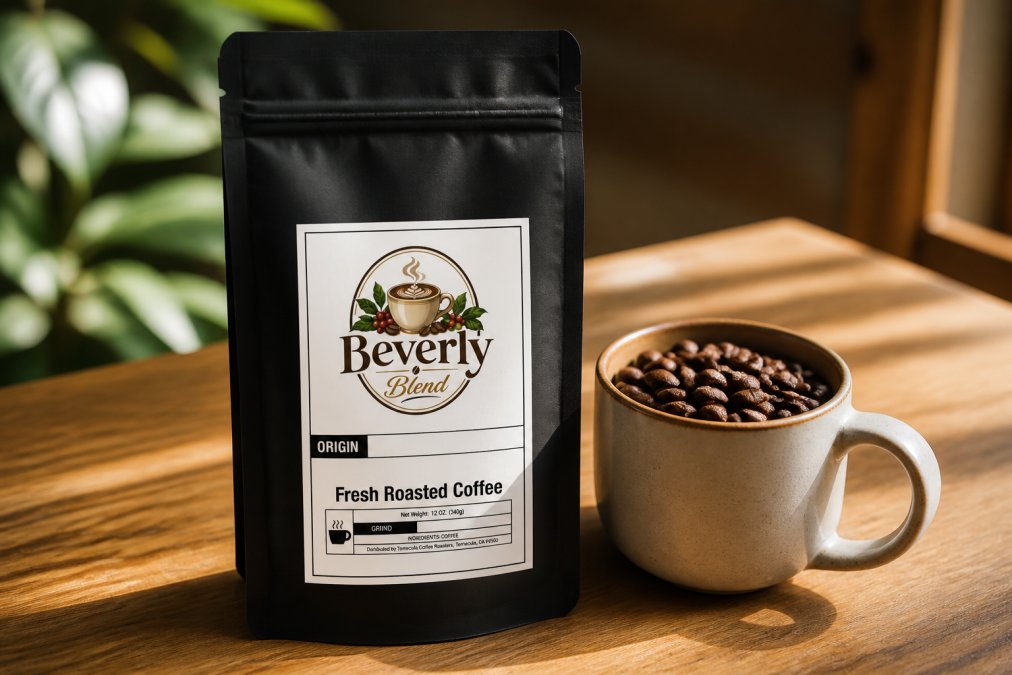
At $19.99 for a full bag, it's priced like specialty coffee should be, justified by the freshness and care.
Best for: Anyone starting their artisan coffee journey or people who brew the same way every morning.
Brazil Santos: Elegant Single-Origin Option
Brazil Santos occupies a sweet spot between approachability and distinctiveness. Medium roast, grown at 750-1050 meters in volcanic loam soil, it delivers an elegant, smooth cup with clear cocoa notes. The Catuai and Mundo Novo varieties are known for balance, they offer character without overwhelming intensity.
Best for: Afternoon cups, milk-based preparations, or anyone who finds other single-origins too intense for daily drinking.
Colombia: Bright Fruit and Chocolate Notes
Colombia brings more complexity. Medium roast, sourced from smallholder farmers in Medellin at 1300-1500 meters, it combines dried orange, berry, and chocolate notes. The fully washed process preserves the fruit-forward profile while the chocolate base keeps it grounded.
Best for: Pour-over brewing, black coffee drinkers, or people who want their morning cup to be a sensory experience.
Guatemala: Rich and Balanced
Guatemala delivers dark chocolate, bright fruit, and butterscotch notes in a smooth, balanced cup. Grown in Antigua at 1200-1616 meters in volcanic loam, it works in any brewing method.

Best for: All-day drinking, espresso preparation, or building a ritual around a coffee that tastes good no matter how you brew it.
Sample Packs: Test Before Committing
Beverly Blend offers two sample packs. The Single Origin Favorites Sample Pack ($24.99) includes six 2-ounce packs: Brazil Santos, Colombia, Costa Rica, Ethiopia, Honduras, and Tanzania. The Best Sellers Sample Pack ($24.99) includes six 2-ounce packs across different roast levels and styles.
Sample packs solve the commitment problem, you're not locked into a full bag of something you might not love.
| Coffee | Type | Roast Level | Best For | Price |
|---|---|---|---|---|
| House Blend | Blend | Medium | Daily consistency | $19.99 |
| Brazil Santos | Single-Origin | Medium | Approachable exploration | $19.99 |
| Colombia | Single-Origin | Medium | Bright, complex cups | $19.99 |
| Guatemala | Single-Origin | Medium | Balanced all-purpose | $19.99 |
| Sample Packs | Mixed | Varies | Testing before buying | $24.99 |
How to Brew Better Coffee at Home
Grind Size and Brew Ratio Matter
The roaster's work ends when the beans leave the warehouse. Your work, grinding, water temperature, contact time, and ratio, determines what you taste in the cup.
Grind size controls extraction speed. Too coarse, and water rushes through without pulling enough flavor. Too fine, and water over-extracts, pulling bitter compounds. The sweet spot depends on your brewing method:
- Pour-over: Medium-fine grind, similar to sand
- French press: Coarse grind, like breadcrumbs
- Espresso: Very fine, almost powder-like
- Automatic drip: Medium grind, like table salt
Brew ratio is equally critical. A common starting point is 1:16 (one part coffee to sixteen parts water). If brewing 25 grams of coffee, use 400 grams of water. Adjust from there: want it stronger? Use 1:15. Prefer it lighter? Try 1:17.
Investing in a basic kitchen scale ($15-30) transforms your ritual from guesswork to repeatability.
Water Temperature and Extraction
Water temperature controls extraction speed. The ideal range is 195-205°F for most brewing methods (peer-reviewed research). Too hot over-extracts, pulling bitter compounds. Too cold leaves sourness.
Extraction also depends on contact time. French press (4 minutes), pour-over (3-4 minutes), and espresso (25-30 seconds) all have different contact times, which is why the same coffee tastes different in each method. A gooseneck kettle with a thermometer ($30-50) gives you precise control.
Best Coffee Subscription Services for Consistent Supply
A subscription model removes the friction of remembering to reorder. You set the frequency, weekly, bi-weekly, or monthly, and fresh coffee arrives automatically.
Beverly Blend doesn't operate a traditional subscription model but offers one-time purchases with fast, reliable delivery. This appeals to people who want control, adjusting quantities and trying different coffees without being locked into recurring charges.
For your best artisan coffee for daily ritual, consider what fits your habits. If you brew the same coffee every morning and want convenience, a subscription makes sense. If you like exploring different origins, one-time ordering gives you more freedom.
Artisan Coffee Brewing Techniques for Peak Flavor
The Bloom Phase
The bloom is the first 30-45 seconds of brewing, when you pour just enough water to saturate the grounds. CO2 trapped in the beans escapes, and the grounds begin releasing flavor compounds. Skipping the bloom leaves flavor on the table.
For pour-over: Pour twice the weight of water compared to coffee (if brewing 25g coffee, use 50g water). Wait 30 seconds, then continue pouring slowly.
For French press: Pour enough hot water to wet all the grounds, wait 30 seconds, then add the rest of the water.
Fresh artisan coffee blooms vigorously, you'll see bubbling and smell the aroma intensify. Stale beans barely bloom, indicating CO2 has already escaped.
Flavor Clarity and Balance
Flavor clarity refers to how distinct the tasting notes are. A Colombia with good clarity lets you taste the orange, berry, and chocolate as separate sensations.
Clarity depends on bean freshness, roast level, and brewing precision. Artisan roasters control freshness and roast level. You control brewing precision through grind size, water temperature, and brew ratio.
Balance refers to how flavor elements work together. A balanced cup has acidity without sharpness, body without heaviness, sweetness without cloyingness. Blended coffees excel here; single-origins require more precision from you to achieve balance.
Freshness and Roast Dates: Why They Matter Daily
Roast date is the most important number on a coffee bag. Flavor peaks 3-10 days after roasting, when beans have released enough CO2 to be stable but haven't begun losing volatile flavor compounds (peer-reviewed research).
Most grocery store coffee is 2-4 weeks old when you buy it. By then, aromatic oils have oxidized and flavor is flat. Beverly Blend ships roasted-to-order coffee, so your beans are typically roasted within 2-3 days of shipment, arriving at peak freshness.
After receiving your coffee, store it in an airtight container away from light and heat. Whole beans stay fresh for 2-3 weeks (peer-reviewed research). Ground coffee oxidizes faster, use within 1-2 weeks.
Building Your Morning Coffee Ritual
A ritual transforms a task into a moment. Making coffee becomes meditation when you approach it with intention.
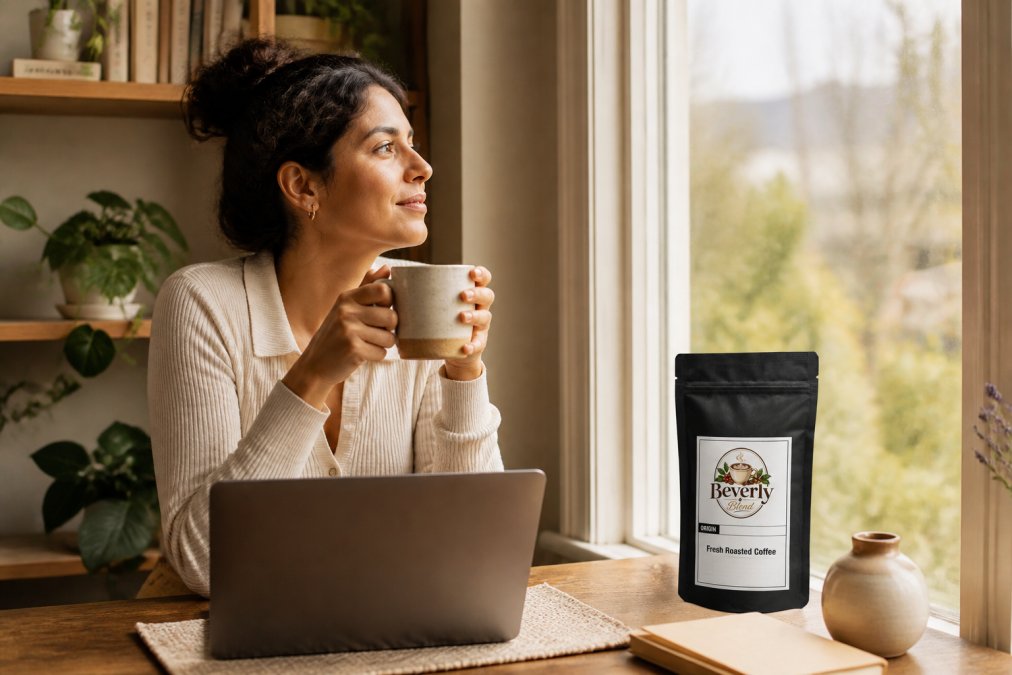
Start by choosing your coffee intentionally. Instead of grabbing whatever's convenient, select an artisan coffee that matches your mood. Brazil Santos for a smooth, grounded morning. Colombia for a brighter, more alert start.

Commit to a brewing method and master it. Don't jump between pour-over, French press, and espresso. Pick one and dial it in. This mastery is where the ritual deepens.
Set aside 5-10 minutes where coffee is the focus. Grind the beans, pour the water, watch the bloom, breathe in the steam. This sensory engagement separates a daily habit from a daily ritual.
Use a vessel that matters to you. Beverly Blend offers ceramic mugs and travel mugs built for this, the White Glossy Mug ($13.23) or the Travel Mug with Handle ($43.24) in stainless steel.
Finally, protect the ritual from dilution. Don't scroll your phone while brewing. Don't rush extraction. The ritual only works if you're present for it.
A strong daily coffee ritual anchors your morning and gives you a controllable sensory experience in a chaotic day. That's why people invest in artisan coffee, not just for taste, but for what the ritual represents.
Building a sustainable daily coffee ritual starts with choosing coffee that deserves your attention. Beverly Blend's freshly roasted artisan blends and single-origins are designed for this exact purpose, to elevate your morning from routine to ritual. With roasted-to-order freshness, direct-to-door delivery, and options ranging from approachable house blends to distinctive single-origins, Beverly Blend removes the barriers between you and exceptional coffee. Start with their Single Origin Favorites Sample Pack to explore what your palate actually prefers, then commit to the coffee that makes your morning pause feel intentional.
Frequently Asked Questions
Q: What defines artisan coffee compared to standard grocery store brands?
A: Artisan coffee is roasted in small batches to order, ensuring maximum freshness and flavor. Unlike mass-produced grocery store coffee, artisan beans are sourced from specific regions or farms, often with documented processing methods. Single-origin coffees trace back to specific growers and altitudes, while blends combine beans to create consistent tasting profiles. The roast date matters too, artisan coffee ships within days of roasting, preserving the complexity of flavor notes and acidity that fade in older beans.
Q: How do I know the coffee is actually fresh when it arrives at my door?
A: Look for a visible roast date on the bag. Artisan roasters like Beverly Blend roast to order and ship quickly, typically arriving within 3-7 days of roasting. This timeline preserves the bloom phase and extraction clarity that define specialty coffee. Grocery store coffee often sits for weeks or months before reaching shelves. Check the packaging for a recent roast date, anything older than 2-3 weeks will have lost some of its brightness and complexity. Freshly roasted coffee also has a stronger aroma when you open the bag.
Q: What's the difference between single-origin and blended artisan coffee for daily use?
A: Single-origin coffees come from one specific region or farm, offering distinct tasting notes tied to altitude, soil, and processing method. Brazil Santos, for example, delivers cocoa and smooth body, while Colombia brings dried orange and berry complexity. Blended coffees combine beans from multiple origins to create consistency and balance, ideal for daily routines when you want reliable flavor every morning. Blends are often smoother and more forgiving of slight brewing variations, while single-origins reward precise technique with greater flavor clarity.
Q: Can I actually justify paying more for artisan coffee versus grocery store brands?
A: Artisan coffee costs more because it's roasted fresh to order, sourced directly from small farms, and shipped quickly to preserve flavor. The difference lies in tasting notes, body, and mouthfeel, artisan beans deliver complexity that standard coffee cannot match. For daily drinkers who appreciate quality, the investment pays off in a noticeably better morning experience. Sample packs let you test whether the difference matters to your palate before committing to larger orders.
Q: What brewing method brings out the best in artisan coffee beans?
A: Artisan coffee shines with methods that allow precise control over water temperature, grind size, and brew time. Pour-over, French press, and AeroPress all work well if you dial in the right ratio and technique. Start with a 1:16 coffee-to-water ratio (1 gram coffee to 16 grams water), water at 195-205°F, and a medium-fine grind. The bloom phase, wetting grounds for 30-45 seconds before full brewing, releases CO2 and improves extraction. Avoid over-extraction (bitter taste) and under-extraction (sour, thin flavor) by timing your brew and adjusting grind size. Freshly roasted beans need slightly less time than older coffee because they release gases more readily.
This article was written using GrandRanker