

Can You Reuse Loose Leaf Tea Leaves: A Complete Guide
Table of Contents
- Can You Reuse Loose Leaf Tea Leaves? The Safety Facts
- How Many Times Can You Re-Steep Loose Leaf Tea?
- Best Tea Varieties for Re-Steeping
- How to Store Used Tea Leaves Safely
- Step-by-Step: Reusing Your Loose Leaf Tea
- Creative Uses for Spent Tea Leaves
- Frequently Asked Questions
Last Updated: October 1, 2026
Can You Reuse Loose Leaf Tea Leaves? The Safety Facts
Yes, you can reuse loose leaf tea leaves multiple times. The key question is how to do it safely and when to stop.
Safety depends on timing, storage, and tea type. A single steep extracts about 30% of the leaf's soluble compounds. But leave wet leaves at room temperature for hours, and bacteria can grow, that's where the 3-hour rule comes in.
Tea leaves contain tannins, caffeine, and flavor compounds that release gradually over multiple infusions. Green tea and white tea are designed for multiple infusions. Black tea and herbal tea vary, some handle re-steeping beautifully, others turn bitter or weak after the first steep.

Understanding the 3-Hour Rule
The 3-hour rule: if wet tea leaves sit at room temperature longer than 3 hours, don't reuse them.
Wet leaves create a moist environment where bacteria and mold thrive. Within hours, microbial colonies can develop invisibly on the leaf surface.
The clock starts when you remove leaves from hot water. Steep at 8 a.m. and re-steep at 10 a.m., you're safe. Wait until noon and skip the reuse.
Bacterial Growth and Food Safety
Wet tea leaves are a food product. Bacteria grow fastest between 40°F and 140°F (the danger zone), where room temperature sits.
Mold appears as visible fuzz or discoloration. Bacterial pathogens like E. coli or Listeria can colonize wet leaves without visible signs. Millions reuse tea safely daily, timing and storage matter.
The risk is manageable: immediate re-steeping eliminates it, and refrigeration extends the safe window.
Hot water kills most pathogens. Re-steeping with water above 160°F reduces microbial load, making hot re-steeping safer than cold re-steeping.
How Many Times Can You Re-Steep Loose Leaf Tea?
Most loose leaf tea can be steeped 3 to 5 times; premium varieties handle 7 to 10 infusions depending on type and quality.
Whole leaves hold flavor longer than fannings and dust (small broken pieces), which exhaust after 2 to 3 steeps.
Stop when the tea tastes weak or flat. That's your signal the leaves have given up their soluble compounds. Continuing to steep after that point wastes hot water and produces disappointing flavor.
Flavor Profile Changes Between Steeps
Each steep tastes different. The first infusion pulls out bright, delicate flavors. The second and third steeps taste smoother and more mellow. Later steeps become progressively lighter.
Different compounds release at different rates: caffeine comes out quickly in the first steep, while tannins and aromatic compounds release more gradually across multiple infusions.
Oolong tea drinkers specifically brew multiple infusions to experience how flavor evolves across steeps.
If your second steep tastes harsh, shorten the steep time. A 30-second steep instead of 2 minutes pulls out fresh flavor without over-extracting tannins.
Caffeine Extraction Across Multiple Infusions
Most caffeine releases in the first 30 seconds of steeping. By one minute, you've extracted 50% of the leaf's caffeine. Remaining caffeine decreases with each subsequent infusion.
Your second cup has less caffeine than your first, your third cup even less. For caffeine boost, the first steep matters most.
Some people use this to their advantage. They brew a full-strength first cup for morning energy, then reuse the same leaves for afternoon or evening cups with lower caffeine. It's a practical way to extend the tea and reduce caffeine intake later in the day.

Best Tea Varieties for Re-Steeping
Some teas are specifically grown and processed to handle multiple infusions beautifully. Others taste best as a single steep.
Premium loose leaf teas designed for re-steeping are usually whole leaves, not broken pieces. The processing matters too. Teas that are rolled, twisted, or shaped (like oolong or white tea) unfurl gradually with each steep, releasing flavor slowly and consistently.

Oolong and White Tea: Premium Re-Steeping Options
Oolong tea is the gold standard for re-steeping. These semi-oxidized leaves are designed for multiple infusions. A quality oolong can handle 5 to 10 steeps easily. Each steep reveals new layers of flavor.
White tea is equally excellent for re-steeping. These delicate, minimally processed leaves release flavor slowly and gently. A white tea steep might taste light and floral, then fruity, then slightly sweet, all from the same leaves across different infusions.
Beverly Blend's Jasmine is a white tea blend specifically noted as "good for multiple steepings." The jasmine blossoms paired with hand-picked green tea create a smooth, silky cup that reveals new dimensions with each re-steep.
Both oolong and white tea benefit from slightly cooler water (160°F to 180°F) and shorter initial steep times (2 to 3 minutes). This prevents over-extraction and allows the leaves to unfurl gradually across multiple infusions.
Green Tea and Herbal Tea for Multiple Infusions
Green tea handles re-steeping well, though the experience varies by type. Whole-leaf green tea from quality sources can be steeped 3 to 5 times. Broken or powdered green tea (matcha, for example) doesn't re-steep, it's consumed as a powder.
Herbal tea is trickier. Some herbal blends are excellent for re-steeping. Others are one-and-done. Peppermint, chamomile, and rooibos can handle 2 to 3 steeps if the leaves are whole. Herbal blends with flowers and herbs mixed together often exhaust after one steep because smaller pieces break down faster.
The best approach: taste your second steep. If it's flavorful and pleasant, continue. If it's weak or tastes off, stop. Different herbal blends behave differently.
How to Store Used Tea Leaves Safely
If you're not re-steeping immediately, storage becomes critical. Proper storage extends the safe window and preserves flavor.
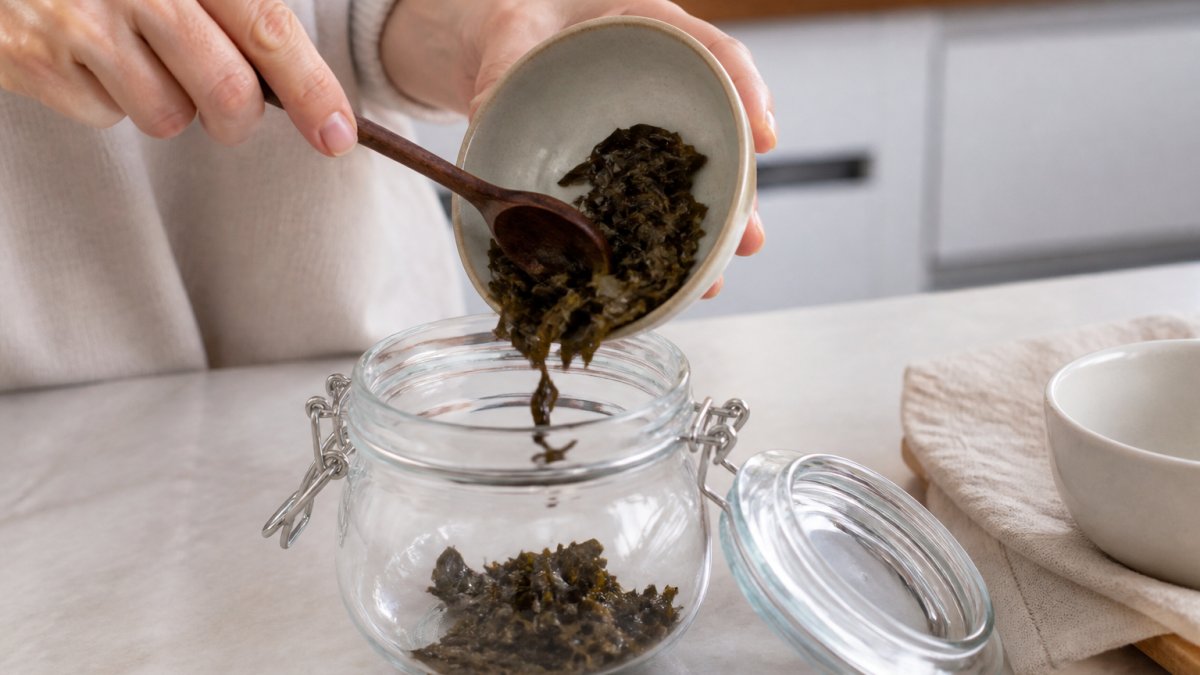
The enemy is moisture and time. Wet leaves in a warm environment breed bacteria and mold.
Moisture Content and Airtight Containers
After your first steep, remove the leaves from the infuser and let them drain briefly. Don't squeeze them dry, just let gravity work for a minute. Excess standing water speeds bacterial growth.
Signs of Spoilage and Mold
Visible mold is the clearest sign to discard the leaves. Mold appears as fuzzy growth, usually white, green, or black. Any visible discoloration beyond the tea's natural color is a warning sign.
Step-by-Step: Reusing Your Loose Leaf Tea
Here's how to reuse loose leaf tea safely and effectively.
Immediate Re-Steeping (Same Session)
This is the safest and easiest method.
- Brew your first cup. Use your preferred water temperature and steep time. For most teas, that's 160°F to 200°F for 2 to 5 minutes.
- Pour the tea into your cup.
- Leave the wet leaves in your infuser or strainer.
- Add fresh hot water at the same temperature.
- Steep for 30 seconds to 1 minute longer than the first steep. The leaves are already partially opened, so they release flavor faster.
- Pour and enjoy.
- Repeat until the tea tastes weak or you've reached your infusion limit.
This method takes minutes from start to finish. There's zero storage risk. The leaves never cool down or sit exposed.
Re-Steeping the Next Day or Later
If you want to re-steep later, refrigeration is essential.
- After your first steep, remove the leaves from the infuser.
- Let them drain for 1 minute.
- Transfer to a small airtight glass container.
- Seal tightly and refrigerate immediately.
- Use within 24 hours for best safety and flavor.
- When ready to re-steep, remove the leaves and add fresh hot water.
- Steep for 1 to 2 minutes.
- Return any unused leaves to the refrigerator in the sealed container.
The refrigeration step is non-negotiable here. Room temperature storage beyond 3 hours carries real risk. Cold storage buys you time and keeps the leaves fresh.
Cold Brew vs. Hot Brew Re-Steeping
Cold brew re-steeping works differently. Cold water doesn't extract flavor as quickly or completely as hot water. Re-steeping cold brew leaves with cold water produces very weak tea.
Creative Uses for Spent Tea Leaves
Don't throw away leaves after they've given up their flavor. They have value beyond the cup.
Composting vs. Reusing in the Garden
Spent tea leaves are excellent for compost. They're nitrogen-rich and break down quickly. Add them to your compost bin along with brown materials like leaves and cardboard. They'll decompose and contribute nutrients to finished compost in weeks or months.
Other Household and Beauty Applications
Some people use spent tea leaves as a gentle exfoliant in homemade face masks. The leaves are soft enough not to irritate skin, and tea contains antioxidants. Mix damp leaves with honey or yogurt for a simple treatment.
Frequently Asked Questions
How many times can loose leaf tea be reused?
Most loose leaf teas can be re-steeped 2-5 times, depending on the variety and initial brewing method. Oolong and white teas typically handle 4-5 infusions, while green teas often yield 3-4 good steeps. Black teas and herbal blends like Earl Grey usually produce 2-3 quality infusions. Each subsequent steep extracts fewer tannins and caffeine, creating a gentler, more subtle flavor profile that many tea enthusiasts prefer.
Is it safe to reuse tea leaves the next day?
Reusing tea leaves the next day is safe if you store them properly in an airtight container in the refrigerator immediately after the first brew. Wet leaves left at room temperature for more than 3 hours can develop bacterial growth and mold. Store used leaves in a sealed glass or plastic container to minimize moisture exposure and oxidation. Check for visible mold or off-odors before re-steeping.
Which types of tea are best for multiple infusions?
Oolong, white tea, and high-quality green teas are ideal for multiple re-steepings because their leaves are tightly rolled or structured, releasing flavors gradually across 4-5 infusions. Jasmine tea also performs well for re-steeping. Black teas like English Breakfast can be re-steeped but typically yield fewer quality infusions. Loose leaf formats preserve leaf integrity better than tea bags, making them superior for multiple steeps.
What should I do with spent tea leaves after they're no longer drinkable?
Spent tea leaves have several uses beyond brewing. You can compost them to enrich garden soil with organic matter, or dry them for use as a natural deodorizer in closets and refrigerators. Some people use cooled, spent leaves as a gentle face mask or add them to homemade bath soaks. If leaves show no signs of mold or spoilage, they can also be added to potted plants as a nutrient boost, though fresh leaves are more effective than repeatedly re-steeped ones.