

7 Best Ethically Sourced Coffee Brands for Home Brewers
Table of Contents
- What Makes Coffee Ethically Sourced
- Why Sustainability Matters in Coffee Sourcing
- How to Identify Fair Trade Coffee Labels
- Benefits of Drinking Single Origin Coffee
-
7 Top Ethically Sourced Coffee Brands for Home Brewers
- 1. Beverly Blend: Single-Origin Direct Trade Focus
- 2. Ethiopia Natural: Heirloom Varieties with Transparent Sourcing
- 3. Guatemala: Smallholder Farmer Partnerships
- 4. Colombia: Cooperative-Driven Supply Chain
- 5. Peru: Fair Trade Certified Cooperatives
- 6. Kenya: Single-Origin Specialty Grade Beans
- 7. Costa Rica: Eco-Pulped Sustainable Processing
- Best Brewing Methods for Single Origin Beans
- Decoding Greenwashing in Coffee Marketing
- Conclusion
Last Updated: August 29, 2026
What Makes Coffee Ethically Sourced
Ethically sourced coffee prioritizes fair farmer compensation, sustainable farming practices, and transparent supply chains from farm to cup. Conventional sourcing often leaves farmers earning below production costs while environmental degradation accelerates across coffee-growing regions. True ethical sourcing encompasses direct relationships between roasters and growers, documented traceability, and verifiable commitment to living wages.
At Beverly Blend, we source directly from smallholder farmers and cooperatives who receive fair compensation and maintain sustainable practices. Every bean carries documented traceability back to specific farms, ensuring you know exactly where your coffee originates and how it was grown.
Why Sustainability Matters in Coffee Sourcing
Coffee farming shapes entire ecosystems. Conventional monoculture plantations strip soil nutrients, require heavy pesticide use, and eliminate shade canopy that protects biodiversity. Sustainable sourcing reverses this through regenerative agriculture that rebuilds soil health and preserves bird populations and forest ecosystems.
Coffee processing consumes enormous water quantities, wet-processing requires 140 liters per kilogram of beans. Eco-pulped and natural processing methods dramatically reduce this footprint. Shade-grown coffee sequesters more atmospheric carbon than sun-exposed monocultures. Direct-trade relationships eliminate unnecessary middlemen and reduce shipping distances, creating smaller carbon footprints. Regenerative practices like cover cropping and composting restore soil carbon and enhance farm viability while producing higher-quality beans with complex tasting notes.
How to Identify Fair Trade Coffee Labels
Fair Trade certification ensures farmers receive a minimum price floor and participate in democratically-run cooperatives. However, the minimum price doesn't always reflect living wages in high-cost regions.
Examine bags for specific information: farmer or cooperative name, farm altitude, processing method, and roast date. Transparent roasters list this data prominently because they're proud of sourcing relationships. Rainforest Alliance certification indicates environmental stewardship and worker protections. Bird-Friendly certification, awarded by the Smithsonian Institution, verifies shade-grown practices preserving migratory bird habitat. Organic certification confirms pesticide-free cultivation, though it doesn't guarantee fair compensation.
Direct-trade relationships bypass certification entirely. Some of the most ethical coffee comes from roasters who visit farms annually, negotiate prices directly with farmers, and maintain multi-year purchasing commitments, often exceeding certification standards.
Benefits of Drinking Single Origin Coffee
Single-origin coffee delivers superior flavor complexity because you're tasting the unique terroir of a specific farm or region. Altitude, soil composition, processing method, and varietal genetics create distinct tasting profiles. Ethiopia Natural beans from Sidama express milk chocolate and fruity notes shaped by volcanic soil and elevation. Guatemala beans from Antigua develop dark chocolate and butterscotch characteristics from volcanic loam at 1,200-1,600 meters.

Single-origin sourcing strengthens farmer relationships. Roasters specializing in single-origin beans typically purchase entire harvests from specific farms, creating stable income for growers and allowing them to adjust roast profiles based on each year's harvest variations.
7 Top Ethically Sourced Coffee Brands for Home Brewers
Quick Picks:
- Best Overall Direct-Trade Focus: Beverly Blend Ethiopia Natural, single-origin heirloom varieties with transparent smallholder farmer partnerships
- Best for Cooperative Transparency: Beverly Blend Peru, Fair Trade certified with documented cooperative relationships
- Best for Sustainable Processing: Beverly Blend Costa Rica, eco-pulped method minimizing water consumption
1. Beverly Blend: Single-Origin Direct Trade Focus
Beverly Blend stands apart because every bean carries documented traceability to specific farms and smallholder farmers. We roast to order, ensuring maximum freshness. Our Ethiopia Natural ($19.99) sources from Sidama zone smallholder farmers growing indigenous heirloom cultivars at 1,700-1,900 meters elevation. Full natural processing, hand-sorted and dried on raised beds, preserves fruity, milk chocolate character.
Our Guatemala ($19.99) partners with smallholder farmers in Antigua, combining Bourbon, Catuai, Caturra, and Typica varietals. The fully washed, sun-dried process develops dark chocolate and butterscotch notes. Colombia ($19.99) sources from Medellin smallholders using solar dryers, creating dried orange, berry, and chocolate profiles.
What distinguishes Beverly Blend is operational transparency. You receive a roast date on every bag. You know the exact farm or cooperative, altitude, processing method, and varietal. No mystery middlemen, just direct relationships with farmers who receive fair compensation and maintain sustainable practices.
Pros:
- Roasted to order ensures maximum freshness
- Fully transparent sourcing with specific farm attribution
- Direct-trade relationships support farmer income stability
- All beans priced consistently at $19.99
Cons:
- Direct-trade premium pricing higher than commodity coffee
- Limited to single-origin options
2. Ethiopia Natural: Heirloom Varieties with Transparent Sourcing
Ethiopia Natural ($19.99) from Sidama produces some of the world's most complex single-origin beans. Beverly Blend sources from smallholder farmers growing indigenous heirloom cultivars, the genetic foundation of modern coffee varieties. Full natural processing creates distinctive fruity profile with berry, stone fruit, and fermented notes alongside milk chocolate sweetness. The 1,700-1,900 meter elevation and nitisol soil create bright acidity and complex body.
Pros:
- Heirloom genetics offer complexity unavailable in commercial hybrids
- Natural processing creates distinctive fruity profile
- Smallholder farmer partnerships ensure direct income
- Altitude and soil documentation verify terroir authenticity
Cons:
- Natural processing creates higher variability between lots
- Fruity profile may not suit espresso-focused brewers
3. Guatemala: Smallholder Farmer Partnerships
Guatemala ($19.99) from Antigua combines Bourbon, Catuai, Caturra, and Typica varietals across volcanic loam soil at 1,200-1,616 meters elevation. Beverly Blend partners directly with smallholder farmers, ensuring stable pricing and long-term relationships. Fully washed, sun-dried process develops dark chocolate, bright fruit, and butterscotch characteristics. This bean suits espresso and milk-based drinks exceptionally well because chocolate foundation stands up to milk's sweetness while fruit notes add dimension.

Pros:
- Volcanic terroir creates balanced chocolate-fruit-sweetness profile
- Fully washed processing offers consistency
- Smallholder farmer partnerships support family farm sustainability
- Versatile across brewing methods
Cons:
- Smallholder sourcing means potential lot-to-lot variation
- Less fruity than natural-processed origins
4. Colombia: Cooperative-Driven Supply Chain
Colombia ($19.99) from Medellin sources from smallholder farmers organized into cooperatives that negotiate collective pricing and share resources. Varietals include Castillo, Caturra, Colombia, and Typica across 1,300-1,500 meter elevation. Fully washed process uses solar dryers that protect beans during drying, preserving dried orange, berry, and chocolate notes while reducing water consumption. Cooperative-driven supply chains often include community investment programs: education funding, healthcare access, and infrastructure improvements.
Pros:
- Cooperative structure distributes economic benefits across farmers
- Solar drying reduces water consumption
- Balanced flavor profile suits diverse brewing preferences
- Community investment programs extend ethical impact
Cons:
- Cooperative model can obscure individual farmer relationships
- Less distinctive character than single-varietal origins
5. Peru: Fair Trade Certified Cooperatives
Peru ($19.99) from Piura and Amazonas sources from Cooperativa Agricola de Servicios Norandino, a Fair Trade certified cooperative managing smallholder farmers across 1,100-1,700 meter elevation. Fair Trade certification guarantees minimum pricing, democratic governance, and community development investments. Gully-washed, sun-dried process creates salted caramel, silky sweetness, and citrus notes. Elevation variation across the cooperative's territory creates flavor complexity, lower elevations contribute body and sweetness, higher elevations add brightness.
Pros:
- Fair Trade certification guarantees minimum farmer pricing
- Cooperative governance ensures democratic decision-making
- Elevation variation creates complex flavor profile
- Community development investments documented
Cons:
- Fair Trade minimum price may not reflect true living wages in all regions
- Cooperative structure reduces individual farmer attribution
6. Kenya: Single-Origin Specialty Grade Beans
Kenya ($19.99) from Othaya, Nyeri County represents East African specialty coffee at its finest. Beverly Blend sources from small cooperative farmers growing SL28, SL34, Ruiru 11, and Batian varietals at 1,700-1,890 meters elevation. Fully washed process with raised-bed drying creates bright acidity, orange, lemon, floral, and effervescent characteristics. High elevation creates crisp, clean cup profiles with exceptional clarity.
Pros:
- Specialty-grade varietals create distinctive flavor clarity
- High elevation produces crisp, complex acidity
- Raised-bed drying develops nuanced flavor development
- Bright profile suits pour-over and filter brewing
Cons:
- High acidity may not suit espresso or milk-based drinks
- Delicate profile requires precise brewing technique
7. Costa Rica: Eco-Pulped Sustainable Processing
Costa Rica ($19.99) from Alajuela sources from micro farms using eco-pulped processing, a water-efficient method that removes fruit while preserving some mucilage, then dries naturally. This reduces water consumption by 90% compared to fully washed processing while creating sweet apple, raisin, and honey notes. Caturra and Catuai varietals at 1,300-1,445 meters elevation create balanced sweetness and body. Many micro farms practice shade-growing with fruit and hardwood trees, creating complex agroforestry systems that support bird populations and carbon sequestration.
Pros:
- Eco-pulped processing reduces water consumption by 90%
- Micro-farm sourcing supports individual farmer sustainability
- Balanced sweetness and body suit diverse brewing methods
- Environmental impact documentation available
Cons:
- Eco-pulping is less standardized than conventional methods
- Lot-to-lot variation may be higher
| Brand | Origin | Processing | Altitude | Price | Best Brewing Method |
|---|---|---|---|---|---|
| Beverly Blend Ethiopia | Sidama, Ethiopia | Full Natural | 1,700-1,900m | $19.99 | Pour-over, Cold Brew |
| Beverly Blend Guatemala | Antigua, Guatemala | Fully Washed | 1,200-1,616m | $19.99 | Espresso, Milk Drinks |
| Beverly Blend Colombia | Medellin, Colombia | Washed/Solar Dried | 1,300-1,500m | $19.99 | All Methods |
| Beverly Blend Peru | Piura/Amazonas, Peru | Gully Washed | 1,100-1,700m | $19.99 | All Methods |
| Beverly Blend Kenya | Othaya, Kenya | Fully Washed | 1,700-1,890m | $19.99 | Pour-over, Filter |
| Beverly Blend Costa Rica | Alajuela, Costa Rica | Eco-Pulped | 1,300-1,445m | $19.99 | All Methods |
Best Brewing Methods for Single Origin Beans
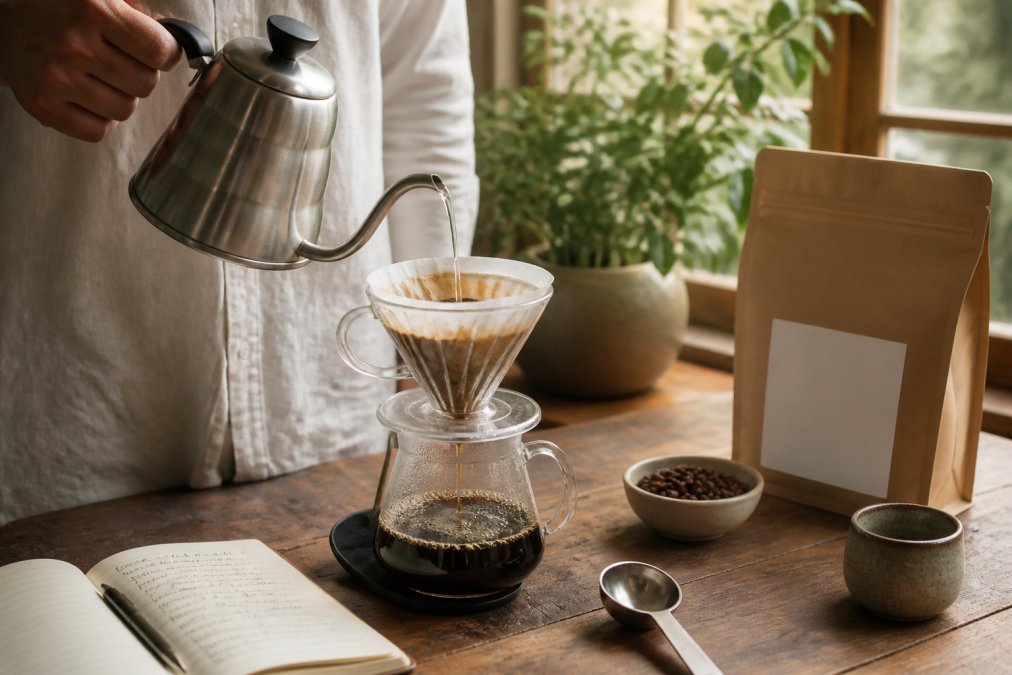
Single-origin beans deserve brewing methods that highlight their unique terroir. Pour-over brewing suits fruit-forward origins like Ethiopia Natural and Kenya. Precise water temperature control (195-205°F) and extended contact time highlight delicate floral, citrus, and berry notes in 3-4 minutes total brew time.
Espresso extraction suits chocolate-forward origins like Guatemala and Colombia. The pressure-driven process (9 bars) forces water through finely-ground beans in 25-30 seconds, concentrating flavors and creating crema that emphasizes chocolate, caramel, and body.

Cold brew extraction transforms acidic origins into smooth, sweet beverages. Steeping coarsely-ground beans in cold water for 12-24 hours creates a concentrate with minimal acidity and maximum sweetness, ideal for high-acidity origins like Kenya.
French press brewing creates full-bodied cups that showcase origin oils and texture. The immersion method (4 minutes steeping) extracts strong flavors without paper filtration, working well for balanced origins like Peru and Colombia.
Water quality and temperature precision matter as much as brewing method. Filtered water removes chlorine and sediment that interfere with flavor expression. Temperature precision (within 5°F) determines extraction rate. Grind consistency affects contact time, finer grinds extract faster, coarser grinds slower.
Decoding Greenwashing in Coffee Marketing
Greenwashing, making environmental claims without substantive practices, pervades coffee marketing. Many brands use green packaging, nature imagery, and vague sustainability language without documented practices.
Red flags include: "Sustainably sourced" without specific certification or farm attribution, "eco-friendly" without explaining which practices reduce environmental impact, and "premium" or "specialty" without farmer compensation documentation. Genuine ethical claims include specific details: farmer names or cooperative names, exact altitude and processing method, certification names with years, roast dates, and community investment documentation.
Price tells a story too. Ethically sourced coffee costs more because farmers receive fair compensation and sustainable practices require labor investment. If a brand claims ethical sourcing but prices competitively with commodity coffee, the math doesn't work.
Ask brands directly: What's the farmer's name? How much does the farmer receive per pound? How often do you visit farms? What environmental practices do you verify? Transparent roasters answer with specificity. Evasive responses indicate greenwashing.
Look for third-party verification beyond marketing claims. Rainforest Alliance certification standards document environmental and social requirements. Fair Trade International minimum pricing and cooperative governance requirements provide accountability mechanisms. Smithsonian Bird-Friendly certification verifies shade-grown practices.
Some of the most ethical coffee lacks any certification because roasters maintain direct relationships with farmers that exceed certification standards. However, lack of certification doesn't excuse vague marketing. Transparent roasters provide detailed sourcing information regardless of certification status.
Choosing ethically sourced coffee brands requires moving beyond marketing language to examine specific practices and verifiable relationships. Beverly Blend's commitment to direct-trade partnerships, transparent farm attribution, and roast-to-order freshness ensures you know exactly where your coffee originates and how it was grown. Every bean carries documented traceability to specific smallholder farmers and cooperatives who receive fair compensation for their work. Start with Beverly Blend's single-origin collection and explore how terroir, processing method, and direct farmer relationships create the complexity that transforms your daily ritual into an intentional practice of supporting sustainable agriculture and farmer equity.
Frequently Asked Questions
What is the difference between fair trade and direct trade coffee?
Fair trade coffee is certified through third-party organizations and guarantees farmers receive a minimum price, typically around $1.40 per pound. Direct trade coffee eliminates middlemen, with roasters buying directly from farms or cooperatives, often paying higher prices and building ongoing relationships. Direct trade offers greater supply chain transparency and typically results in higher farmer compensation, though it requires more resources from roasters to verify sourcing.
How can I tell if my ethically sourced coffee beans are truly ethical?
Look for specific certifications like Fair Trade, Organic, Rainforest Alliance, or Bird-Friendly on the packaging. Check the label for the farm name, region, altitude, and processing method. Ethically sourced coffee brands should provide traceability information, including the grower's name or cooperative. Roasters committed to ethical sourcing often publish detailed sourcing reports and explain their sourcing practices on their website. Avoid vague claims like 'sustainably grown' without certification backing.
What are the benefits of drinking single origin coffee?
Single origin coffee offers distinct tasting notes reflecting its specific region, altitude, and processing method. You experience the unique flavor characteristics of that coffee's terroir, similar to wine regions. Single origin beans typically come from known farms or cooperatives, providing better traceability and supporting specific communities. They're often fresher since roasters source smaller batches, and you can experiment with different regions to discover your preferred flavor profiles and brewing methods.
Why should home brewers choose ethically sourced coffee over mass-market options?
Ethically sourced coffee ensures farmers receive fair compensation for their work, supporting sustainable farming practices and community development. These beans are typically fresher, roasted to order, and of higher quality than mass-produced alternatives. Choosing ethically sourced coffee reduces environmental impact by supporting regenerative agriculture and reducing chemical pesticide use. For home brewers, the investment in quality beans results in better flavor, more satisfying brewing experiences, and the assurance that your purchase directly benefits coffee-growing communities.
What should I look for when choosing ethically sourced coffee for home brewing?
Prioritize roast date over roast type, as fresher beans deliver better flavor within two to four weeks of roasting. Check the label for specific origin information including region, altitude, and farm or cooperative name. Look for certifications or direct trade claims backed by detailed sourcing information. Consider your preferred brewing method and select beans suited to it. Start with medium roasts if you're new to single origin coffee, as they showcase regional characteristics clearly. Compare tasting notes to your flavor preferences, and choose roasters that provide cupping scores or detailed flavor descriptions.
This article was written using GrandRanker