

Green Tea for Focus: Health Benefits & How to Brew
Table of Contents
- How Green Tea Supports Focus and Mental Clarity
- The L-Theanine and Caffeine Synergy Explained
- How Much Green Tea to Drink for Focus
- Green Tea vs Coffee for Mental Clarity
- Antioxidants and Neuroprotection: EGCG and Brain Health
- Brewing Green Tea for Maximum Focus Benefits
- Conclusion
- Frequently Asked Questions
Last Updated: September 25, 2026
How Green Tea Supports Focus and Mental Clarity
Green tea for focus works through caffeine and L-theanine, which interact to produce calm alertness rather than coffee's jittery stimulation. This Beverly Blend guide covers the science, how much to drink, and how to brew it.
The L-Theanine and Caffeine Synergy Explained
L-theanine and caffeine synergy is the combined effect of these two compounds producing calmer, more sustained focus than either delivers alone. The ratio matters more than the absolute dose.
- L-theanine softens caffeine's edge, reducing anxiety and blood pressure spikes
- Caffeine extends L-theanine's calming effect into productive alertness
- The combination improves reaction time and attention switching more than caffeine by itself
Why This Combination Beats Caffeine Alone
Caffeine alone produces a sharp rise in alertness followed by a dip, the dip that drives the second and third cup, and why coffee drinkers often feel worse by mid-afternoon than at 9 a.m.
How Much Green Tea to Drink for Focus
How much green tea to drink for focus depends on caffeine tolerance, but a common range is two to four cups across the morning and early afternoon, each with a modest caffeine dose well below a standard cup of coffee.
A practical starting framework:
| Cups per Day | Timing | Best For |
|---|---|---|
| 1-2 cups | Morning only | Caffeine-sensitive drinkers |
| 2-3 cups | Morning and early afternoon | Most remote professionals |
| 3-4 cups | Spread across workday | Regular caffeine consumers |
| 4+ cups | Not recommended | Diminishing returns, sleep disruption |
Timing Your Cups for All-Day Alertness
Timing matters as much as quantity: front-load your intake in the morning and taper by early afternoon.
A workable schedule for a typical workday:
- First cup, 30-60 minutes after waking. This avoids stacking caffeine on your natural cortisol peak.
- Second cup, mid-morning. Bridges the gap before lunch without a spike.
- Third cup, early afternoon if needed. Cut off by 2 p.m. to protect sleep.
- Switch to herbal or decaf after that. Keeps the ritual without the caffeine.
Green Tea vs Coffee for Mental Clarity
Green tea vs coffee for mental clarity comes down to the shape of the alertness curve: coffee delivers a faster, stronger lift, green tea a slower, steadier one that many find easier to work with over a full day.
Key differences:
- Onset: Coffee hits in 20-30 minutes. Green tea builds over 45-60 minutes.
- Duration: Coffee peaks and drops within 2-3 hours. Green tea holds steadier for 3-4 hours.
- Side effects: Coffee more often causes jitters, racing heart, and anxiety at higher doses.
- Compounds: Green tea adds L-theanine and antioxidants that coffee lacks.
Caffeine Sensitivity and Individual Tolerance
Caffeine sensitivity varies widely and is largely genetic: some people metabolize it quickly and drink it into the evening without issue, while others feel a single cup for eight hours.
Signs you should dial back:
- Trouble falling asleep despite an early cutoff
- Racing heart or chest tightness after drinking
- Anxiety or irritability in the hours after a cup
- Headaches when you skip a day
Antioxidants and Neuroprotection: EGCG and Brain Health
Epigallocatechin gallate (EGCG) is the most abundant and most studied catechin in green tea, and the compound most responsible for its antioxidant and neuroprotective reputation. But "antioxidants fight free radicals" skips what matters: how EGCG behaves once it crosses into the brain, and why dose and delivery format change the outcome.
Here is the mechanism in plain terms.
What EGCG Actually Does in the Brain
EGCG is a polyphenol, a class of plant compounds that interact with oxidative stress pathways. In the brain, oxidative stress is a normal byproduct of high-energy metabolism, neurons burn glucose and generate reactive oxygen species. When that load outpaces the brain's own defenses (glutathione, superoxide dismutase, catalase), the result is cumulative damage to lipids, proteins, and DNA.
- Direct radical scavenging. EGCG's chemical structure includes multiple hydroxyl groups that donate electrons to neutralize reactive oxygen species before they damage cell membranes.
- Metal chelation. EGCG binds free iron and copper ions, which otherwise catalyze the formation of the most damaging radicals (hydroxyl radicals) via Fenton chemistry.
- Nrf2 pathway activation. EGCG is one of several plant compounds shown to nudge the Nrf2 transcription factor, which upregulates the body's own antioxidant enzymes rather than just acting as a direct scavenger.
Why This Matters for Focus Specifically
Neuroprotection and focus are usually treated separately, but they are connected. The same oxidative stress behind long-term cognitive decline also degrades short-term signaling: mitochondrial efficiency drops, neurotransmitter synthesis slows, and the brain's energy budget for sustained attention tightens.
The Bioavailability Problem Nobody Mentions
The gap most articles miss: EGCG is poorly absorbed. Oral EGCG has low bioavailability because it is rapidly metabolized in the small intestine and liver (phase II conjugation, glucuronidation and sulfation), so much of what you swallow never reaches the bloodstream in active form.
Two things change that:
- Consuming the whole leaf. Matcha delivers the entire ground leaf, so you get the full catechin profile, EGCG, EGC, ECG, and the minor catechins, rather than just what steeps out. This is one reason matcha is often cited as delivering a higher effective catechin dose per cup than steeped leaf tea.
- Catechins work as a group. The minor catechins and the caffeine itself appear to modulate EGCG's absorption and stability. Isolated EGCG supplements do not replicate this, which is one reason whole-tea consumption is the more studied format.
What the Evidence Actually Supports
The honest summary:
- Green tea consumption is consistently associated with lower oxidative stress markers in human studies.
- Some observational research links regular intake to slower cognitive decline in older adults, though it cannot prove causation (Checking your browser).
- EGCG shows neuroprotective activity in lab and animal models, but human trials at effective doses are limited.
What that means for you: green tea's antioxidant and neuroprotective benefits are real but supporting, not standalone. They stack on top of sleep, exercise, and diet, they do not replace them.
Brewing Green Tea for Maximum Focus Benefits
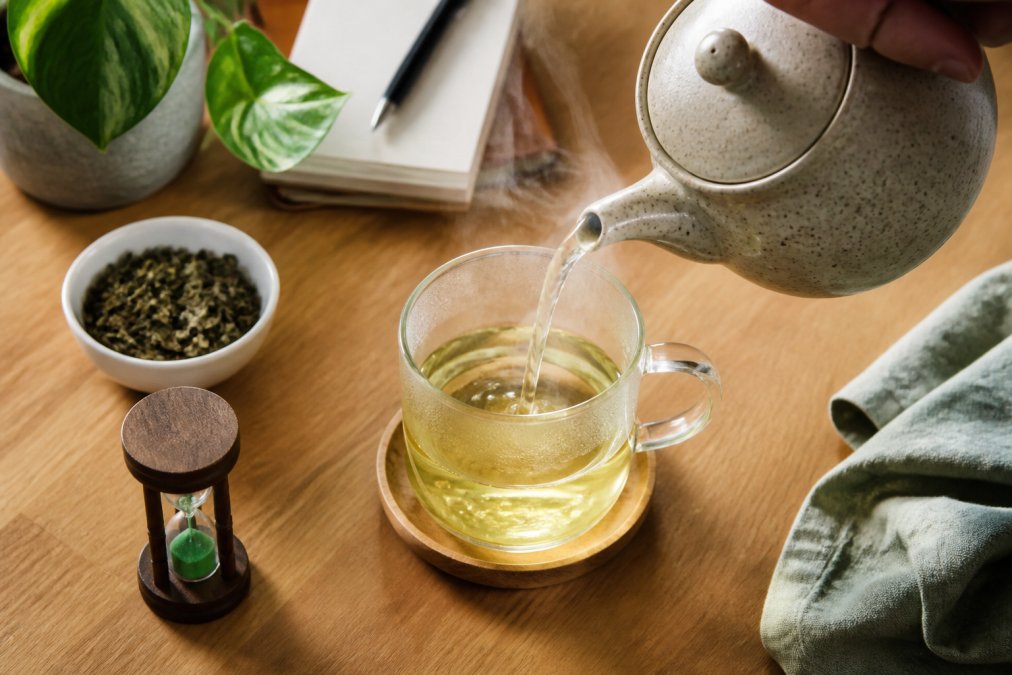
Brewing green tea for maximum focus benefits is not about a tastier cup, it is about shifting the ratio of L-theanine to caffeine in your glass. The useful version is knowing which compounds extract when, and how to steer the cup toward calm focus or a sharper lift.
The Extraction Order Matters
When hot water hits green tea leaves, compounds dissolve at different rates, in roughly this order:
- L-theanine and other free amino acids, water-soluble, extract fast, peak in the first 1-2 minutes.
- Catechins (including EGCG), extract steadily over 2-5 minutes, with higher temperatures pulling more.
- Caffeine, extracts more slowly than L-theanine but accelerates sharply above 180°F.
- Tannins and bitter compounds, extract late and at high temperatures, which is what makes over-steeped tea astringent.
A Practical Brewing Framework
| Goal | Water Temp | Steep Time | What It Does |
|---|---|---|---|
| Calm focus, low jitter | 160°F (71°C) | 1-2 min | Maximizes L-theanine-to-caffeine ratio |
| Balanced focus | 170°F (77°C) | 2-3 min | Full amino acid + moderate catechin extraction |
| Maximum catechins | 180°F (82°C) | 3 min | Higher EGCG yield, more caffeine, more bitterness |
| Never | 212°F (100°C) | Any | Scorches leaves, destroys delicate compounds, bitter cup |
A few specifics:
- Leaf quantity: About 1 teaspoon (roughly 2-3 grams) of loose leaf per 8 oz of water. More leaf mostly means more caffeine and bitterness, not more L-theanine proportionally.
- Water quality: Filtered water matters. Chlorine and high mineral content flatten flavor and can interfere with extraction.
- Re-steeping: L-theanine is largely gone by steep two; caffeine and catechins continue. For a calm second cup, use fresh leaves at a lower temperature rather than re-steeping.
- Matcha is the exception. Because you consume the whole ground leaf, matcha sidesteps the extraction question, you get the full compound profile in one cup, including L-theanine that would otherwise stay locked in spent leaves.
Why Temperature Beats Time for Focus
If your goal is focus rather than maximum antioxidant yield, temperature is the more powerful lever. Dropping from 180°F to 160°F and shortening the steep from three to two minutes means less caffeine, more L-theanine relative to caffeine, and a noticeably calmer effect.
Matching the Brew to the Task
Different focus tasks call for different cups:
- Deep analytical work (writing, coding, problem-solving): A cooler, shorter steep, the calm-alertness profile that supports sustained attention without edge.
- Reactive work (email, meetings, admin): A slightly hotter, longer steep for a bit more caffeine lift.
- Afternoon slump: Hojicha, roasted and lower in caffeine, brewed at 180°F for two minutes, enough to break the slump without threatening sleep.
For a premium starting point, Beverly Blend's matcha is stone-ground and crafted for traditional preparation, so you consume the whole leaf and get the full spectrum of compounds in one cup. Matcha tends to deliver more L-theanine per serving than steeped leaf tea because nothing is left behind in the strainer.


Other options worth trying:
- Hojicha for a lower-caffeine, roasted profile, good for afternoon cups
- Jasmine for a sweeter, floral cup that holds up to multiple steepings
- Moroccan Mint for a refreshing blend that works hot or iced
Conclusion
Getting green tea to actually help your focus takes more than swapping your coffee order, it takes the right dose, timing, and a brewing method that preserves the compounds doing the work.

Frequently Asked Questions
Does green tea actually help you focus?
Green tea contains L-theanine and caffeine, a combination shown to support calm attentiveness and concentration. The L-theanine promotes relaxation without drowsiness while caffeine increases alertness, working together to improve mental clarity. Regular consumption may also support cognitive function over time through antioxidant activity. For best results, drink one to three cups during your peak focus hours rather than all at once.
How does L-theanine in green tea affect concentration?
L-theanine is an amino acid that crosses the blood-brain barrier and promotes alpha wave activity, which is linked to relaxed alertness. When paired with caffeine, it smooths out the jitters and crash that caffeine alone can cause, supporting sustained concentration. This synergy is why many people report feeling focused but calm after drinking green tea rather than wired. The effect typically peaks within 30 to 60 minutes of drinking.
Is green tea a good alternative for those sensitive to caffeine?
Green tea typically contains 25 to 50 mg of caffeine per cup, far less than the 95 mg in an average cup of coffee. That lower dose, combined with L-theanine, makes it a gentler option for people who experience anxiety or sleep disruption from coffee. If you are highly sensitive, try a roasted green tea like hojicha, which has less caffeine due to the roasting process, and avoid drinking it after mid-afternoon.
How does green tea compare to coffee for sustained focus?
Coffee delivers a faster, sharper caffeine spike that can fade into an afternoon crash. Green tea provides a slower release of caffeine alongside L-theanine, which supports steadier mental clarity over several hours. If you need a quick jolt before a meeting, coffee works. If you want calm, sustained concentration through a work session, green tea is often the better choice. Many people rotate between the two depending on the task.