

How to Make Herbal Tea for Sleep
Table of Contents
- Best Herbs for Sleep Tea
- What You'll Need to Brew
- Step-by-Step: How to Make Herbal Tea for Sleep
- How Long to Steep Herbal Tea for Maximum Potency
- DIY Bedtime Tea Recipes You Can Make at Home
- Safety Precautions and Interactions with Sleep Medications
- Building Herbal Tea Into Your Nighttime Routine
- Common Mistakes to Avoid
- Frequently Asked Questions
Last Updated: September 29, 2026
Best Herbs for Sleep Tea
Making herbal tea for sleep starts with choosing the right botanicals. Premium dried herbs deliver stronger infusions than stale alternatives.
The best approach combines complementary herbs into a blend that addresses your specific sleep challenges, some promote relaxation, others ease racing thoughts.
Chamomile and Lavender
Chamomile is the most recognized herbal tea for sleep, with a gentle, slightly apple-like flavor that works well in blends.
Lavender brings floral notes and calming properties to herbal tea for sleep, pairing beautifully with chamomile.
Both herbs are mild enough for daily use and work best when steeped together, creating a more balanced cup than either herb alone.
Valerian Root and Passionflower
Valerian root is a more potent option for herbal tea for sleep, with a strong, earthy flavor that requires careful blending with sweeter herbs.
Passionflower offers a lighter alternative with a subtle, slightly fruity taste that works well in blends.
Both herbs are stronger than chamomile; many people use them in rotation rather than nightly, reserving them for nights when sleep feels particularly elusive.
Lemon Balm and Catnip
Lemon balm brings bright, citrus notes to herbal tea for sleep blends, balancing heavier botanicals like valerian.
Catnip offers genuine calming properties with a mild, slightly minty taste, and works well for those sensitive to stronger sedative herbs.
What You'll Need to Brew
Brewing herbal tea for sleep requires minimal equipment, simple tools work as well as specialty devices.
Essential items for making herbal tea for sleep:
- Dried herbs or herbal blend (loose leaf preferred over bags)
- Kettle or pot for heating water
- Strainer or infuser (mesh, ball, or basket style)
- Mug or teacup
- Thermometer (optional but helpful)
- Spoon for measuring and stirring
- Timer for tracking steep time
Loose leaf herbs produce stronger infusions than bagged tea due to greater surface area for water contact.
Water temperature matters, boiling water damages delicate herbal compounds and creates bitterness. A thermometer helps reach the right temperature.
Step-by-Step: How to Make Herbal Tea for Sleep
Making herbal tea for sleep follows a straightforward process. Each step affects the final flavor and potency of your cup.
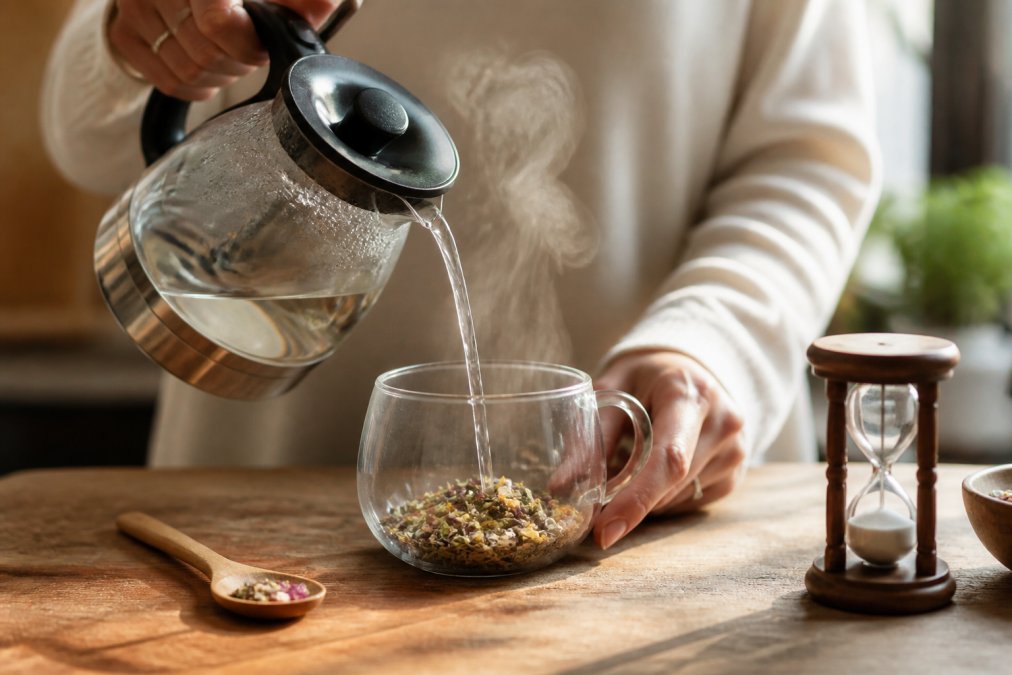
Step 1: Select and Measure Your Herbs
Use about one teaspoon of dried herbs per six to eight ounces of water for a balanced infusion.
When blending multiple herbs, measure each separately to prevent one from dominating the mixture.
Pre-blended herbal tea for sleep saves time. Beverly Blend offers carefully crafted blends like Apple Cider Rooibos, which combines naturally caffeine-free rooibos with warming spices.

Step 2: Heat Water to the Right Temperature
Most herbal tea for sleep brews best between 160 and 212 degrees Fahrenheit.
Let boiling water cool for three to five minutes before pouring to prevent scalding delicate flowers and releasing bitter compounds.
Pour the heated water over your measured herbs. Ensure all the plant material gets wet and fully submerged. Use enough water to fill your cup with room for the herbs to expand.
Step 3: Steep for Optimal Results
Most herbal tea for sleep needs five to ten minutes to fully infuse; longer steeping can create bitterness.
Set a timer to track your steeping time accurately. This prevents over-extraction, which creates an unpleasant taste. Check your herbs after five minutes if you're uncertain about timing.
The color of your tea indicates steeping progress. A light golden or amber hue usually signals adequate infusion. Darker tea means longer steeping, appropriate for some herbs but not others.
Step 4: Strain and Serve
Pour your tea through a fine mesh strainer into a clean mug. If using an infuser ball, simply lift it out and set it aside. Remove all herb particles for a smooth, pleasant drinking experience.
Serve your herbal tea for sleep while still warm. The warmth itself promotes relaxation and prepares your body for sleep. Some people enjoy adding a touch of honey or lemon, though this is entirely optional.
Drink your tea thirty minutes to one hour before bedtime. This timing allows the herbs to work while you're winding down for the night.
How Long to Steep Herbal Tea for Maximum Potency
Steeping time directly affects both flavor and the strength of your herbal tea for sleep. Getting this right transforms an average cup into something truly effective.
Steeping Times by Herb Type
Different herbs require different steeping durations. Flowers typically need less time than roots or barks.
Steeping guidelines for common sleep herbs:
- Chamomile flowers: 5-7 minutes
- Lavender flowers: 5-8 minutes
- Lemon balm leaves: 5-10 minutes
- Catnip leaves: 5-10 minutes
- Passionflower: 7-10 minutes
- Valerian root: 10-15 minutes
Delicate flowers like chamomile and lavender over-steep quickly. Stop at five to seven minutes to preserve their subtle flavor. Roots and tougher plant materials need the full time to release their compounds.
When combining herbs with different steeping times, use the longest time required. This ensures all components extract fully. The delicate flowers won't become bitter in the extra minutes.
Hot Brewing vs. Cold Brewing
Hot brewing is the traditional method for herbal tea for sleep. It's faster and more convenient for evening routines. Hot water extracts compounds more efficiently than cold water.
Cold brewing offers an alternative for those who prefer iced tea or have sensitive stomachs. Place your measured herbs in a jar with cold water and refrigerate overnight. Strain in the morning and gently warm before drinking in the evening.
Cold-brewed herbal tea for sleep takes eight to twelve hours but produces a smooth, less astringent infusion. Some people find cold-brewed tea gentler on digestion. The longer extraction time means you can use slightly less herb.
DIY Bedtime Tea Recipes You Can Make at Home
Creating your own herbal tea for sleep blends lets you customize flavor and effect. These three recipes balance taste with calming properties.
Classic Sleep Blend Recipe
This simple herbal tea for sleep combines the most popular relaxation herbs.
Ingredients:
- 2 tablespoons dried chamomile flowers
- 1 tablespoon dried lavender flowers
- 1 tablespoon dried lemon balm
- 1 teaspoon dried catnip
Mix all dried herbs in a glass jar. Store in a cool, dark place. Use one teaspoon of blend per six to eight ounces of water.
Spiced Relaxation Blend
This herbal tea for sleep adds warming spices that enhance both flavor and digestive comfort.
Ingredients:
- 2 tablespoons dried chamomile flowers
- 1 tablespoon dried passionflower
- ½ teaspoon dried cinnamon bark (crushed)
- ¼ teaspoon dried ginger root
- 3-4 whole cloves
Floral Calming Blend
This herbal tea for sleep emphasizes delicate floral flavors for those who prefer lighter tastes.
Ingredients:
- 2 tablespoons dried lavender flowers
- 1 tablespoon dried chamomile flowers
- 1 tablespoon dried rose petals
- ½ teaspoon dried lemon balm
Safety Precautions and Interactions with Sleep Medications
Most herbal tea for sleep is safe for general use, but certain situations require caution. Understanding potential interactions protects your health.
Building Herbal Tea Into Your Nighttime Routine
Making herbal tea for sleep a consistent habit amplifies its benefits. Routine creates psychological associations that support better sleep.
Common Mistakes to Avoid
Most people make at least one mistake when first brewing herbal tea for sleep. Learning from these errors saves frustration and improves results.
Frequently Asked Questions
What is the best herbal tea to help with sleep?
Chamomile, lavender, and valerian root are among the most effective herbs for sleep support. Chamomile has been used for centuries as a calming herb, while lavender offers sedative properties that promote relaxation. Valerian root is particularly potent for sleep quality. Many people find success blending two or three complementary herbs, such as chamomile with lavender, to create a more balanced flavor profile while enhancing the therapeutic benefits. The best choice depends on your taste preferences and how your body responds to different botanicals.
How long should you steep herbal tea for maximum potency?
Most herbal sleep teas should steep for 5-10 minutes for optimal potency. Delicate flowers like chamomile and lavender work well at 5-7 minutes, while stronger herbs like valerian root and passionflower benefit from closer to 10 minutes. Longer steeping times extract more of the sedative and nervine properties from the botanicals. If you prefer a milder flavor, start at 5 minutes and adjust upward based on your taste. Cold brewing overnight also works well and can reduce bitterness while maintaining therapeutic benefits.
Are there any safety concerns with herbal sleep teas and prescription sleep medications?
Yes, certain herbs can interact with prescription sleep medications and other drugs. Valerian root, passionflower, and magnolia bark may amplify the effects of sedatives, potentially causing excessive drowsiness or other complications. If you take any sleep medication, blood thinners, or other prescription drugs, consult your healthcare provider before using herbal sleep teas regularly. Pregnant or nursing individuals should also seek medical guidance, as some botanicals are not recommended during pregnancy. Most mild herbal teas like chamomile are safe for general use, but individual tolerance varies.
Can I make my own herbal sleep tea blends at home?
Absolutely. The simplest approach is to combine 2-3 dried herbs in equal parts (one teaspoon of each per cup of water). A classic blend might mix chamomile flowers, lavender buds, and lemon balm in a 1:1:1 ratio. Store your custom blend in an airtight container away from light and heat to preserve the botanicals' potency. For better flavor balance, start with a mild herb like chamomile as your base (40-50% of the blend), add a floral or calming herb like lavender (25-35%), and finish with a complementary herb like lemon balm or catnip (15-25%). Experiment with ratios to find what tastes best and helps you sleep most effectively.
Making herbal tea for sleep doesn't require special skills or expensive equipment. The right herbs, proper technique, and consistent routine transform a simple cup into a powerful sleep-support tool. Beverly Blend offers carefully crafted blends like Hibiscus Berry Tea that combine premium botanicals for evening enjoyment. Start with our classic recipes, adjust based on your preferences, and discover how herbal tea for sleep can become your most reliable bedtime ritual.