

How to Taste Coffee Like a Professional Barista
Table of Contents
- How to Taste Coffee Like a Professional Barista: The Step-by-Step Method
- What You'll Need Before You Start
- Step 1: Set Up a Repeatable Tasting Station
- Step 2: Smell the Dry Fragrance of Ground Coffee
- Step 3: Slurp to Spread Coffee Across Your Palate
- Step 4: Evaluate Acidity, Body, and Finish
- Coffee Cupping: The Professional Protocol Behind Every Tasting
- How to Describe Coffee Flavors Using the Coffee Flavor Wheel
- How to Describe Coffee Flavors Without Sounding Like a Snob
- Frequently Asked Questions
Last Updated: October 13, 2026
How to Taste Coffee Like a Professional Barista: The Step-by-Step Method
Learning how to taste coffee like a professional barista comes down to one habit: slowing down and paying attention.
At Beverly Blend, we roast every order fresh, so the flavors in the cup are still alive when the bag reaches your door.
This guide walks you through the same steps a barista uses, from setup to the first slurp to writing down what you taste.
What You'll Need Before You Start
You don't need a lab. You need a few simple tools and one rule: keep everything the same each time.
Here is what to gather:
- Fresh whole-bean coffee, ideally roasted within the last few weeks
- A burr grinder
- A digital scale that reads in grams
Freshness matters most: coffee starts losing its best flavors soon after roasting, so the roast date tells you more than the "best by" date.
Step 1: Set Up a Repeatable Tasting Station
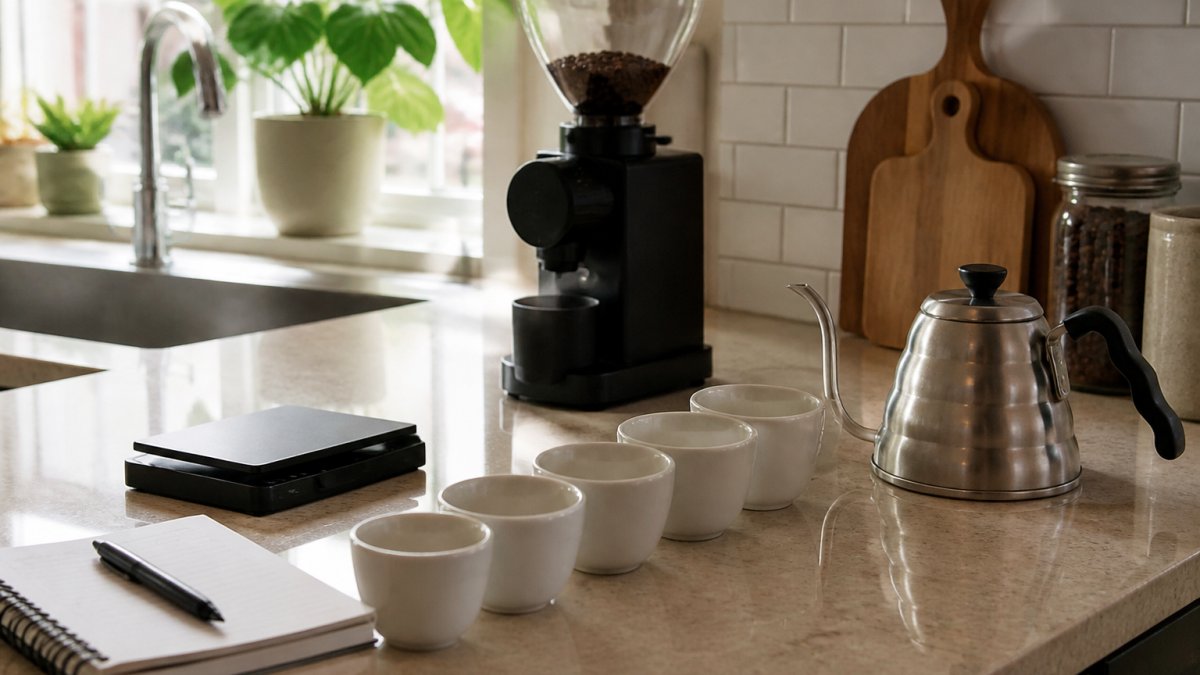
A repeatable setup means changing one thing at a time, the only way to learn what you actually like. Set up on a clean counter with good light, identical cups in a row, and your tools within reach, in a quiet room free of strong smells.
The Variables That Matter Most
Control these four things and your notes will mean something:
- Dose: weigh your coffee in grams, same amount every time
- Water: same temperature, same volume, same source
- Grind: same setting for the same brew method
Change only one variable per session. If you change grind and dose together, you won't know which one caused the difference.
Step 2: Smell the Dry Fragrance of Ground Coffee
Smell the grounds before you add water. This dry fragrance tells you a lot before you sip. Grind a small amount, bring the cup to your nose, and breathe in slowly. Ask yourself:
- Is it sweet, nutty, or chocolatey?
- Does it smell fruity or floral?
- Does anything smell sharp, stale, or like cardboard?
Those first impressions often show up again in the cup. If the dry grounds smell flat, the brew usually tastes flat too.
Try this with a few different coffees side by side. Our Single Origin Favorites Sample Pack gives you six small packs to compare, including a Colombia with dried orange and berry notes and an Ethiopia Natural with milk chocolate and caramel.


Step 3: Slurp to Spread Coffee Across Your Palate
The slurp is not rude, it's the whole point. Slurping pulls air across the coffee, spraying it over your tongue and the back of your throat, spreading it across more taste buds and pushing aroma into your nose.
Here is how to slurp:
- Let the coffee cool for a few minutes. Very hot coffee hides its flavors.
- Take a spoonful and hold it just above the cup.
- Breathe in as you sip, so the coffee sprays across your tongue.
- Hold it for a second, then swallow or spit.
- Wait, then notice what lingers.
Cooling coffee reveals more than hot coffee does: as it drops toward room temperature, sweetness and fruit notes come forward.
Step 4: Evaluate Acidity, Body, and Finish
Every cup can be judged on three things: acidity, body, and finish.
Acidity is not sourness. Good acidity is brightness, the lively tang that makes coffee taste fresh.
Body is the weight of the coffee in your mouth, its mouthfeel. A medium-dark roast like our Bali Blue, with dark chocolate and molasses notes, tends to feel heavier than a light roast.

Finish is the aftertaste: does it fade clean, or leave something sweet, bitter, or dry behind? A long, pleasant finish marks quality.
Coffee Cupping: The Professional Protocol Behind Every Tasting
Coffee cupping is the standardized method professionals use to compare coffees fairly, removing variables so the coffee itself is the only difference. Most home tasting borrows only part of the protocol.
What Cupping Standardizes
The Specialty Coffee Association publishes a widely used cupping protocol that fixes the variables most likely to skew a comparison:
- A set ratio of coffee to water (commonly about 8.25 grams of coffee per 150 milliliters of water)
- Water just off the boil, around 200°F
- A medium-coarse grind
When every sample is treated the same way, differences in the cup come from the coffee, not your brewing.
The Basic Cupping Routine
- Weigh the same dose of each coffee into identical cups
- Pour hot water over the grounds and let them steep
- Break the crust of grounds on top and smell the released aroma
A trained taster, sometimes called a Q grader, scores coffees on attributes like sweetness, acidity, body, flavor, and balance, often on a 6-to-10 scale. You don't need a certificate to borrow the method, the value is in the structure: same dose, same water, same steps, every time.
What's Informal and What's Standardized
Most home tasting is informal, comparing coffees for your own enjoyment. Cupping becomes standardized when you:
Single Origin Favorites Sample Pack →
- Use the same coffee-to-water ratio across every sample
- Use the same water temperature and grind
- Taste blind (you don't know which cup is which)
Skip the blind step or scoring and you're still tasting, just not cupping formally. Both are useful; knowing which you're doing keeps your notes honest.
When Scoring Is Actually Useful
Scoring isn't necessary for everyday drinking. It earns its keep when you want to:
- Decide between two similar coffees for a subscription or repeat purchase
- Track how a coffee changes across roast dates or brew methods
- Train your palate to notice small differences over time
A simple 1-to-5 score per attribute (acidity, body, sweetness, finish, overall) is enough for home use. Consistency matters more than the number, scoring the same way each time makes the numbers comparable.
Troubleshooting Unpleasant Flavors
When a cup tastes off, cupping helps narrow down causes, but can't identify one on its own. Common patterns:
- Sour or sharp: often under-extraction (grind too coarse, water too cool, brew time too short) or a very light roast
- Bitter or harsh: often over-extraction (grind too fine, water too hot, brew time too long) or a dark roast
- Flat or cardboard: often stale beans or old grounds
Tasting tells you what you perceive, not why. To find the cause, change one variable at a time and taste again.
That structure makes your own notes useful: cup two coffees side by side and you have a repeatable record to compare against next time.
How to Describe Coffee Flavors Using the Coffee Flavor Wheel
The coffee flavor wheel is a map of taste words, from broad categories inside to specific notes outside. It gives you vocabulary when your own words run out, but a wheel alone won't teach you to taste, calibrate your palate against real reference flavors first.
Start Broad, Then Get Specific
Work from the center of the wheel outward. Ask yourself:
- Is this fruity, nutty, sweet, or spicy?
- If fruity, is it citrus, berry, or dried fruit?
- If citrus, is it orange, lemon, or grapefruit?
Our Colombia is a good practice coffee. Its listed notes are dried orange, berry, and chocolate. Taste it and see if you can find all three, then check the wheel for words that fit.
Calibrate Your Palate With Reference Foods
The fastest way to learn a flavor word is to taste the actual food next to the coffee. Keep a small "reference shelf" of inexpensive items and smell or taste them before you sip:
- Citrus: a slice of lemon (sharp, bright), orange peel (sweet, aromatic), grapefruit (bitter edge)
- Berry: frozen raspberries or blueberries, thawed
- Dried fruit: raisins, dried apricots, dates
Smell the reference, then the coffee, and say the word out loud. Three or four pairings per session is enough before your nose fatigues.
A Short Practice Routine
You don't need a formal class. Try this once or twice a week:
- Pick two coffees with different listed notes (for example, a fruity Ethiopia and a chocolatey Bali Blue).
- Brew both with identical dose, water, grind, and time.
- Smell the dry grounds of each, then the brewed aroma.
- Slurp each and write down the first food it reminds you of, no editing.
- Check the wheel and pick one broad category and one specific note per cup.
- Compare your notes to the bag's listed notes. Note matches and misses without judging yourself.
Over a few weeks your vocabulary sharpens. The goal isn't to match the roaster's notes, it's to build a personal library of taste memories.
Why Your Notes May Differ From the Bag
Flavor perception varies with experience, smell ability, health (a cold dulls everything), and personal associations, and some people are genetically more sensitive to bitterness. If a bag note doesn't match what you taste, that's normal, your palate is yours, and the goal is to find what you enjoy.
How to describe coffee flavors well comes down to honesty, not poetry. "It tastes like orange peel" beats "it has a complex citrus profile" every time, and with a calibrated palate, you'll know which one is true.
How to Describe Coffee Flavors Without Sounding Like a Snob
Plain language wins. If a coffee reminds you of toast with honey, say that. Real comparisons land better than fancy ones.
A few habits keep your tasting notes useful:
- Use foods you actually eat as reference points
- Write notes while you taste, not after
- Record the coffee's name, roast date, and brew method
Here is a simple worksheet you can copy into any notebook:
| Field | What to Record |
|---|---|
| Coffee and roast date | Name, origin, date on bag |
| Brew method and dose | Method, grams of coffee, grams of water |
| Dry fragrance | First smell of the grounds |
| Aroma | Smell of the brewed cup |
| Flavor notes | 2-3 words from the flavor wheel |
| Acidity | Low, medium, or high |
| Body | Thin, medium, or full |
| Finish | Short, medium, or long |
| Overall score | 1-5 |
Tasting coffee well is a skill you build, not a talent you're born with. The hard part is keeping your setup consistent long enough to notice real differences between cups.
Beverly Blend roasts to order so every bag arrives with its aroma intact. Start with our Ethiopia Natural for fruity, floral notes, or try the Single Origin Favorites Sample Pack to compare six origins side by side.
Frequently Asked Questions
How do you taste coffee like a professional barista?
Start by smelling the dry grounds, then the brewed aroma. Take a loud slurp to spread coffee across your palate and coat your tongue evenly. Hold it for a few seconds, swallow, and note the finish. Compare two coffees side by side using the same grind, water temperature, and ratio so the only variable is the bean itself. Repeat with a consistent setup and record what you taste each time.
What is coffee cupping and do I need special equipment?
Coffee cupping is the standardized method professional tasters use to evaluate coffee quality. You do not need lab equipment. A kitchen scale, a burr grinder, identical cups, and a kettle will get you close. Weigh 8.25 grams of coarsely ground coffee per 150 milliliters of water just off boil, steep for four minutes, break the crust, skim, and slurp. The goal is consistency so you can compare beans fairly.
How do you use a coffee flavor wheel to describe coffee flavors?
The coffee flavor wheel organizes taste descriptors from broad categories like fruity or nutty down to specific notes like blueberry or hazelnut. Start at the center with the general impression, then work outward to narrow it. If a coffee tastes fruity, ask whether it leans citrus, berry, or dried fruit. The wheel gives you vocabulary when your first instinct is just 'it tastes good.'
What should I look for when tasting coffee?
Focus on four things: sweetness, acidity, body, and finish. Sweetness tells you how ripe and well-roasted the beans are. Acidity shows up as brightness, not sourness, when it is balanced. Body is the weight and texture on your tongue, from thin to syrupy. Finish is what lingers after you swallow. Jot down one word for each and compare across cups to build your palate.