

Single Origin Tea vs Blended Tea: What to Choose
Table of Contents
- Single Origin Tea vs Blended Tea: The Core Difference
- What Is Terroir in Tea and Why It Matters
- Consistency vs. Uniqueness: What Defines Single Origin Tea
- The Art of Tea Blending: Why Blends Exist
- How to Brew Artisan Tea for Best Flavor
- Best Tea Storage Practices for Freshness
- Which Should You Pick? A Practical Guide
- Conclusion
- Frequently Asked Questions
Last Updated: September 4, 2026
Single Origin Tea vs Blended Tea: The Core Difference
The debate between single origin tea vs blended tea is one every tea drinker eventually faces, but the choice is less about quality and more about what you want from your cup. A single origin tea comes from one specific tea garden, estate, or region, while a blended tea combines leaves from multiple origins to create a consistent, repeatable flavor profile.
Neither option is inherently superior. A single origin tea offers a snapshot of a particular place and harvest, much like a vintage wine. A blended tea is a crafted product where the blender acts as a conductor, bringing together different leaves to hit a target profile every single time.
Below, we break down how terroir shapes taste, why consistency matters for your morning ritual, and how to brew and store each type.
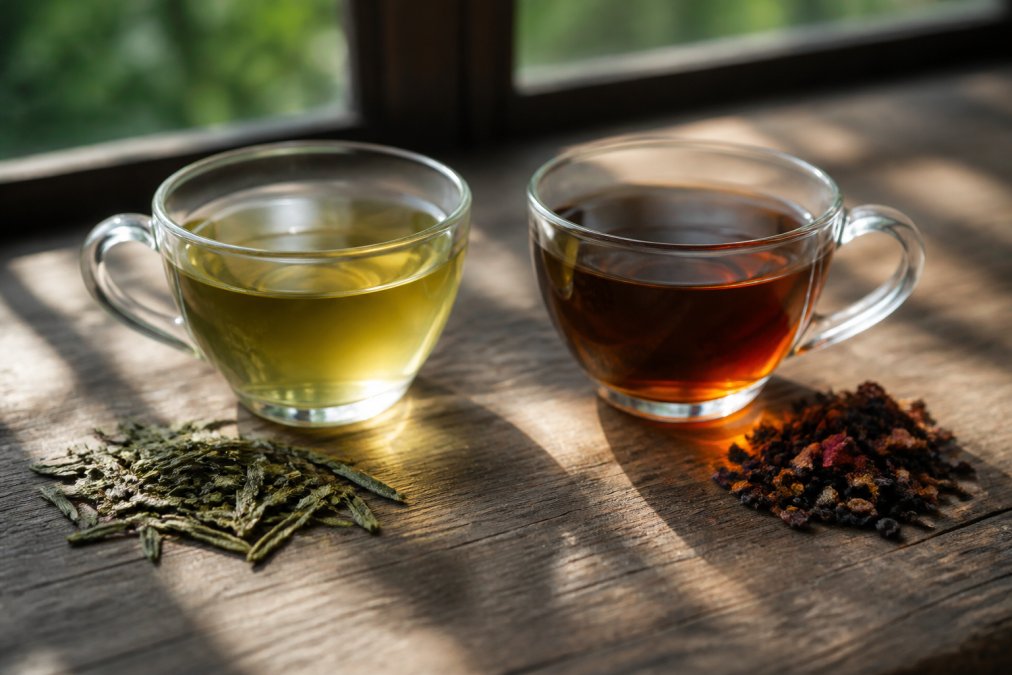
What Is Terroir in Tea and Why It Matters
Terroir in tea is the combination of soil, climate, altitude, and farming practices that gives leaves from a specific tea garden their distinctive character. It is the reason a Darjeeling first flush tastes of muscatel grapes while an Assam from a lower elevation delivers a malty, brisk cup.
The impact of terroir is visible in the leaf itself. A high-grown tea from a misty micro-climate often produces smaller, more tender leaves with a complex flavor profile, while teas from warmer, lower regions grow faster and develop a bolder, more straightforward taste.
For the drinker, terroir creates seasonal variation. A single origin tea from one harvest will differ slightly from the same tea garden's next picking.
Consistency vs. Uniqueness: What Defines Single Origin Tea
A single origin tea is defined by its unblended purity, offering a direct expression of one estate's terroir, cultivar, and processing methods. You get an authentic, pure tea with a flavor profile that tells a story, but that profile can shift between harvests.
A tea garden's output changes with weather patterns, and a drought or an unusually rainy season alters the flavor notes, aroma, and mouthfeel of the finished leaf.
Single origin teas often have a shorter flavor life. Because they are unblended, there is no buffer to smooth out astringency or mask a slightly vegetal note from an early harvest.
| Category | Flavor Profile | Consistency | Best For |
|---|---|---|---|
| Single Origin Tea | Complex, terroir-driven, seasonal variation | Varies by harvest | Tasting, collecting, slow brewing |
| Blended Tea | Balanced, standardized, predictable | High, batch after batch | Daily ritual, milk and sugar, iced tea |
| Flavored Blend | Base tea plus added essence or botanicals | High | Creative brewing, cold infusions |
The Art of Tea Blending: Why Blends Exist
Blended teas exist because most drinkers want a cup that tastes the same today as it did last month, and blending is the most reliable way to deliver that. A master blender sources leaves from multiple regions and combines them so the strengths of one origin offset the weaknesses of another.
A classic breakfast tea might pair a malty Assam with a bright Ceylon and a brisk Kenyan tea to create a rustic, sweet cup that stands up to milk and sugar.
The role of additives also separates blends from pure teas. Some blends incorporate essential oils, like bergamot in Earl Grey, or dried flowers and botanicals for visual appeal and aroma.

For a dependable daily cup, our English Breakfast brings together African and Indian teas into a rustic, sweet blend that handles milk and sugar effortlessly. If you prefer something floral and aromatic, the Earl Grey pairs Ceylon black tea with bergamot essential oil and cornflowers for a timeless, fragrant brew.

How to Brew Artisan Tea for Best Flavor
Most brewing guides treat all tea the same, but the structural differences between a single origin and a blend demand distinct approaches. The key variables, water temperature, steep time, and leaf ratio, shift based on what you're brewing.
Temperature and Steep Time: A Comparative Guide
Single origin teas, especially those from high-altitude gardens, are often more delicate and nuanced. Use cooler water (170°F-185°F) for unblended green, white, and oolong teas, and steep for shorter durations (1-3 minutes) to avoid extracting bitter tannins. Blended black teas, like a classic English Breakfast, are designed for a robust cup. They typically contain heartier leaves from regions like Assam or Ceylon that can withstand a full rolling boil (212°F) and a longer steep of 3-5 minutes.
The Leaf-to-Water Ratio and Multiple Steepings
A standard starting point is 2.5 grams of leaf per 8-ounce cup, but the categories diverge here. Single origin teas are often less processed and more intact, so they have more room to expand and release flavor over multiple infusions. A high-quality single origin oolong can be re-steeped 4-6 times (PubMed). Blends are frequently cut into smaller pieces for fast, consistent extraction, so they typically give their best flavor in the first one or two steepings.
A Sensory Evaluation Guide for Brewing
To truly compare the two, you need a structured way to taste. Use this simple framework:
- Smell the Dry Leaf: Single origin teas often have a more complex, terroir-driven aroma, think of a high-mountain oolong with notes of orchid and cream. Blends will have a more integrated, sometimes bolder scent, with the aroma of the base tea and any added botanicals or oils melding together.
- Taste the First Sip: Focus on the attack. A single origin tea should present a clear, distinct flavor that tells you exactly where it's from. A blend should taste balanced and smooth, with no single origin overpowering the others.
- Evaluate the Finish: The aftertaste is a critical differentiator. A fine single origin tea will have a long, lingering finish, often with a sweet or cooling sensation (hui gan in Chinese tea culture). A blend's finish is typically shorter and cleaner, designed to be refreshing without leaving a complex residue on the palate (sciencedirect.com).
- Observe the Wet Leaves: After steeping, examine the leaves. Single origin teas will often have more whole, intact leaves that show their processing. Blends, especially those designed for tea bags, will have smaller, more fragmented pieces (fannings or dust).
Water Quality and Vessel Choice
Water is the primary solvent for flavor. For single origin teas, purity is paramount; any off-notes from chlorine or heavy minerals will mask the tea's delicate terroir, so filtered or spring water is non-negotiable. A thin-walled porcelain gaiwan is ideal for single origin teas as it cools quickly and prevents over-steeping. A thicker, pre-heated ceramic teapot is better for blends, as it maintains the consistent, high temperature needed for strong extraction.
Best Tea Storage Practices for Freshness
Best tea storage practices center on protecting leaves from the four enemies of freshness: light, heat, air, and moisture. Tea leaves are hygroscopic, meaning they absorb ambient moisture and odors quickly (peer-reviewed research). An airtight, opaque container in a cool, dark cupboard is the gold standard.
Single origin teas are more vulnerable to storage mistakes than blends. Their unblended character means any off-note from poor storage becomes immediately apparent in the cup. Blends, particularly those with added oils or botanicals, can lose their top notes faster.
Shelf life differs between the two categories. Most loose leaf teas remain drinkable for 6 to 12 months when stored properly, but a single origin oolong or green tea is best consumed within 6 months of its harvest to capture its peak vibrancy. Roasted teas like Hojicha hold their toasted cereal notes longer, making them more forgiving for occasional drinkers.
Which Should You Pick? A Practical Guide
Choosing between a single origin and a blend isn't about finding the 'better' tea, it's about matching the tea to your specific needs, palate, and lifestyle.
1. Your Daily Ritual vs. Your Curiosity
Ask yourself what role tea plays in your day. If you're reaching for a cup to kickstart your morning or to have a consistent, comforting companion during work, a blend is almost always the right choice. Its engineered consistency ensures your 7 AM cup tastes exactly like it did yesterday.
If you view tea as an experience to be savored and studied, a single origin is your gateway. These teas reward attention, they invite you to sit down, focus on the aroma, and notice how the flavor evolves from one sip to the next.
2. A Sensory Evaluation Guide for Selection
When you're standing in front of two options, use your senses to guide you.
- For Single Origin: Look for a clear, distinct aroma that speaks of a specific place. It might be the muscatel notes of a Darjeeling, the vegetal, ocean-like scent of a Japanese Sencha, or the honeyed sweetness of a Taiwanese oolong. The dry leaf should look relatively uniform in size and shape, indicating it was processed in one batch. When you taste it, you should be able to identify a primary flavor note that is characteristic of its terroir, not a muddle of different things.
- For Blends: The aroma should be integrated and harmonious. You might smell the bright, citrusy top note of bergamot in an Earl Grey, but it should be balanced by the malty base of the black tea. The leaf size may be more varied, which is normal. When you taste it, you're looking for balance and consistency, no single component should dominate. The goal is a smooth, satisfying cup that doesn't challenge you but comforts you.
3. The Additives Test: Blended vs. Flavored
A crucial distinction often missed is the difference between a blend and a flavored tea. A true blend, like a traditional English Breakfast, is a mixture of only tea leaves from different origins. A flavored tea, like a typical Earl Grey or a Jasmine tea, is a base tea (which may itself be a blend) infused with natural or artificial flavorings, essential oils, or dried flowers.

4. Practical Scenarios to Clarify Your Choice
- Scenario A: The Busy Professional. You need a reliable, strong cup to get through the morning. You often drink it with milk. Best Choice: A robust blend like an English Breakfast or a Scottish Breakfast. Its consistency and strength are perfect for this.
- Scenario B: The Weekend Explorer. You have time on the weekend to sit and focus on your brew. You want to try something new and complex. Best Choice: A single origin oolong or a high-mountain green tea. This is your chance to explore terroir and multiple steepings.
- Scenario C: The Iced Tea Lover. You want a refreshing pitcher of iced tea that won't get bitter when cold. Best Choice: A blend, particularly one with a bright, citrusy character or a robust black base. Blends are designed to maintain their flavor profile even when diluted with ice. A delicate single origin green tea will often turn bitter and astringent when chilled.
Conclusion
The choice between single origin tea vs blended tea ultimately reflects your drinking habits and what you value in a cup. Single origin teas deliver a unique, terroir-driven experience with complexity that changes across harvests, while blends offer the consistency and balance that make a daily ritual effortless.
At Beverly Blend, we source both carefully, and we roast and pack to order so every tin arrives with maximum flavor and aroma. Whether you are exploring the nuances of a pure tea or settling into a dependable breakfast blend, our simple ordering process and fast, reliable delivery bring the experience straight to your door. Get started with Beverly Blend and find the cup that fits your day.
Frequently Asked Questions
Does single origin tea always taste better than blends?
Not necessarily. Single origin tea offers a distinct flavor profile tied to one estate and harvest, which many enthusiasts prize for its uniqueness. Blends aim for a consistent, balanced cup that tastes the same every time you buy it. Better depends on what you value: a one-of-a-kind sensory experience or a reliable daily brew. Many premium blends, like an English Breakfast with African and Indian leaves, deliver complexity that rivals any single origin tea.
Why are tea leaves blended together?
Tea leaves are blended to achieve a consistent flavor profile that stays the same batch after batch. Harvests vary with weather and season, so blenders combine leaves from different gardens to hit a target taste. Blending also lets producers create new flavor experiences, like pairing green tea with jasmine blossoms or adding bergamot oil to Ceylon leaves for an Earl Grey. The goal is reliability and a balanced cup.
What should I look for when buying artisan tea?
Check the harvest date and the origin details. Artisan tea should name the estate or region, not just the country. Look at the leaf grade and whether the leaves are whole or broken. For blends, the description should tell you what is inside, like our Earl Grey with Ceylon OP, bergamot oil, and cornflowers. Buy in small amounts, store it in an airtight container, and brew within a few months of purchase.
Is single origin tea better for multiple steepings?
Often yes, but it depends on the leaf. Whole-leaf single origin teas, especially green and oolong varieties, hold up well across multiple steepings because the leaves unfurl slowly and release flavor gradually. Our Jasmine blend, made with hand-picked green tea, is good for several infusions. Finely broken leaves, common in many blends, extract quickly and lose flavor after the first steep.
This article was written using GrandRanker