

Art of Tea vs Fresh Roasted Coffee: A Complete Comparison
Table of Contents
- Key Differences: Tea vs Fresh Roasted Coffee at a Glance
- Flavor Profiles and Sensory Experience
- Caffeine Content in Tea vs Coffee: What the Numbers Show
- Processing Methods: From Leaf to Cup
- Best Brewing Methods for Artisan Tea and Fresh Roasted Coffee
- How to Store Fresh Roasted Coffee Beans for Maximum Freshness
- Health Benefits and Antioxidants
- Which Should You Choose?
Last Updated: August 21, 2026
Key Differences: Tea vs Fresh Roasted Coffee at a Glance
The choice between art of tea vs fresh roasted coffee comes down to flavor, caffeine, and ritual. Both reward attention to detail, but they're fundamentally different experiences. Fresh roasted coffee delivers immediate caffeine intensity and bold, complex flavors that shift with roast levels and origin. Tea offers nuanced sensory notes, sustained energy without the crash, and a meditative brewing ritual.
| Attribute | Fresh Roasted Coffee | Artisan Tea |
|---|---|---|
| Caffeine per serving | 95-200 mg | 25-50 mg |
| Flavor complexity | Bold, intense, origin-driven | Delicate, layered, subtle |
| Brewing time | 4-6 minutes | 3-5 minutes |
| Best for | Morning energy, intensity | Afternoon ritual, sustained focus |
| Storage life | 2-4 weeks (peak freshness) | 6-12 months |
| Brewing temperature | 195-205°F | 160-210°F (varies by type) |
| Oxidation level | Roasting process | Leaf processing determines this |
Fresh roasted coffee's flavor comes from the Maillard reaction during roasting, where heat transforms sugars and amino acids into hundreds of aromatic compounds. Tea's complexity comes from leaf oxidation during processing, which creates tannins and other flavor molecules. One is about heat; the other is about time and air exposure.
Flavor Profiles and Sensory Experience
Fresh roasted coffee delivers bold, immediate flavors. A medium roast from Brazil hits your palate with cocoa notes, nutty sweetness, and a clean finish. Dark roasts lean into bitterness and smokiness. Light roasts highlight the bean's origin character: citrus, floral, or fruity notes.
Tea moves more subtly. A jasmine green tea unfolds across multiple steepings, revealing fruity florals on the first infusion, deeper vegetal notes on the second, and lingering sweetness on the third. Matcha offers umami richness and a lingering sweetness that builds on your palate.

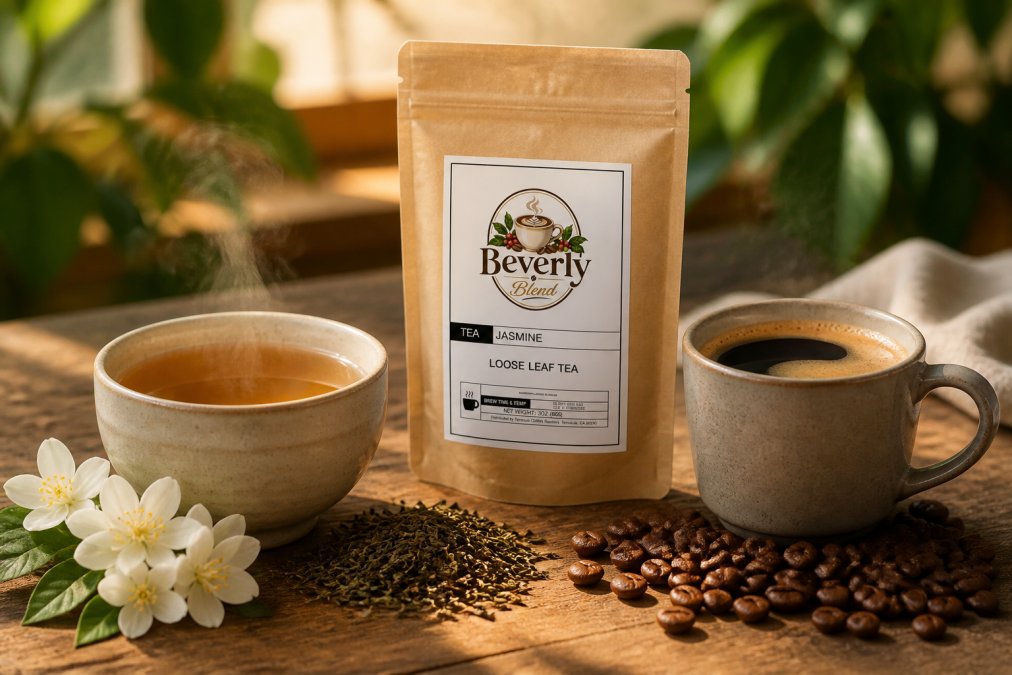
Fresh roasted coffee carries weight and coats your mouth, leaving residual flavors that linger. Tea is typically lighter and more delicate, though some black teas and pu-erh can develop significant body.
Tannins play a crucial role in both. Coffee's tannins contribute to bitterness and astringency. Tea's tannins are intentional design elements; proper steeping balances them to create briskness without harshness. Over-steep, and tannins dominate, making the tea unpleasantly astringent.
Fresh roasted coffee peaks within 2-4 weeks of roasting. Artisan tea, stored properly in an airtight container away from light and heat, maintains quality for 6-12 months. Some teas, like pu-erh, actually improve with age. Beverly Blend roasts to order and ships within days, ensuring peak freshness arrives at your door.
Caffeine Content in Tea vs Coffee: What the Numbers Show
A standard 8-ounce cup of fresh roasted coffee contains roughly 95 to 200 milligrams of caffeine, depending on roast level and brewing method (the FDA). Darker roasts contain slightly less caffeine than light roasts; the roasting process breaks down some caffeine molecules. Brewing method matters more: espresso concentrates caffeine into a small volume, while a French press extracts more total caffeine into a larger cup.
Tea's caffeine content is substantially lower. A standard 8-ounce cup of black tea contains 25 to 50 milligrams of caffeine (the FDA). Green tea runs similarly. Matcha is an outlier; a traditional serving delivers 70 milligrams because you're consuming the whole leaf powder. Herbal teas contain zero caffeine.
Coffee gives you a sharp, immediate caffeine spike, useful for morning grogginess. Tea delivers gentler, more sustained energy. Tea contains L-theanine, an amino acid that modulates caffeine absorption and creates a calm-alert state rather than jittery intensity.
For caffeine sensitivity, tea's lower dose prevents the crash that can follow coffee. If you need serious energy mobilization, coffee's higher caffeine content is the more direct tool.
Brewing time shifts these numbers. A longer steep time increases caffeine extraction in both beverages. If you're managing caffeine intake precisely, brewing time is your control lever.
Processing Methods: From Leaf to Cup
Fresh roasted coffee and artisan tea follow completely different processing paths.
Coffee starts as a cherry fruit containing two seeds, the beans. After harvesting and removing the cherry through wet or dry milling, the beans are dried, milled, and sorted. At this point, the green coffee, still pale and unroasted, is ready for export.
Roasting creates coffee's flavor. Heat transforms the green bean's chemistry. At around 350°F, the Maillard reaction begins, producing hundreds of aromatic compounds (peer-reviewed research). Light roasts (around 380°F) preserve origin flavors. Medium roasts (around 410°F) balance origin and roasting flavors. Dark roasts (around 430°F+) emphasize roasting flavors: chocolate, nuts, smoke. Roast too light, and you get sour, grassy notes. Roast too dark, and you lose origin character under char.
Tea processing works through leaf oxidation rather than heat. Black teas are fully oxidized, creating dark color and strong, malty flavors. Green teas are minimally oxidized; leaves are heated immediately after harvest to prevent oxidation, preserving green color and delicate, vegetal notes. Oolong teas fall in between, partially oxidized, creating complex flavor profiles. Matcha is shade-grown tea leaves stone-ground into powder, so you consume the whole leaf.
Post-harvest processing also matters. Leaves are rolled, twisted, or shaped; these manipulations affect how water interacts with the leaf during brewing and influence extraction. A tightly rolled oolong unfurls slowly in hot water, releasing flavor gradually.
Best Brewing Methods for Artisan Tea and Fresh Roasted Coffee
How you brew determines whether you get a transcendent cup or a mediocre one.
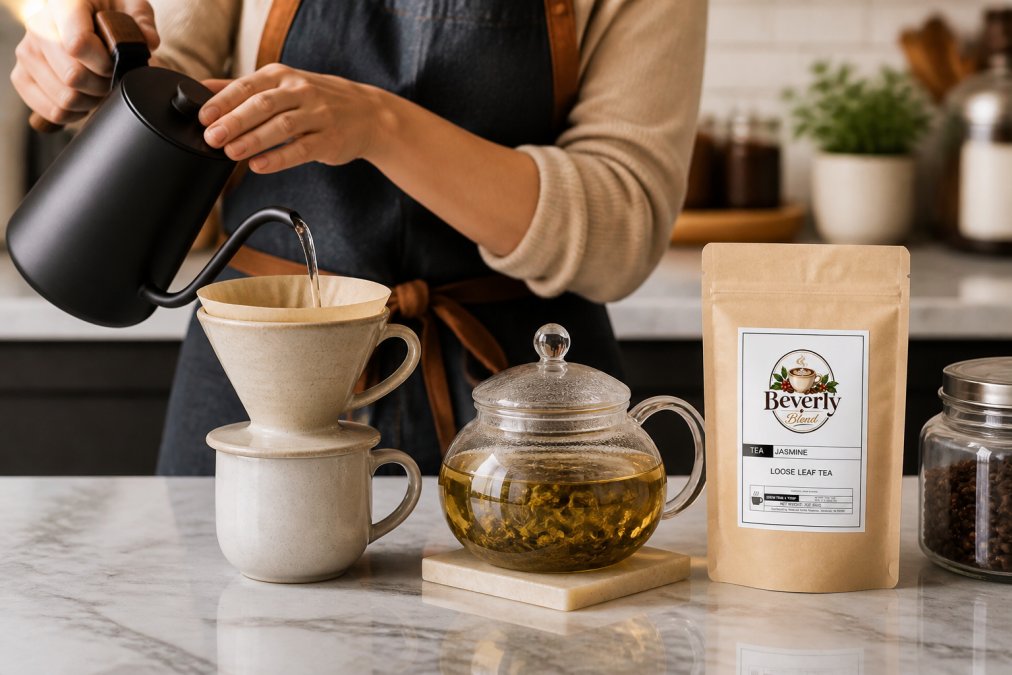
Fresh roasted coffee brewing depends on grind size, water temperature, brew ratio, and contact time. A standard pour-over uses medium-fine grounds, water at 195-205°F, a 1:16 coffee-to-water ratio by weight, and a 4-6 minute brew time. Too fine a grind or too hot water extracts bitterness. Too coarse a grind or too cool water under-extracts, leaving the cup sour.
The brew ratio is the most controllable variable. A proper ratio is roughly 1 ounce of coffee per 16 ounces of water. This produces a balanced cup. Adjust upward for stronger coffee, downward for lighter.
Water quality matters. Filtered water is better than tap water. Water that's too soft under-extracts; water that's too hard over-extracts.
Artisan tea brewing is simpler mechanically but equally precise. The variables are leaf amount, water temperature, and steeping time. Most black teas steep at 200-212°F for 3-5 minutes. Green teas steep at 160-180°F for 2-3 minutes; hotter water destroys delicate flavors. Oolong teas vary widely: some steep at 195-212°F for 3-7 minutes. Matcha is whisked into hot water (160-180°F) rather than steeped.
Steeping time is the primary control. A 2-minute steep extracts less caffeine and flavor; a 5-minute steep extracts more. Over-steeping increases tannin extraction, making the tea astringent. The sweet spot is usually 3-4 minutes for most black teas.
Water temperature is critical for green tea. Water that's too hot will scald the delicate leaves, producing a bitter, grassy cup. If you don't have a thermometer, let boiling water cool for 3-5 minutes before pouring.
Many artisan teas reward multiple infusions. A quality jasmine or oolong can be steeped 3-5 times, with each infusion revealing different flavor layers. This encourages you to slow down and pay attention.
How to Store Fresh Roasted Coffee Beans for Maximum Freshness
Fresh roasted coffee peaks within 2-4 weeks of roasting. Proper storage extends this window and preserves quality.
The enemies of coffee freshness are air, light, heat, and moisture. Store beans in an airtight container away from direct sunlight and heat. A dark, opaque container is better than a clear one. Room temperature (around 70°F) is ideal; avoid the freezer. Freezing introduces moisture when beans thaw, and repeated temperature cycling damages the bean structure.
Whole beans stay fresher longer than ground coffee. Grinding dramatically increases surface area exposed to air, accelerating oxidation. Grind only what you'll use within a few hours.
Freshly roasted beans release carbon dioxide for 24-48 hours after roasting. Don't seal beans immediately after roasting; let them degas first in a breathable container.
Beverly Blend roasts to order and ships within days, so your beans arrive during the optimal freshness window. This is a significant advantage over pre-roasted coffee from a grocery store, where beans may have been sitting for weeks or months.
Health Benefits and Antioxidants
Both fresh roasted coffee and artisan tea deliver antioxidants, though the compounds differ.
Coffee contains chlorogenic acid, a powerful antioxidant that makes up about 6-10% of the bean's weight. Light roasts retain more than dark roasts. Coffee also contains polyphenols associated with reduced inflammation and improved metabolic function.
Tea's antioxidants come primarily from catechins (in green and white teas) and theaflavins (in black teas). These compounds form during oxidation. All true teas contain beneficial compounds.
Coffee delivers higher antioxidant concentration per cup, but tea's antioxidants are absorbed differently. Some research suggests tea's L-theanine enhances antioxidant absorption.
Moderate caffeine consumption (up to 400 milligrams daily for most adults) is generally considered safe and may offer cognitive benefits. Tea's lower caffeine and L-theanine create a gentler stimulant effect without jittery intensity.
Coffee is acidic (pH around 5), which can irritate sensitive stomachs or contribute to tooth enamel erosion. Tea is less acidic, making it gentler for people with acid reflux or dental sensitivity.
Which Should You Choose?
The choice between art of tea vs fresh roasted coffee depends on what you want from your daily beverage ritual.
Choose fresh roasted coffee if you need serious morning energy, value bold, complex flavors, and enjoy the ritual of grinding and brewing. Coffee's higher caffeine content and intense flavor profile suit people who want intensity and immediate effects. Each origin tastes distinctly different, offering endless exploration for enthusiasts.
Choose artisan tea if you prefer sustained energy without crashes, value meditative ritual, or are sensitive to high caffeine doses. Tea's lower caffeine and L-theanine combination create calm focus rather than jittery intensity. If you work from home and want something to sip throughout the afternoon, tea won't cause the energy crash that afternoon coffee often triggers. Multiple steepings mean one serving of leaves creates several cups, making it economical.
For many people, the answer is both. Morning coffee for energy and intensity, afternoon tea for sustained focus and ritual.
Quality matters enormously for both. Cheap, stale coffee tastes bitter and flat. Cheap tea tastes like dusty leaf water. Investing in fresh roasted coffee or artisan tea transforms the experience. Beverly Blend's approach, roasting to order and shipping within days, ensures you're getting peak freshness.
The real answer: try both at their best. Brew each properly. Then decide which ritual fits your life better. You might discover that the choice isn't either-or, it's about when, and why, you're reaching for each one.
The decision between fresh roasted coffee and artisan tea ultimately reflects your daily priorities. If you're seeking the bold, energizing start that only quality coffee delivers, Beverly Blend's carefully sourced, roasted-to-order beans arrive at peak freshness with maximum flavor and aroma. Our House Blend ($19.99) and single-origin Brazil Santos ($19.99) are crafted specifically for drinkers who refuse to compromise on quality. For those who prefer tea's meditative ritual and sustained energy, our Jasmine ($20.99) and English Breakfast ($20.99) blends offer the same commitment to freshness and artisanal care. Get started with Beverly Blend and discover why thousands of home-based beverage connoisseurs trust us to elevate their daily rituals.

Frequently Asked Questions
How does caffeine content compare between tea and coffee?
A typical 8-ounce cup of brewed coffee contains 95-200 mg of caffeine, while the same serving of black tea has 25-50 mg. Green tea and white tea are lower still, with 15-30 mg per cup. However, the caffeine in tea is absorbed more slowly due to the presence of L-theanine, an amino acid that promotes calm focus. This means tea delivers a gentler, more sustained energy boost compared to coffee's faster spike.
Is fresh roasted coffee better than store-bought?
Fresh roasted coffee offers superior flavor complexity and aroma because the beans haven't degraded over time. Store-bought coffee may have been roasted weeks or months ago, allowing aromatic compounds to dissipate and flavors to flatten. Beans roasted to order, like Beverly Blend's offerings, reach your door at peak freshness, typically within days of roasting. This freshness window is critical: the first two weeks after roasting deliver the most vibrant tasting notes and body.
What are the main flavor differences between artisan tea and fresh roasted coffee?
Coffee delivers bold, complex flavors shaped by roast level, from bright, fruity notes in light roasts to deep, chocolatey undertones in dark roasts. Tannins and chlorogenic acid contribute to its body and subtle bitterness. Artisan tea offers more delicate, nuanced profiles: green teas are grassy and floral, black teas are robust with malty sweetness, and specialty blends like jasmine introduce layered aromatic notes. Tea's flavor develops across multiple steepings, while coffee's profile remains consistent in a single brew.
Why does artisan tea cost more than grocery store tea?
Artisan tea commands higher prices because of careful sourcing, hand-picking, and small-batch processing. Premium teas like Beverly Blend's Jasmine blend freshly plucked jasmine blossoms with hand-picked green tea at the optimal moment, creating complexity that mass-produced tea cannot match. Single-origin beans and specialty varieties also reflect higher labor costs and stricter quality control. The result is a more refined flavor profile and better multiple-steeping potential.
How should I store fresh roasted coffee beans to keep them fresh?
Store beans in an airtight container away from light, heat, and moisture at room temperature. Avoid the refrigerator or freezer, as temperature fluctuations cause condensation that degrades flavor. Keep beans in a cool, dark cupboard and use them within 2-4 weeks of the roast date for optimal freshness. Whole beans stay fresh longer than ground coffee; grind just before brewing to preserve aromatic compounds and tasting notes.
This article was written using GrandRanker