

How to Store Artisan Coffee Beans: A Complete Guide
Table of Contents
- Why Proper Storage Matters for Artisan Coffee
- The Four Enemies of Coffee Freshness
- Best Coffee Storage Containers for Long-Term Freshness
- Step-by-Step: How to Store Artisan Coffee Beans Correctly
- Coffee Bean Shelf Life: How Long Your Beans Stay Fresh
- How to Tell if Coffee Beans Are Fresh
- Freezing Coffee Beans: When and How to Do It Right
- Common Storage Mistakes to Avoid
Last Updated: August 17, 2026
Why Proper Storage Matters for Artisan Coffee
The difference between exceptional artisan coffee and stale beans comes down to storage. When you invest in premium, freshly roasted beans from a specialty roaster like Beverly Blend, proper storage determines whether you experience full flavor depth or a flat, disappointing cup. From the moment roasting stops, beans begin degrading. The roasting process creates volatile compounds and aromatic oils that give artisan coffee its distinctive character, but these are fragile and degrade quickly when exposed to wrong conditions. Beverly Blend roasts coffee to order to maximize freshness, but once beans arrive at your door, the responsibility shifts to you.
The Four Enemies of Coffee Freshness
Coffee freshness deteriorates when beans encounter light, heat, moisture, or oxygen.
Light causes oxidation and breaks down aromatic compounds. Even indirect sunlight accelerates staling, which is why specialty roasters use opaque bags.
Heat accelerates staling by speeding up chemical reactions inside the bean. Warm environments cause volatile compounds to escape faster. Avoid storing beans above your stove or in direct sunlight.
Moisture creates conditions for mold and degrades bean structure. Coffee is hygroscopic and absorbs moisture from the air. High-humidity environments like bathrooms and kitchens near sinks are problematic.
Oxygen drives oxidation, the primary staling mechanism. When oxygen contacts the oils in roasted beans, it breaks them down into stale, bitter compounds. One-way degassing valves on coffee bags let carbon dioxide escape while blocking oxygen from entering.
The goal is to minimize exposure to all four factors simultaneously. A container that blocks light and oxygen while sitting in a cool, dry location will preserve beans far longer than any single approach.
Best Coffee Storage Containers for Long-Term Freshness
Airtight glass containers with rubber seals are the gold standard. Glass doesn't absorb odors or oils, and a proper rubber gasket creates an airtight seal. Look for containers with locking mechanisms that compress the seal with each closure.
Vacuum-sealed containers remove oxygen mechanically and work well if you're buying in bulk, though they require resealing every time you remove beans.
Stainless steel containers with airtight seals are durable and block light completely. They're less prone to breaking than glass but require opening to check supply.
The original bag (if it has a one-way valve) works for short-term storage. Most specialty roasters package beans in bags with one-way degassing valves. Fold the top down and use a clip to minimize air exposure. This works fine if you're drinking through the bag within 2-3 weeks.
Avoid clear containers, mason jars without proper seals, and paper bags. Clear containers expose beans to constant light. Mason jars don't seal as tightly as containers designed for coffee storage. Paper bags offer zero protection.
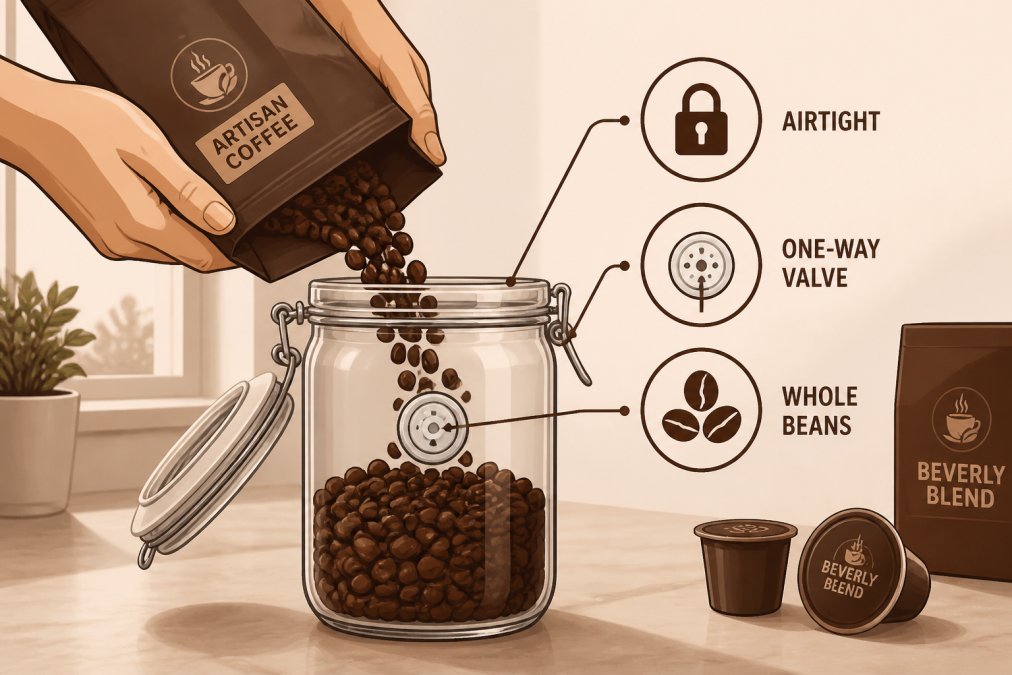
Spend the money on a quality container. It's the single most important investment in preserving your beans.
Step-by-Step: How to Store Artisan Coffee Beans Correctly
Step 1: Choose Your Storage Method
Decide whether you're storing beans short-term (drinking within 2-3 weeks) or long-term (storing for a month or more). For short-term storage, keep beans in the original bag with the one-way valve, fold the top down, and clip it shut. For long-term storage, transfer beans to an airtight container soon after arrival.
Step 2: Prepare Your Container
Ensure your container is completely clean and dry. Wash with warm water, dry thoroughly, and let air-dry completely before filling. Fill the container to the brim to minimize air space. Seal immediately after filling.
Step 3: Select the Right Location
The ideal storage location is cool, dark, and dry. A pantry away from the stove, a kitchen cabinet away from direct sunlight, or a bedroom closet all work well. Consistency matters, you want a location where temperature stays stable and light never reaches your beans.
Avoid the refrigerator for short-term storage. Temperature fluctuations and humidity create condensation inside your container every time you open the door. Never store beans on countertops, windowsills, or near heat-generating appliances like ovens or dishwashers.
Step 4: Monitor and Rotate Stock
Practice FIFO: First In, First Out. Drink from the oldest bag first. Check beans weekly for moisture or off-odors. If you notice condensation, move the container somewhere drier. Keep a sticky note on your container with the roast date.
Coffee Bean Shelf Life: How Long Your Beans Stay Fresh
Peak flavor window: 2-4 weeks after roasting. Artisan beans taste their absolute best during this window. After 4 weeks, volatile compounds begin degrading noticeably.
Acceptable range: 4-8 weeks after roasting. Beans still taste decent but with less aroma and complexity.
Stale: 8+ weeks after roasting. Flavor is noticeably flat and dull. This is where most grocery store coffee lives.
These timelines assume proper storage. Beans in poor conditions stale much faster. Beverly Blend's roast-to-order model ensures you're getting beans days old, not weeks or months old.
How to Tell if Coffee Beans Are Fresh
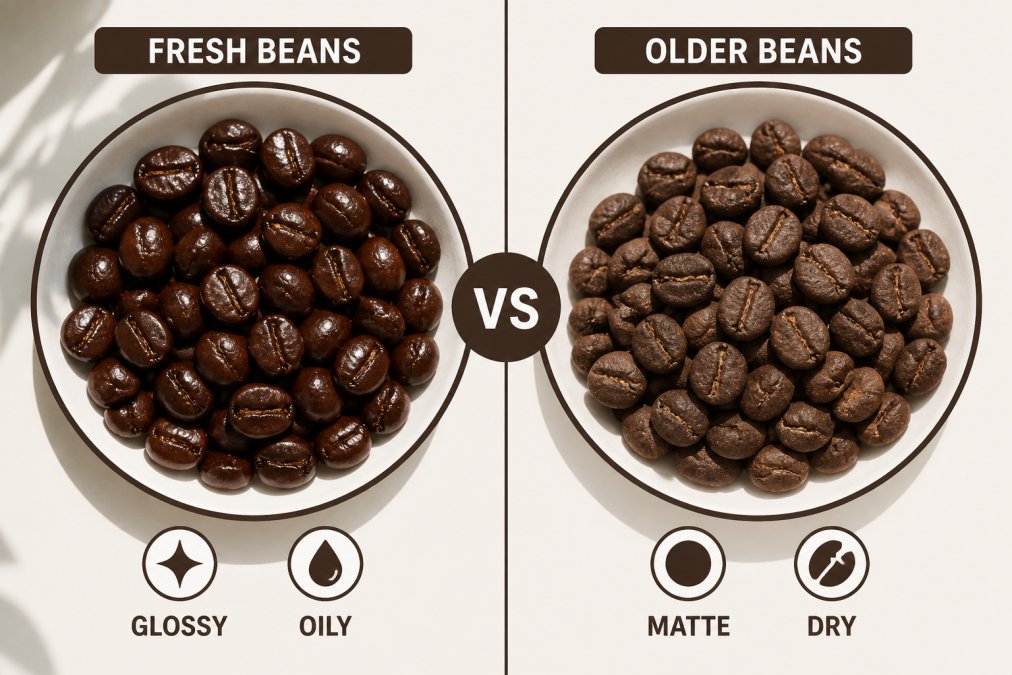
Fresh beans are glossy and dark. The oils on the surface create a visible sheen. The color is deep and rich.
Stale beans are dull and matte. The surface looks dry. The color appears faded compared to fresh beans.
Fresh beans smell aromatic and complex. Open a bag and you'll immediately notice strong, inviting aroma with nuanced notes.
Stale beans smell flat or musty. The aroma is noticeably weaker or absent. You might detect a sour or musty smell indicating oxidation.
Fresh beans crunch when you bite them. Stale beans become brittle or feel slightly soft.
The most reliable test is taste. Brew two cups, one from a fresh bag and one stored for 8 weeks. The difference in flavor complexity, aroma, and brightness will be obvious.
Freezing Coffee Beans: When and How to Do It Right
The case for freezing: Freezing dramatically slows oxidation. If you're buying in bulk or want to preserve beans beyond their normal shelf life, freezing extends the acceptable flavor window by several weeks or months.
The case against freezing: Freezing introduces condensation risk. When frozen beans warm up, moisture condenses on the surface, accelerating staling and risking mold. Repeated freeze-thaw cycles damage bean structure.
The right way to freeze: Use airtight containers designed for freezing. Divide beans into portions you'll actually use (a week's worth or less per container). Freeze immediately after filling. When ready to use, remove the container and let it come to room temperature before opening. Wait 30 minutes after removing from the freezer before opening to prevent condensation.
Once thawed, don't refreeze. Use thawed beans within 1-2 weeks. Freezing works best for whole beans, not ground coffee.
Common Storage Mistakes to Avoid
Storing beans in the refrigerator. Temperature fluctuations and humidity create condensation. Room temperature in a cool, dry location is always better.
Using clear containers or leaving bags in sunlight. Light drives oxidation. Use opaque containers or dark storage locations.
Buying more beans than you can drink in 3-4 weeks. Bulk discounts don't offset flavor loss from stale beans.
Leaving bags open or loosely sealed. Every opening allows oxygen in and accelerates staling. Seal immediately after removing beans.
Storing beans near heat sources. Ovens, dishwashers, coffee makers, and sunny windows all speed staling.
Using containers not designed for coffee storage. Regular plastic absorbs odors and oils. Clear containers expose beans to light. Invest in proper coffee storage containers.
Not checking the roast date before buying. Always verify the roast date. With Beverly Blend's roast-to-order model, you know exactly when beans were roasted.
Grinding beans too far in advance. Ground coffee stales much faster. Grind immediately before brewing, or no more than 30 minutes ahead.
Storing artisan coffee beans properly is the difference between tasting the roaster's intention and drinking flat coffee. The investment in a quality airtight container and cool, dark storage location pays dividends in every cup. Beverly Blend ships beans roasted to order, ensuring maximum freshness on arrival. From there, how you store those beans determines whether you experience the full complexity and aroma that makes artisan coffee worth the investment.
Frequently Asked Questions
Should I store coffee beans in the freezer?
Yes, freezing can extend coffee bean shelf life significantly, but only if done correctly. Whole beans freeze better than ground coffee. The key is using an airtight container to prevent freezer burn and condensation. Freeze beans in small portions so you thaw only what you need. Allow beans to reach room temperature before opening the container to avoid moisture absorption. Most roasters recommend freezing only if you won't use beans within two weeks of roasting.
How long do artisan coffee beans stay fresh after roasting?
Whole artisan coffee beans peak in flavor within 7 to 14 days after roasting, as volatile compounds and carbon dioxide stabilize during this window. They remain drinkable for up to one month when stored in airtight containers away from light and heat. After 30 days, oxidation accelerates and flavor degrades noticeably. Ground coffee stales much faster, typically within 15 minutes of grinding, which is why whole beans are always preferable for storage.
What's the best way to tell if my coffee beans are fresh?
Fresh beans appear glossy and oily, with a rich brown color, while stale beans look dull and dusty. Check the roast date on the bag, beans roasted within the last two weeks are ideal. Smell the beans; fresh coffee has a vibrant, complex aroma, while stale beans smell flat or musty. Finally, brew a cup: fresh beans produce a rich crema and full flavor, while aged beans taste weak or bitter.
Does the original coffee bag provide enough protection for storage?
Original bags with one-way degassing valves offer decent short-term protection (up to two weeks) but aren't ideal for long-term storage. These valves allow carbon dioxide to escape while blocking oxygen and moisture entry, but once opened, the bag loses its seal. For storage beyond two weeks, transfer beans to an airtight container. Opaque containers are best since light exposure degrades flavor compounds quickly. If you must use the original bag, fold it tightly and store in a cool, dark place.
This article was written using GrandRanker