

Buy Freshly Roasted Coffee Online: 2026 Guide
Table of Contents
- Why Freshly Roasted Coffee Online Beats the Grocery Shelf
- Coffee Roast Dates Explained: What the Label Actually Tells You
- Shop by Roast Profile: Finding Your Flavor Match
- Single-Origin vs. Blends: Which Should You Buy?
- Best Coffee Subscription Services vs. One-Time Orders
- How to Store Coffee Beans for Maximum Freshness After Delivery
- Matching Freshly Roasted Coffee to Your Brewing Method
- Sustainably Sourced: What Ethical Coffee Buying Actually Means
Last Updated: August 15, 2026
Why Freshly Roasted Coffee Online Beats the Grocery Shelf
Grocery store coffee sits 12 to 18 months from roast before reaching your kitchen, losing volatile aromatic compounds during extended degassing. Online roasters who roast to order deliver coffee days old, preserving peak flavor.
Roasted coffee releases carbon dioxide for several days post-roast, a process called degassing. Brew too early and CO2 interferes with extraction; brew too late and oxidation flattens flavor. Peak flavor for most specialty coffee spans roughly four days to four weeks post-roast, depending on roast level and bean density.
According to the Specialty Coffee Association's research on coffee freshness, gases released during roasting actively protect flavor compounds from oxidation. Once degassing slows, the clock on peak flavor accelerates.
This guide covers everything from reading roast dates to matching beans to your brewing method, so you can maximize every bag that arrives at your door.
Coffee Roast Dates Explained: What the Label Actually Tells You
How to Read a Roast Date and Why It Matters
A roast date is the single most important piece of information on a coffee bag. It tells you when beans were processed, determining how much flavor potential remains when you open the bag. A "best by" date without a roast date is nearly useless.
What to look for:
- Roast date: A specific calendar date, not a range
- Best by date: Cross-reference with roast date to calculate freshness window
- Roast level: Light roasts degas faster and have a shorter peak window; dark roasts are more forgiving but still benefit from a 24-48 hour rest post-roast
- Processing method: Washed process coffees taste cleaner and brighter early; natural process beans often develop more complexity with a slightly longer rest
A common mistake is assuming "sealed" equals "fresh." Nitrogen-flushed bags slow oxidation but do not stop degassing. A sealed bag still needs to be opened and used within a reasonable window after the roast date.
Roast-to-Delivery Timeline: What to Expect
For online roasters operating a roast-to-order model, the roast-to-delivery timeline typically runs two to five business days from roast to delivery, depending on shipping distance and carrier.
| Stage | Typical Duration | What to Watch For |
|---|---|---|
| Roast to shipment | 1-2 days | Allows initial degassing before sealing |
| Transit time | 2-4 days | Varies by shipping zone |
| Delivery to optimal brew window | 1-3 days rest | Especially important for light roasts |
| Peak flavor window | Days 4-28 post-roast | Varies by roast level and bean density |
| Decline begins | After 4 weeks | Oxidation accelerates once bag is opened |
By the time the bag arrives, initial degassing is largely complete and the coffee is entering its optimal brew window. You don't need to wait.
Shop by Roast Profile: Finding Your Flavor Match
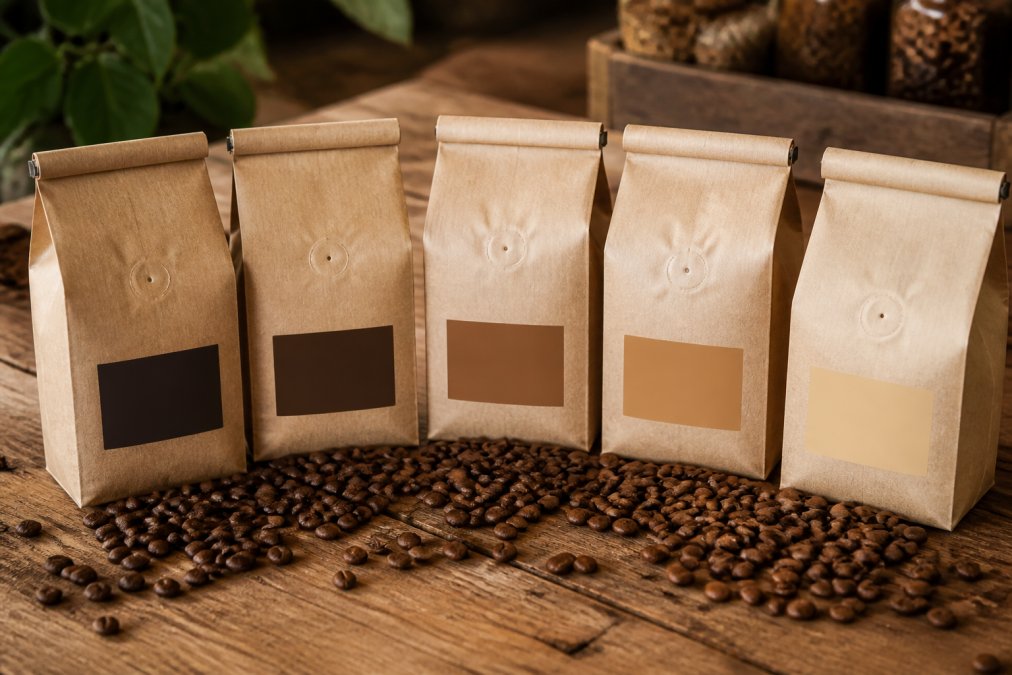
Lighter roasts preserve origin character and tend toward brightness and complexity; darker roasts develop body and bitterness while muting the bean's inherent flavor notes.
Light and Medium Roasts: Bright, Nuanced Flavor Notes
Light and medium roasts showcase distinctive character in single-origin arabica beans. The roasting process stops before the bean's natural sugars fully caramelize, preserving acidic brightness, floral aromatics, and origin-specific tasting profiles.
Beverly Blend's Ethiopia Natural ($19.99) is a med-light roast from the Sidama zone, processed using a full natural method and dried on raised beds. At 1700-1900 meters altitude, these indigenous heirloom cultivars develop complexity difficult to replicate at darker roast levels, with tasting notes of milk chocolate, fruity, and caramel.
The Colombia ($19.99) sits at medium roast from smallholder farmers in Medellin. Fully washed and dried in solar dryers, it presents as dried orange, berry, and chocolate with well-defined acidity.
The Single Origin Favorites Sample Pack ($24.99) includes six 2oz bags spanning Brazil Santos, Colombia, Costa Rica, Ethiopia, Honduras, and Tanzania, covering the full spectrum of medium to medium-light roast profiles.
Medium-Dark and Dark Roasts: Full-Bodied and Bold
Medium-dark and dark roasts trade origin nuance for body, sweetness from caramelization, and lower perceived acidity. For espresso roasts and cold brew, this profile is often the better technical choice.
The Bali Single Origin in the Best Sellers Sample Pack is a med-dark roast from Kintamani, processed via wet-hulling and dried on raised beds, with tasting notes of dark chocolate, molasses, and brown sugar. Volcanic loam soil at 1200-1600 meters gives the bean density that holds up well to darker roasting.

The 6Bean Blend is a dark roast designed specifically for espresso.
The Best Sellers Sample Pack ($24.99) offers six different coffees, from medium to dark, in 2oz tasting portions.
Single-Origin vs. Blends: Which Should You Buy?
Single-origin coffee comes from one identifiable farm, cooperative, or region, reflecting specific terroir, processing method, and growing conditions. Blends combine beans from multiple origins, achieving consistency, balance, and flavor complexity that no single origin can produce alone.

Choose single-origin if:
- You want to taste the difference between a washed Colombian and a natural Ethiopian
- You're dialing in a brewing method and need consistent, identifiable flavor variables
- Traceability and direct trade sourcing matter to you
Choose a blend if:
- You want a reliable, balanced cup every morning without variation
- You're pulling espresso and need consistent extraction behavior
- You prefer a full-bodied, smooth profile over brightness and acidity
Beverly Blend's House Blend ($19.99) is a medium roast combining select coffees from Central and South America with tasting notes of nutty, sweet chocolate, mild citrus, and a clean bright finish.
The Peru single-origin ($19.99) is grown by Cooperativa Agricola de Servicisios Norandino at 1100-1700 meters, gully washed and sun dried, with tasting notes of salted caramel, silky sweet, and citrus.
Best Coffee Subscription Services vs. One-Time Orders
Subscriptions remove the friction of remembering to reorder while ensuring freshly roasted coffee arrives at the optimal point in its flavor window. A subscription calibrated to your consumption rate means beans never sit stale, and you're never caught without coffee.
According to the National Coffee Association's annual drinking trends report, home coffee consumption has grown consistently, with specialty coffee drinkers showing the strongest preference for premium sourcing and freshness.
One-time order is the right call when:
- You're trying a new roaster for the first time
- You have an irregular schedule or travel frequently
- You want to sample multiple roast profiles before settling on a preference
Subscription makes sense when:
- You drink coffee daily and go through 12oz to 1lb per week
- You want roast-to-order freshness without manually reordering
- You've identified your preferred roast profile and origin
Beverly Blend's sample packs at $24.99 each are designed for the evaluation phase. Start with the Best Sellers Sample Pack or the Single Origin Favorites Sample Pack to identify which profiles suit your palate before committing to full bags.
How to Store Coffee Beans for Maximum Freshness After Delivery
Proper storage preserves the quality you paid for. The four enemies of roasted coffee are oxygen, moisture, heat, and light.
Storage rules that actually matter:
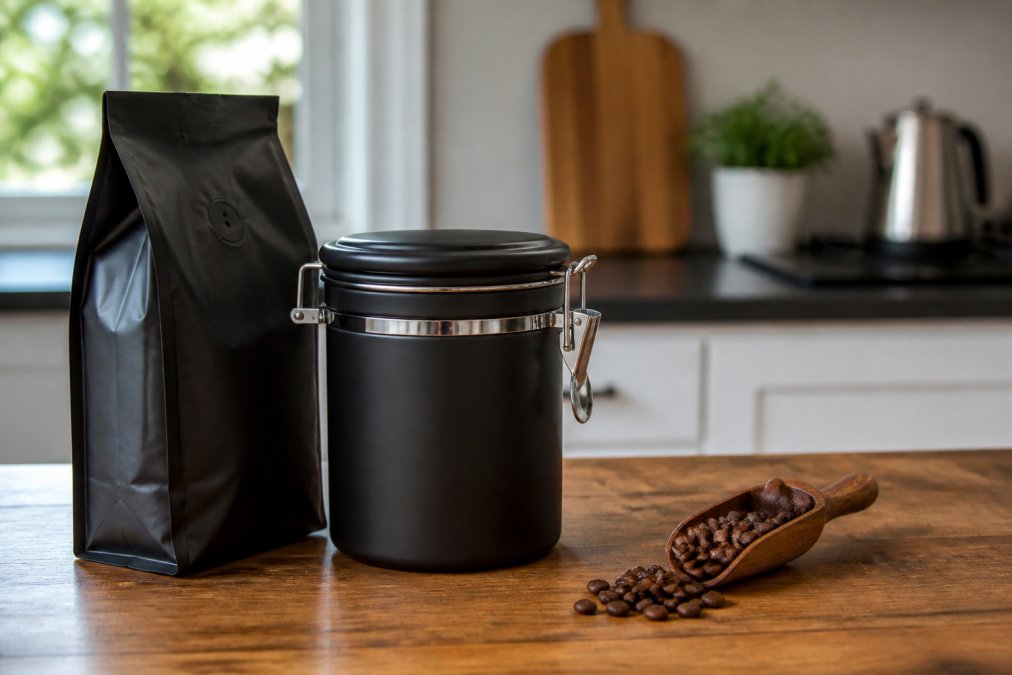
- Transfer beans to an airtight container with a one-way CO2 valve immediately after opening
- Store at room temperature, away from the stove and direct sunlight
- Do not refrigerate whole beans: refrigerators introduce moisture and absorb odors
- Freeze only if storing for longer than three weeks, using a vacuum-sealed bag
- Buy in quantities you'll consume within two to three weeks of opening
- Grind only what you need immediately before brewing
According to food science research on coffee storage at UC Davis Coffee Center, freezing is acceptable for long-term storage of unopened, vacuum-sealed bags, but repeated freeze-thaw cycles damage bean structure and introduce moisture. If you freeze, portion into single-week amounts and thaw only what you need.
Whole bean coffee always outlasts pre-ground coffee. Grinding exposes dramatically more surface area to oxygen, accelerating staling.
Matching Freshly Roasted Coffee to Your Brewing Method
Different brewing methods extract at different rates, temperatures, and contact times, meaning the same bean behaves differently depending on equipment.
| Brewing Method | Recommended Roast | Why It Works |
|---|---|---|
| Pour-over / V60 | Light to medium | Highlights acidity and floral notes |
| French press | Medium to dark | Full immersion suits heavier body |
| Espresso | Medium-dark to dark | High pressure extraction needs caramelized sugars |
| Cold brew | Medium-dark to dark | Long steep time benefits from bold, low-acid profiles |
| Drip coffee | Medium | Balanced extraction suits versatile roast levels |
| AeroPress | Light to medium-dark | Versatile; adjust grind size to roast level |
Grind size is critical. Coarser grinds slow extraction; finer grinds accelerate it. For freshly roasted coffee, start slightly coarser than you think necessary, because fresh beans extract faster due to retained CO2.
The Ethiopia Natural's fruity, caramel profile shines through a pour-over at medium-coarse grind. The Bali med-dark roast suits French press or cold brew. The 6Bean dark roast blend is purpose-built for espresso.
Sustainably Sourced: What Ethical Coffee Buying Actually Means
"Sustainably sourced" can mean anything from vague environmental awareness to verified, third-party-audited direct trade relationships with named farmers. Direct trade, when genuine, means the roaster has a direct commercial relationship with the grower, pays above commodity prices, and can trace beans to a specific farm or cooperative.
Beverly Blend's sourcing reflects specific-grower transparency. The Peru single-origin is grown by Cooperativa Agricola de Servicisios Norandino in the Piura and Amazonas regions at 1100-1700 meters. The Colombia comes from smallholder farmers in Medellin, fully washed and dried in solar dryers.

Named growers and specific processing details are markers of genuine sourcing transparency. Vague claims about "ethically sourced arabica beans" with no grower information are a red flag.
Sustainability metrics worth asking about:
- Is the grower named and the region specified?
- What processing method was used, and is it environmentally considerate?
- Does the roaster use small-batch roasting to minimize waste?
- Are the beans specialty grade, which typically requires better farming practices?
Beverly Blend's House Blend notes explicitly that its natural/dry and wet mill washed/sun-dried processing techniques are "friendly to the environment, the rain forests and the living creatures of the high elevation mountains where these coffees are grown."
Organizations including the Rainforest Alliance certification program audit farms for biodiversity, water use, and worker welfare.
Ethical buying requires asking for specifics and choosing roasters who provide them.
Freshly roasted coffee loses its peak flavor quickly once it leaves the roaster, and most grocery shelf options can't compete with roast-to-order delivery. Beverly Blend's entire model is built around closing that gap: beans roasted to order, sourced from named growers, shipped fast, and available in sample packs so you can find your perfect roast profile before committing to a full bag. Start with the Best Sellers Sample Pack or the Single Origin Favorites Sample Pack and experience the difference a real roast date makes.
Frequently Asked Questions
How can you tell if coffee beans are freshly roasted?
Check the roast date printed on the bag, not a vague 'best by' date. Freshly roasted beans will also show a small one-way valve on the packaging, which releases CO2 that fresh beans off-gas after roasting. Beans roasted within the past two to four weeks will smell vibrant and aromatic when you open the bag. Stale beans smell flat or papery. Buying freshly roasted coffee online from a roast-to-order roastery means the date on your bag reflects when your specific order was roasted.
How long does freshly roasted coffee stay fresh?
Whole bean coffee stays at peak flavor for two to four weeks after the roast date when stored in an airtight container away from heat, light, and moisture. Ground coffee degrades faster, losing most of its aroma within a week of grinding. For maximum freshness, grind only what you need each morning. Avoid the freezer for everyday beans since repeated temperature changes introduce moisture. Buying in smaller quantities more often keeps every cup tasting as the roaster intended.
Is it better to buy coffee beans from a local roaster or online?
A local roaster offers same-day freshness, but your options are limited to whatever they stock. Buying freshly roasted coffee online from a roast-to-order roastery like Beverly Blend gives you access to a wider range of single-origin coffees and blends, roasted specifically for your order. As long as the roastery ships within a day or two of roasting, online delivery can match or beat local freshness, especially if your nearest café-roaster only roasts once a week.
Do I have to commit to a subscription, or can I just try one bag first?
You can order a single bag or a sample pack with no subscription required. Beverly Blend's sample packs at $24.99 let you try six different coffees in 2 oz portions before committing to a full 12 oz bag. This is the lowest-risk way to explore roast profiles and single-origin options. If you find a coffee you love, reordering is straightforward, and you set your own delivery frequency rather than being locked into a fixed schedule.
What grind size should I order for my brewing method?
Grind size directly affects extraction. For drip coffee makers, a medium grind works best. Espresso roast requires a fine grind. French press needs a coarse grind to prevent over-extraction and a muddy cup. Cold brew also uses a coarse grind but steeps for 12 to 24 hours. If you have a quality burr grinder at home, ordering whole bean freshly roasted coffee online gives you full control over grind size and preserves aroma longer than pre-ground options.
This article was written using GrandRanker