

How to Brew Better Coffee at Home: 2026 Guide
Table of Contents
- What You'll Need Before You Brew Better Coffee
- Coffee to Water Ratio Chart for Every Brewing Method
- Best Coffee Grind Size for Brewing: A Method-by-Method Guide
- Best Water Temperature for Coffee Extraction
- How to Store Coffee Beans for Freshness
- Step-by-Step: Brew Better Coffee with Three Core Methods
- Troubleshooting Your Flavor Profile
- Sustainability and Waste Reduction in Your Brewing Routine
Last Updated: August 13, 2026
Most home coffee drinkers are one or two adjustments away from a genuinely great cup. The problem isn't equipment or budget, it's knowing which variables actually matter. This guide breaks down how to brew better coffee at home with precision, covering everything from grind size and water temperature to troubleshooting off flavors and reducing waste.
What You'll Need Before You Brew Better Coffee
The biggest mistake new home brewers make is spending money in the wrong order. A $200 brewer paired with a blade grinder and pre-ground coffee will never outperform a $40 pour-over setup with a quality burr grinder and freshly roasted beans. Grind consistency is the single most impactful variable in your setup.
Here's what actually matters, ranked by impact:
- Burr grinder, produces uniform particle size, which is essential for even extraction
- A reliable heat source with temperature control, a gooseneck kettle with a thermometer or built-in temperature control
- Digital scale, brewing by weight, not volume, is the fastest way to improve consistency
- Digital timer, brew time affects extraction; guessing is the enemy of repeatability
- Filtered water, tap water chemistry varies widely and directly affects flavor
- Fresh beans, ideally used within 2-6 weeks of the roast date
Budget-Friendly vs. Pro-Sumer Equipment
You don't need to spend a lot to brew better coffee. There's a meaningful quality gap between entry-level and pro-sumer gear, but it's not where most people think.
| Setup Tier | Grinder | Brewer | Total Approx. Cost | Best For |
|---|---|---|---|---|
| Budget | Hand burr grinder | Pour-over or French press | Under $60 | Beginners, small budgets |
| Mid-range | Entry electric burr grinder | Pour-over, AeroPress | $100-$200 | Daily home brewers |
| Pro-sumer | Stepped or stepless burr grinder | High-end pour-over, espresso | $300+ | Enthusiasts, precision brewing |
A hand burr grinder in the $30-$50 range produces dramatically better results than any blade grinder. Start there before upgrading anything else.
Coffee to Water Ratio Chart for Every Brewing Method
The coffee-to-water ratio is the foundation of a balanced cup. The standard starting point is a 1:15 to 1:17 ratio by weight, meaning 1 gram of coffee for every 15 to 17 grams of water.
| Brewing Method | Coffee (grams) | Water (grams) | Ratio | Brew Time |
|---|---|---|---|---|
| Pour-over | 20g | 320g | 1:16 | 3-4 minutes |
| French press | 30g | 480g | 1:16 | 4 minutes |
| Cold brew | 100g | 700g | 1:7 | 12-24 hours |
| Drip coffee maker | 60g | 1000g | 1:17 | 5-8 minutes |
| AeroPress | 18g | 250g | 1:14 | 2-3 minutes |
Use these as starting points. Adjust by 5-10% based on your taste preference. A higher ratio increases body and bitterness, while a lower ratio opens up acidity and clarity.

Best Coffee Grind Size for Brewing: A Method-by-Method Guide
Grind size controls how quickly water extracts compounds from coffee grounds. Finer grinds have more surface area and extract faster. Coarser grinds extract more slowly. Match your grind to your brew time and method to avoid under-extraction (sour, thin) and over-extraction (bitter, harsh).
- Extra coarse, cold brew
- Coarse, French press
- Medium-coarse, Chemex and some drip coffee makers
- Medium, standard drip coffee maker
- Medium-fine, pour-over (V60, Kalita Wave)
- Fine, AeroPress, Moka pot
- Extra fine, espresso only
Uniformity matters as much as size. A quality burr grinder minimizes fines and produces consistent particle size throughout, while blade grinders create uneven extraction.
As noted in the Specialty Coffee Association's brewing standards, grind consistency is one of the most critical factors in achieving uniform extraction and repeatable flavor profiles.
Best Water Temperature for Coffee Extraction
Water temperature for coffee extraction sits in a specific window: 195°F to 205°F (90°C to 96°C). Brewing outside this range is one of the most common reasons a technically correct recipe produces a flat or harsh cup.
Too cool and your coffee will be under-extracted, weak, and sour. Too hot and you'll over-extract bitter compounds. The sweet spot for most filter methods is 200°F (93°C), roughly 30 seconds off a full boil.
Darker roasts are more soluble and can tolerate slightly lower temperatures (195-200°F). Lighter roasts are denser and benefit from water at the higher end of the range (200-205°F) to achieve full extraction without sourness.
Advanced Water Chemistry: Why TDS Matters
Water quality is the most underrated variable in home brewing. Coffee is approximately 98% water, which means the mineral content of your water directly shapes the flavor of your cup.
Total dissolved solids (TDS) is the measure of minerals dissolved in water, expressed in parts per million (ppm). According to the Specialty Coffee Association's water quality standards, the ideal TDS range for brewing coffee is 75-250 ppm, with a target of around 150 ppm.
What this means practically:
- Distilled or reverse-osmosis water (0-10 ppm), too pure. Minerals allow water to carry and transport coffee compounds. Distilled water produces flat, lifeless coffee.
- Filtered tap water (50-200 ppm), usually ideal. A simple carbon filter removes chlorine and off-flavors without stripping beneficial minerals.
- Hard tap water (300+ ppm), can cause scale buildup and muddy flavor profiles, muting acidity.
How to Store Coffee Beans for Freshness
Fresh coffee is chemistry, not marketing. Roasted beans begin releasing CO2 immediately after roasting. The optimal brewing window is typically 7 to 21 days after the roast date, though this varies by roast level and bean origin.
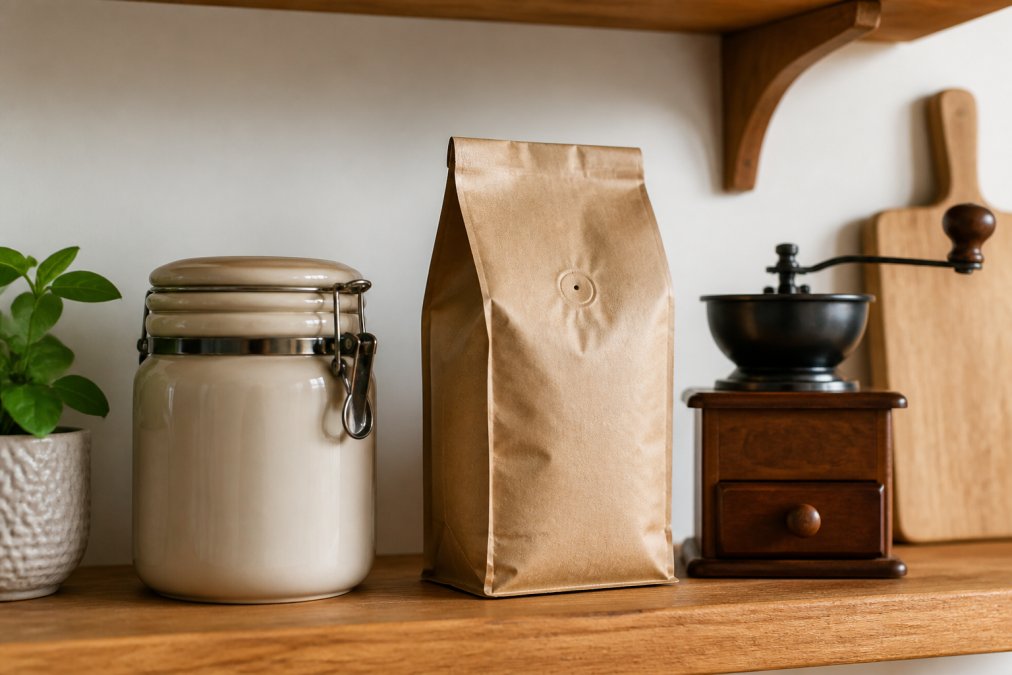
The enemies of freshness are oxygen, moisture, heat, and light. Here's how to store coffee beans effectively:
- Buy whole beans, pre-ground coffee goes stale within hours of grinding
- Use an airtight container, ideally one with a one-way CO2 valve
- Store at room temperature, away from heat sources and direct sunlight
- Don't refrigerate, coffee absorbs odors and moisture
- Freeze only for long-term storage, portion into airtight bags and thaw once
- Check the roast date, not the "best by" date
Beverly Blend roasts to order, which means beans ship within days of roasting. That's a meaningful advantage over grocery store coffee, which often sits in warehouses for months.
Step-by-Step: Brew Better Coffee with Three Core Methods
The method you choose shapes the flavor profile of your cup as much as the beans themselves. Pour-over produces clarity and brightness. French press produces body and richness. Cold brew produces sweetness and low acidity.
Pour-Over
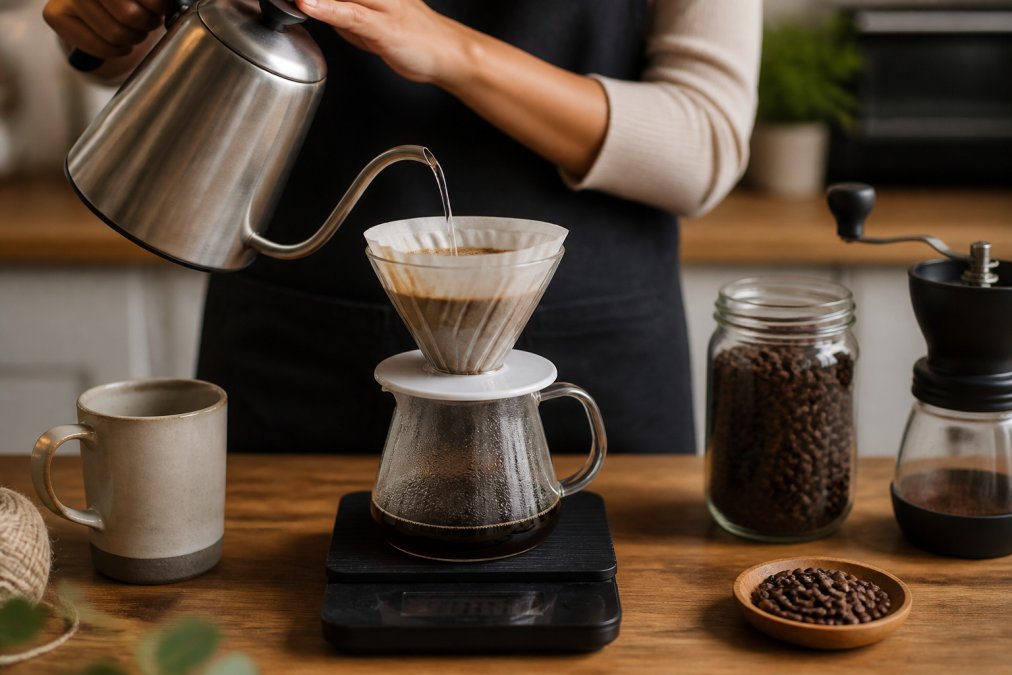
Pour-over is the most technique-sensitive method, which is why it rewards attention the most. The control you have over water flow, saturation, and timing makes it the best method for exploring a single-origin bean's tasting notes.
What you'll need: Pour-over dripper, paper filter, gooseneck kettle, scale, timer, mug or carafe.
Steps:
- Rinse your filter with hot water to remove paper taste and preheat the dripper. Discard the rinse water.
- Add 20g of medium-fine ground coffee to the filter.
- Start your timer and pour 40g of water (twice the weight of the coffee) to saturate the grounds evenly. Let it sit for 30-45 seconds.
- Pour in slow, steady circles from the center outward, keeping the water level consistent. Add water in 3-4 pours, reaching 320g total over 3-4 minutes.
- Let the bed drain fully before removing the dripper.
The bloom is the tell. Fresh coffee blooms aggressively, with grounds rising and bubbling. Stale coffee barely blooms at all.
French Press
French press is immersion brewing, where grounds sit in contact with water for the full brew time, producing a heavier body and richer mouthfeel than filter methods.
What you'll need: French press, coarse-ground coffee, kettle, scale, timer.
Steps:
- Preheat the French press by filling it with hot water for 30 seconds, then discard.
- Add 30g of coarse-ground coffee to the press.
- Pour 480g of water at 200°F over the grounds, ensuring all grounds are saturated.
- Stir gently once to ensure full saturation, then place the lid on (plunger up).
- Steep for 4 minutes.
- Press the plunger slowly and steadily, forcing it creates agitation that pushes fines through the filter.
- Pour immediately. Leaving brewed coffee in the press continues extraction and leads to bitterness.
Cold Brew
Cold brew is the simplest method to execute, but it requires the most patience. The low-temperature, long-steeping process extracts sweetness and body while leaving behind many acidic compounds.
Beverly Blend's Cold Brew Coffee blend is specifically formulated for this method, with a profile that balances chocolate, toffee, and floral tones.
Steps:
- Combine 100g of coarsely ground coffee with 700g of cold, filtered water in a large jar or dedicated cold brew vessel.
- Stir to ensure all grounds are saturated.
- Cover and refrigerate for 12-24 hours.
- Strain through a fine mesh filter or cheesecloth to remove grounds.
- Serve over ice or dilute with water or milk to taste. Concentrate keeps refrigerated for up to two weeks.
Troubleshooting Your Flavor Profile
A flat or unpleasant cup almost always traces back to one of four variables.
| Flavor Problem | Likely Cause | Fix |
|---|---|---|
| Sour, thin, weak | Under-extraction | Grind finer, increase water temp, extend brew time |
| Bitter, harsh, dry | Over-extraction | Grind coarser, lower water temp, shorten brew time |
| Flat, muted, no aroma | Stale beans or wrong water | Use fresher beans, switch to filtered water |
| Papery, astringent | Unrinsed filter or low temp | Rinse filter thoroughly, check water temperature |
| Muddy, heavy sediment | Too-fine grind for method | Coarsen grind, especially for French press |
The most common mistake is diagnosing bitterness as "too strong" and using less coffee. Less coffee at the same grind and temperature doesn't fix over-extraction. The correct fix is to coarsen the grind or reduce brew time.
Acidity and bitterness are often confused. Acidity is a brightness on the front of the palate, like citrus or fruit. Bitterness is a dry, lingering sensation at the back. According to research on coffee extraction chemistry published by the American Chemical Society, the compounds responsible for sourness extract first, followed by sweetness, then bitterness.
Sustainability and Waste Reduction in Your Brewing Routine
The environmental footprint of your brewing routine is worth thinking about, and the changes that reduce waste also tend to improve your cup.
Skip single-use pods entirely. Pod coffee systems generate significant plastic and aluminum waste, and the pre-ground coffee inside is rarely fresh. Switching to a pour-over or French press setup eliminates pod waste and produces better coffee.
Compost your coffee grounds. Spent coffee grounds are rich in nitrogen and make excellent compost for acid-loving plants.
Use a reusable filter. Metal mesh filters for pour-over and AeroPress eliminate the need for paper filters.
Buy whole beans in larger quantities. Frequent small purchases generate more packaging per gram of coffee.
Choose roasters who source responsibly. Direct-trade and certified sourcing programs support farming communities and sustainable agricultural practices. As the USDA's Agricultural Marketing Service explains, certification programs for specialty coffee provide traceability from farm to cup.
Brewing better coffee at home comes down to controlling a small number of variables consistently: fresh beans, correct ratio, proper grind, clean water at the right temperature, and enough time. Beverly Blend makes the bean side of that equation easy, every order is roasted to order and ships within days, so you're always starting with fresh coffee that's ready to bloom. Explore the cold brew blend or grab a bag of single-origin beans, and taste the difference that roast-to-order freshness actually makes.
Frequently Asked Questions
What is the most effective way to brew better coffee at home?
Start with freshly roasted beans ground just before brewing, use filtered water heated to between 195°F and 205°F, and measure your coffee-to-water ratio with a digital scale. A 1:15 ratio (1 gram of coffee to 15 grams of water) works well for most methods. Consistency across these three variables, grind size, water temperature, and ratio, produces the most noticeable improvement in your cup.
Does water temperature affect coffee extraction?
Yes, significantly. Water below 195°F under-extracts the grounds, producing a sour, flat, or weak cup. Water above 205°F over-extracts, pulling bitter compounds from the coffee. The SCA recommends 195°F to 205°F for optimal extraction. If you don't have a thermometer, bring water to a full boil and let it rest off heat for 30 to 45 seconds before pouring.
Why should I grind my coffee beans right before brewing?
Ground coffee loses its volatile aromatic compounds within minutes of exposure to air. Once beans are ground, the surface area exposed to oxygen increases dramatically, accelerating staling. Grinding immediately before brewing preserves the tasting notes, the acidity, body, and sweetness, that make specialty coffee worth buying. A burr grinder produces a uniform grind size, which leads to even extraction and a cleaner, more balanced flavor profile.
What is the 15-15-15 rule for coffee?
The 15-15-15 rule is a pour-over bloom technique: pour 15% of your total brew water over the grounds first, wait 15 seconds for the bloom (degassing), then pour the remaining water in 15-second intervals. This controlled saturation ensures even extraction by allowing CO2 to escape before full immersion, which prevents uneven channeling and improves the consistency of your flavor profile from cup to cup.
This article was written using GrandRanker