

Best Coffee Beans for Home Office: 7 Picks
Table of Contents
- Quick Comparison: Best Coffee Beans for Home Office
- How to Choose the Right Coffee Beans for Your Workspace
- 1. Breakfast Blend: Smooth Start to Your Workday
- 2. House Blend: Balanced All-Day Coffee
- 3. Max Caf Blend: High Caffeine for Afternoon Energy
- 4. Best Sellers Sample Pack: Explore Single-Origin Varieties
- 5. Coffee with Mushrooms: Specialty Blend for Focus
- 6. Single Serve Coffee Capsules: Speed and Consistency
- How to Brew Better Coffee at Home
- How to Store Coffee Beans for Freshness
- Coffee Brewing Methods for Productivity
- Caffeine Management for Productivity
- Bulk Buying and Storage for Teams
- Frequently Asked Questions
Last Updated: September 2, 2026
Quick Comparison: Best Coffee Beans for Home Office
| Product | Roast Level | Best For | Starting Price |
|---|---|---|---|
| Breakfast Blend | Medium | Smooth morning starts | $19.99 |
| House Blend | Medium | All-day consistency | $19.99 |
| Max Caf Blend | High caffeine | Afternoon productivity | $19.99 |
| Best Sellers Sample Pack | Varied | Single-origin exploration | $24.99 |
| Coffee with Mushrooms | Medium/Dark | Focus and wellness | $20.99 |
| Single Serve Capsules | Medium blend | Speed and convenience | $19.99-$59.99 |
Working from home demands coffee that delivers consistency, convenience, and stable energy through back-to-back meetings. Beverly Blend's selection is built around what remote professionals actually need: beans that taste great every morning, arrive fresh, and fit seamlessly into your workday. Most home office workers struggle to find specialty coffee without complicated brewing rituals. You need something better than grocery store coffee without derailing your 9 a.m. standup.

How to Choose the Right Coffee Beans for Your Workspace
Selecting coffee for a home office differs from buying for a café. Start with three questions: How much time do you have each morning? What's your caffeine threshold? Do you value convenience or flavor exploration more?
Roast Profile and Flavor Preference
Light roasts preserve origin characteristics like citrus and floral notes. Medium roasts balance acidity and body with nutty, chocolate, and caramel notes. Dark roasts bring heavier body with chocolate, molasses, and smoky tones.
For a home office, medium roast is the workhorse. It's forgiving, slight variations in water temperature or brew time won't ruin your cup, and delivers enough flavor complexity to feel premium without requiring expertise.
Whole Bean vs. Pre-Ground for Convenience
Whole bean coffee stays fresh longer because oils are sealed inside the bean. Once ground, oxidation accelerates. If you grind in the morning and brew immediately, you'll taste a noticeable difference compared to pre-ground. However, whole bean requires a burr grinder, which costs $30-150.
Pre-ground coffee trades freshness for speed. Most pre-ground peaks for about two weeks after opening. For home office workers juggling multiple priorities, pre-ground or single-serve capsules eliminate one decision point each morning.
1. Breakfast Blend: Smooth Start to Your Workday
The Breakfast Blend is a medium roast of South American coffees designed for a smooth, approachable cup with nutty and chocolate notes. At $19.99 per bag, you're paying for careful sourcing and roasting to order, which ensures beans arrive fresher than supermarket coffee.

What works: The consistency. Medium roast blends are forgiving. Small variations in water temperature or brew time won't crater your cup.
2. House Blend: Balanced All-Day Coffee
The House Blend is Beverly Blend's workhorse, a medium roast of Central and South American coffees with tasting notes of nutty, sweet chocolate, mild citrus, and a clean finish. The blend uses both natural and washed processing methods to create balance. Medium body means it works in drip brewers, pour-overs, French presses, and espresso machines. At $19.99, it's slightly more interesting flavor-wise than the Breakfast Blend.

What works: The balance. This blend has no weak point.
3. Max Caf Blend: High Caffeine for Afternoon Energy
The Max Caf Blend is Beverly Blend's answer to the 2 p.m. slump, a blend of Tanzania and India Robusta beans chosen for their higher caffeine content. Arabica and Robusta are different species. Arabica has more complex flavor but slightly less caffeine. Robusta has more caffeine and heavier body with earthier tones. At $19.99, it's priced identically to other Beverly Blend options.
What works: The straightforward value proposition. You need afternoon energy; this delivers it.
4. Best Sellers Sample Pack: Explore Single-Origin Varieties
The Best Sellers Sample Pack lets you taste what single-origin coffee means without committing to a full bag. You get six 2-ounce packs: 6Bean Blend, Cowboy Blend, Breakfast Blend, Peru, Mexico, and Bali. Single-origin means all beans come from one country or region, so you taste terroir, characteristics imparted by altitude, soil, climate, and processing. At $24.99 for six different coffees, you're paying less per ounce than full bags and get education.
What works: Variety and discovery. You'll find favorites and understand why.
5. Coffee with Mushrooms: Specialty Blend for Focus
The Coffee with Mushrooms infuses specialty-grade coffee with Lion's Mane, Cordyceps, and Reishi mushrooms. Lion's Mane is associated with cognitive support. Cordyceps are traditionally linked to energy and stamina. Reishi is known as an adaptogen meant to help your body manage stress. The medium roast ($20.99) preserves more origin flavor while adding the mushroom infusion.
What works: The positioning as a focus tool rather than just caffeine delivery.
6. Single Serve Coffee Capsules: Speed and Consistency
Beverly Blend's Single Serve Coffee Capsules, available in a 12-pack for $19.99 or 60-pack for $59.99, solve the "I don't have time" problem. Each capsule is sealed with no oxygen inside, keeping coffee fresh until you brew it. Single-serve capsules eliminate friction. You don't grind, measure, or clean a filter. Drop a capsule in your machine, press a button, and you have coffee in 90 seconds.
| Option | Price | Per Cup Cost | Best For |
|---|---|---|---|
| 12-pack | $19.99 | $1.67 | Testing, occasional use |
| 60-pack | $59.99 | $1.00 | Regular daily use |
What works: Speed and consistency. Every capsule tastes identical.
How to Brew Better Coffee at Home
Water temperature matters. Ideal brewing temperature is 195-205°F (peer-reviewed research). If water is too cool, you under-extract and get sour, thin coffee. If too hot, you over-extract and get bitter coffee. Let water cool for 30 seconds after boiling.
Grind size matches your brewing method. Espresso requires fine grind. Pour-over needs medium grind. French press needs coarse grind. A burr grinder with settings lets you dial this in.
Brew time varies by method. Drip coffee takes 4-6 minutes. Pour-over takes 3-4 minutes. French press takes 4 minutes. Espresso takes 25-30 seconds.
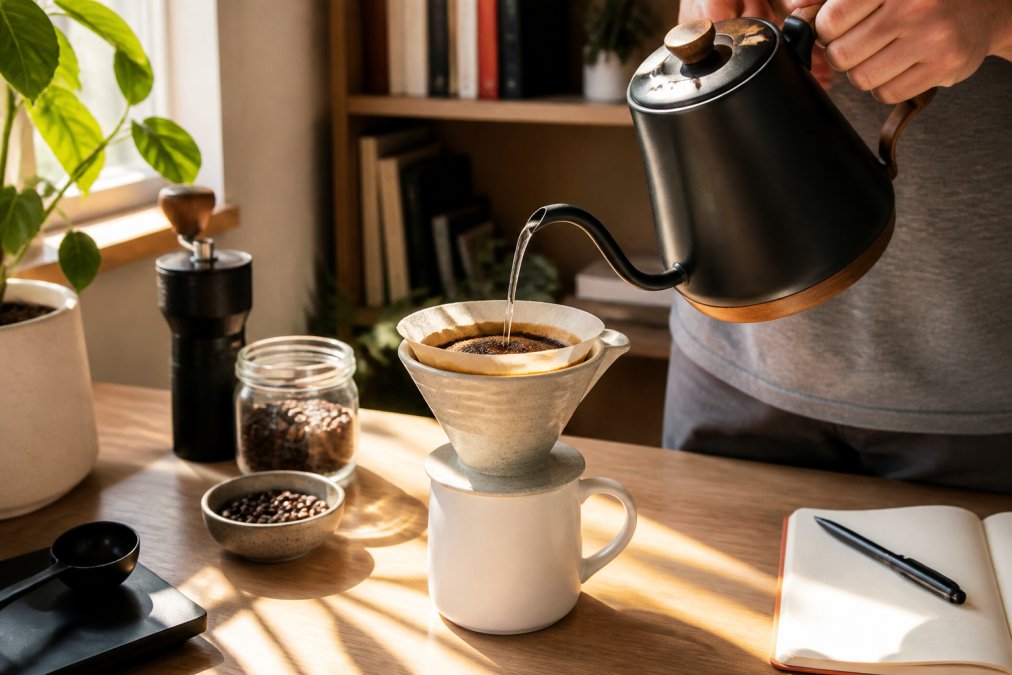
Use filtered water if your tap water is heavily chlorinated. Measure your coffee using the standard 1:16 ratio, 1 gram of coffee to 16 grams of water. For a 12-ounce cup, that's about 0.75 ounces (21 grams) of coffee. A basic kitchen scale costs $15-30 and removes guesswork.
How to Store Coffee Beans for Freshness
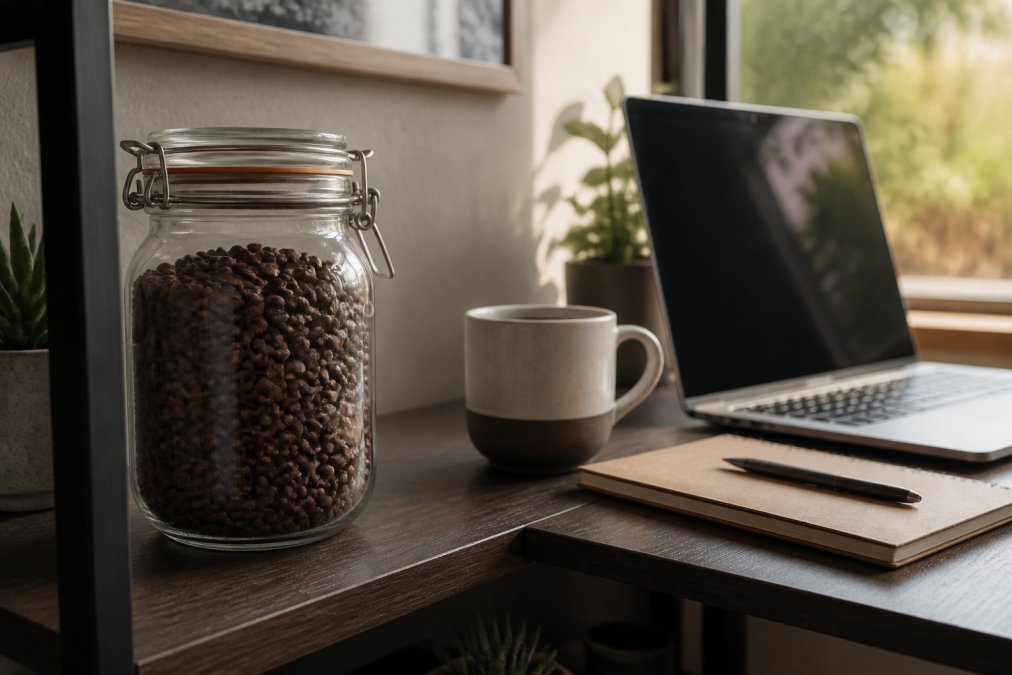
Coffee's enemies are oxygen, light, heat, and moisture. Transfer whole beans to an airtight container with a tight seal; glass jars with rubber gaskets or dedicated coffee canisters work well. Opaque containers are better than clear because light degrades coffee.
Store in a cool place. Room temperature (68-72°F) is ideal. Avoid the refrigerator or freezer; temperature fluctuations cause condensation, which introduces moisture.
Whole beans stay fresh for about two weeks after the roast date. Pre-ground coffee peaks for about five days. Check the roast date on the bag. Beverly Blend includes this because it matters. Buy smaller quantities more frequently rather than stockpiling.
Coffee Brewing Methods for Productivity
Drip coffee makers are the workhorse. They're fast (5-7 minutes total), require minimal attention, and deliver consistent results. Pour-over brewing takes 3-4 minutes and delivers more nuanced flavor because you control water flow. French press brewing takes 4 minutes and produces heavier body and fuller flavor. Single-serve capsules take 90 seconds and require zero attention.
Caffeine Management for Productivity
Caffeine timing matters more than quantity for remote workers. The half-life of caffeine is about five hours (peer-reviewed research). A better strategy is one cup in the morning and one in early afternoon (around 2 p.m.), with nothing after 3 p.m. to avoid sleep disruption.
Light roasts have slightly more caffeine than dark roasts because roasting breaks down some caffeine compounds (peer-reviewed research). The difference is small, roughly 5%. Robusta beans have roughly twice the caffeine of Arabica beans. Brew method affects caffeine extraction. Espresso has less total caffeine per cup (25-30mg per shot) than drip coffee (95-200mg per cup) because espresso is smaller volume.
Bulk Buying and Storage for Teams
If you're part of a small team working from home, buying coffee in bulk makes financial sense. A 12-pack of Single Serve Capsules costs $19.99 ($1.67 per cup). A 60-pack costs $59.99 ($1 per cup). For a team of three people each drinking one cup per day, a 60-pack lasts 20 days. Buying two 60-packs per month costs roughly $120 per month for three people, or $40 per person per month.
For whole bean, buying multiple bags works if you have proper storage. Single-serve capsules are most practical for teams because they're portion-controlled, require no shared equipment, and everyone can choose their own timing.
Finding the best coffee beans for home office work comes down to matching your actual workflow to your coffee choice. If you value speed and consistency, Beverly Blend's Single Serve Capsules deliver that at a fair price. If you want to explore flavor and have a few minutes each morning, the Best Sellers Sample Pack or individual blends like the House Blend are worth the investment.
The Breakfast Blend is the safe choice for anyone switching from grocery store coffee. The Max Caf Blend solves the afternoon energy problem without overcomplicating your routine. Start with one bag from Beverly Blend and notice how the roast date, freshness, and brewing method change what you taste. Quality coffee doesn't need to be complicated, but it does need to be fresh. Beverly Blend roasts to order and ships quickly, which means your beans arrive at their peak.
Frequently Asked Questions
Q: What makes the best coffee beans for home office work different from grocery store coffee?
A: Premium coffee beans for home office are roasted to order, ensuring maximum freshness and flavor. Grocery store coffee sits on shelves for weeks or months, losing aroma and complexity. Specialty roasters focus on single-origin beans with distinct tasting notes, like citrus, chocolate, or caramel, that stay consistent cup to cup. The roast date matters: beans peak 3-10 days after roasting. This freshness and flavor clarity help you stay focused during work hours without the staleness that comes from older beans.
Q: Should I buy whole bean or pre-ground coffee for my home office?
A: Whole bean coffee stays fresh 2-3 weeks in an airtight container, while pre-ground loses flavor within days due to increased surface area exposed to oxygen. If you have a burr grinder, whole bean gives you better extraction and more vibrant tasting notes. Pre-ground works if you value speed and consistency, single-serve capsules, for example, are pre-portioned and eliminate guesswork. For home office work where you brew multiple cups daily, whole bean offers better value and flavor over time.
Q: How does caffeine content affect productivity during a workday?
A: Caffeine sensitivity varies by person, but timing matters more than total intake. A medium roast typically has 12-16% more caffeine than dark roast because dark roasting slightly reduces caffeine. For home office work, a moderate-caffeine blend like House Blend suits morning focus, while high-caffeine options like Max Caf Blend work better for afternoon slumps. Drinking coffee with food slows absorption, preventing jitters. Most remote workers find 1-2 cups of quality coffee in the morning, then switching to lower-caffeine options after noon, keeps energy stable without disrupting sleep.
Q: What's the difference between arabica and robusta coffee beans?
A: Arabica beans are smoother, more complex, and have higher acidity, they're favored for specialty coffee and single-origin varieties. Robusta beans are bolder, earthier, and contain nearly twice the caffeine. Most home office blends use primarily arabica for refined flavor, though some high-caffeine blends mix in robusta for extra energy. For office work, arabica-dominant blends offer better tasting notes and a cleaner finish, while robusta excels in espresso blends or when maximum caffeine is the priority.
This article was written using GrandRanker