

How to Choose Coffee Flavor Profiles: A 2026 Guide
Table of Contents
- Why Coffee Flavor Profiles Matter More Than Roast Level
- The Coffee Flavor Wheel Explained: Your Taste Map
- How to Identify Tasting Notes in Coffee at Home
- Light vs Dark Roast Flavor Differences: What Changes
- A Practical Framework for Choosing Your Coffee Flavor Profiles
- What Freshness Does to Flavor Complexity
- Conclusion: Trust Your Palate, Not the Hype
- Frequently Asked Questions
Last Updated: September 9, 2026
Why Coffee Flavor Profiles Matter More Than Roast Level
Most coffee drinkers pick beans by roast color, assuming dark equals strong and light equals weak. That instinct misses what actually determines taste. Coffee flavor profiles are the complete sensory signature of a bean, shaped by origin, processing, and roasting.
At Beverly Blend, we source single-origin beans, and we've learned that roast level tells you almost nothing about whether you'll taste dark chocolate or dried orange. A light roast Ethiopian coffee tastes nothing like a light roast from Guatemala.

Origin, Variety, and Process: The Three Pillars
Coffee flavor profiles begin with origin. The altitude, soil composition, and rainfall of a region directly influence bean density and the sugars available during development. Coffee grown at higher altitudes matures slower, producing denser beans with more complex acidity. Variety matters too: Bourbon, Typica, and indigenous heirloom cultivars each carry distinct genetic potential. Processing is the final pillar. A natural process, where coffee dries inside the fruit, amplifies fruity and wine-like notes. A washed process, where the fruit is removed before drying, produces a cleaner cup with brighter acidity. According to the Specialty Coffee Association's processing research, processing method is one of the strongest predictors of a coffee's final flavor character.
The Coffee Flavor Wheel Explained: Your Taste Map
The coffee flavor wheel is a visual tool developed by the Specialty Coffee Association to standardize how roasters and tasters describe what they taste. It organizes flavors from broad categories like "fruity" and "sweet" down to specific notes like "dried apricot" or "molasses." Think of it as a map for your palate.
The wheel is organized into concentric circles. The center holds general categories: fruity, floral, nutty, sweet, spicy, and roasty. Moving outward, each ring adds precision. "Fruity" becomes "citrus," which becomes "orange zest" or "lemon." This structure exists because our palates detect broad impressions before specific ones. When you taste a coffee and think "this tastes sweet," the wheel helps you identify whether that sweetness is brown sugar, honey, or caramel.
How to Identify Tasting Notes in Coffee at Home
Tasting notes are not marketing fluff. They are the result of careful sensory evaluation, but you don't need a certified palate to find them. The process is straightforward: slow down, isolate the coffee's characteristics, and compare them against flavors you already know.
Start with the aroma before adding water. Ground coffee releases volatile compounds immediately. Smell the dry grounds, then smell them again after hot water hits them, the difference is often where fruit notes appear. Then taste, letting the coffee coat your entire tongue. A common mistake is trying to identify every note at once; focus on one or two dominant impressions per sip.
A Simple Cupping Method for Beginners
Professional cuppers use a standardized method, but you can replicate the essentials at home. Grind two tablespoons of coffee coarsely and place them in a bowl. Pour hot water just off the boil and let it steep for four minutes. Break the crust that forms on top with a spoon and smell the released aroma. Then taste with a spoon, slurping to aerate the coffee across your palate.
This method removes the variables of brewers and filters, letting you taste the bean itself. When you try to identify tasting notes in coffee, cupping is the most reliable way. Compare two origins side by side, and the differences become obvious.
Light vs Dark Roast Flavor Differences: What Changes
Light vs dark roast flavor differences come down to how much heat transforms the bean's internal chemistry. Light roasts preserve more of the origin's character, including bright acidity and floral or fruity notes. Dark roasts develop roasty, caramelized flavors that come from the roasting process itself, often masking the bean's original identity.
The roast acts like a volume knob. A light roast turns up the coffee's intrinsic flavors, while a dark roast turns them down and introduces new ones from caramelization. Roasting guides from the National Coffee Association explain that darker roasts produce oils on the bean surface, which contributes to a heavier mouthfeel and bittersweet chocolate notes. If you love the idea of tasting a specific region's terroir, choose light to medium roasts. If you prefer consistent, bold, chocolatey cups regardless of origin, darker roasts deliver that reliably.
A Practical Framework for Choosing Your Coffee Flavor Profiles
Choosing coffee becomes simple when you match the flavor profile to your palate, brewing method, and budget. The price tag on a bag of specialty coffee is a flavor signal too. A bag of coffee from the same origin can taste radically different because of how the roaster sourced, processed, and roasted the beans.
Start by identifying what you already enjoy in other foods and drinks. Do you reach for dark chocolate or dried fruit? Do you prefer bright, crisp acidity or round, syrupy sweetness? Your answers point directly to a region and process. But also ask: how much am I willing to pay for that note? A natural-process Ethiopian coffee with intense blueberry notes often costs more because the labor-intensive drying process takes up to three weeks and requires constant raking to prevent mold.
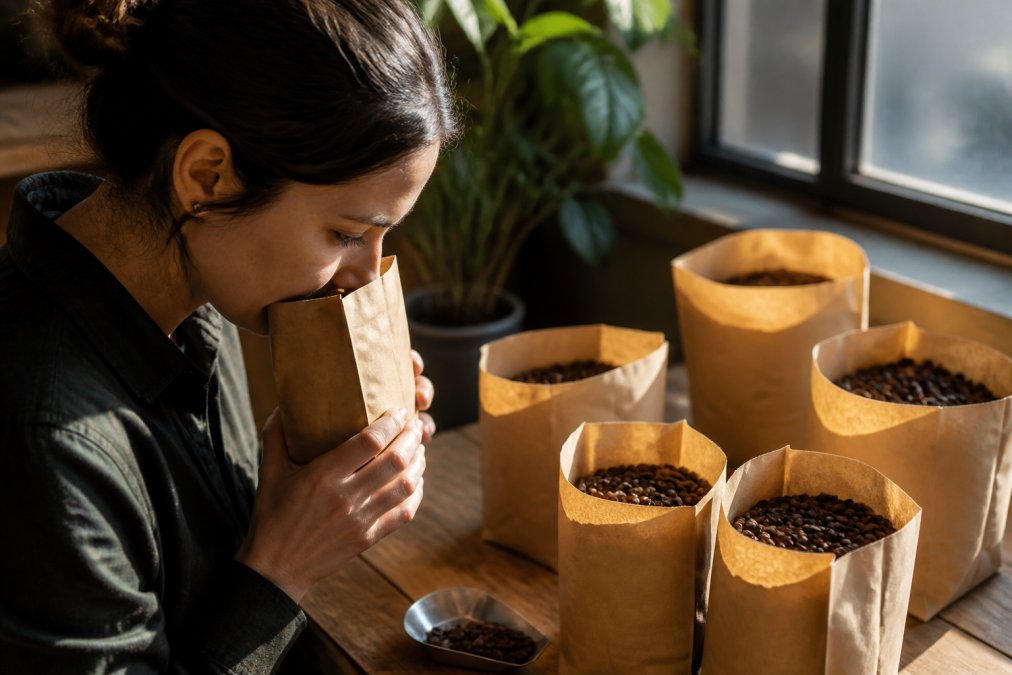
Use this quick reference to guide your first purchase, but read the price per 12 ounces, not just the bag design:
| If You Enjoy | Choose | Tasting Notes to Expect | Typical Price Range per 12 oz |
|---|---|---|---|
| Dark chocolate, molasses | Bali Blue | Dark chocolate, molasses, brown sugar | $18-$24 |
| Bright, sweet fruit | Colombia | Dried orange, berry, chocolate | $14-$18 |
| Fruity, caramel sweetness | Ethiopia Natural | Milk chocolate, fruity, caramel | $20-$28 |
| Rich, butterscotch balance | Guatemala | Dark chocolate, bright fruit, butterscotch | $16-$22 |
These ranges reflect what specialty roasters in the United States typically charge for single-origin lots. The spread comes from farm-gate prices, import fees, and roasting costs, not just markup. An Ethiopian natural often pays farmers a premium for the extra labor of sun-drying beans inside the cherry, which produces wine-like, fermented notes.

Match Your Brewing Method to the Profile and the Price
Your brewer affects extraction, which changes how flavors present. For pour-over methods like a V60 or Chemex, choose coffees with bright, delicate notes like the Ethiopia Natural, these methods highlight clarity and acidity. For espresso or a French press, which produce heavier bodies, reach for the Bali Blue or Guatemala; their chocolate and molasses notes hold up to the intensity, and you can often buy a slightly darker roast at a lower price without losing the flavors you want. A medium roast like the Colombia works well across most methods, making it a safe starting point if you are still dialing in your grinder.
A common pattern among home brewers is buying one expensive bag for weekend pour-overs and a more affordable washed coffee for daily espresso. That split lets you enjoy the premium profile when you have time to savor it, while keeping your weekday routine cost-effective. When you learn how to choose coffee flavor profiles, matching the bean to the brewer and budget is half the battle. If a roaster cannot explain why their coffee costs what it does, that is a red flag.
What Freshness Does to Flavor Complexity
Freshness is the silent partner in flavor, and it is also the most expensive part of the specialty coffee business. Coffee begins losing its volatile aromatic compounds immediately after roasting. Within days, the bright, complex notes fade, and within weeks, the coffee tastes flat. This is why roast-to-delivery timing matters more than most buyers realize.
A bag of coffee sitting on a grocery store shelf for months cannot deliver the flavor complexity described on its label. The tasting notes you chase are most vivid in the first two to four weeks after roasting. After that, the coffee loses the delicate esters and sulfur compounds that create floral, fruity, and sweet impressions. What remains is a uniformly bitter, woody, and papery taste that erases the distinctions between a $12 Colombian and a $28 Ethiopian natural.
The Financial Risk Behind the Freshness Window
Here is the economic reality that most articles skip: a specialty roaster has roughly 30 days to sell a batch of roasted coffee before it falls below the quality threshold that justifies its price. Roasters must pay for green beans upfront, pay for the energy to roast them, package them in one-way valve bags that cost more than standard packaging, and then hope they sell within a month. If a batch does not move, the roaster either discounts it, donates it, or throws it away.
Energy costs compound the issue. Roasting coffee is heat-intensive, and commercial roasters in the United States pay industrial electricity rates that vary by state but often range from 8 to 15 cents per kilowatt-hour. A typical 15-kilogram roast cycle runs for 12 to 15 minutes and draws significant power for both the drum and the afterburner that controls emissions. Energy efficiency guidance from the Specialty Coffee Association notes that roasting is one of the largest operational energy expenses for a coffee company. That cost is invisible to the consumer, but it is part of why a small-batch roaster charges $22 for a 12-ounce bag while a mass-market brand charges $8 for a 32-ounce can.
How to Judge Freshness Before You Buy
Look for a roast date on the bag, not a best-by date. A best-by date is often 12 to 18 months out and tells you nothing about when the coffee was roasted. The roast date should be within the last two to three weeks for optimal flavor. If a bag has no roast date, assume it is stale. Smell the beans through the one-way valve if the bag has one. Fresh coffee smells sweet, fruity, or floral. Stale coffee smells flat, musty, or like old cardboard. After brewing, notice the crema on espresso or the foam on a pour-over. Fresh coffee produces a thick, golden crema and a lively bloom when hot water hits the grounds.
Many roasters, including Beverly Blend, roast to order specifically to preserve these delicate compounds. Our beans ship shortly after roasting, arriving at your door in the peak window for flavor. This model also reduces waste. When you understand that freshness is a perishable product with a hard deadline, you start to see the price of specialty coffee differently. You are paying for a roaster to manage a 30-day clock, and doing it well costs money.
Conclusion: Trust Your Palate, Not the Hype
The coffee industry loves its jargon, but the only opinion that matters is yours. Coffee flavor profiles are a guide, not a rulebook. Use the flavor wheel to build vocabulary, use cupping to sharpen your senses, and use the framework above to make smarter first choices. Then experiment.
What matters is that you buy fresh coffee from roasters who can trace their beans to specific farms. When you understand what creates flavor, you stop being swayed by marketing and start choosing with confidence. Explore the single-origin collection at Beverly Blend, and find a coffee flavor profile that makes your morning ritual genuinely better.
Frequently Asked Questions
How do I know which coffee flavor profile I prefer?
Start by identifying flavors you enjoy in other foods and drinks, like dark chocolate, berries, or caramel. Use the coffee flavor wheel to pinpoint those tastes. Try single-origin coffees from different regions to see which profiles resonate. Our Bali Blue offers dark chocolate and molasses notes, while the Ethiopia Natural brings milk chocolate and fruity caramel. Sampling a few distinct profiles is the fastest way to learn your preference.
Does roast level determine coffee flavor profiles?
Roast level shapes the profile, but it does not solely determine it. The bean's origin, variety, and processing method set the base flavor. A light roast preserves the bean's intrinsic acidity and fruity or floral notes. A dark roast introduces roast-derived flavors like dark chocolate and smokiness, while reducing acidity. For example, our light-roasted Ethiopia Natural tastes fruity, while a dark roast of the same bean would taste more like bittersweet chocolate.
How does origin affect coffee flavor profiles?
Origin is a major factor. Climate, altitude, and soil type all influence bean density and flavor. High-altitude beans, like our Guatemala from Antigua, grow slowly and develop complex sugars, leading to bright fruit and butterscotch notes. Indonesian beans, like our Bali Blue from Kintamani, often have a heavier body with earthy, dark chocolate flavors due to the wet-hulling process. Trying coffees from different continents is the best way to understand this.
What is the difference between body and acidity in coffee?
Acidity in coffee is the bright, tangy, or crisp sensation, similar to the tartness in fruit. It is desirable and different from bitter. Body is the weight or thickness of the coffee on your tongue, ranging from light like tea to heavy like whole milk. Our Colombia has a medium body with a bright acidity from dried orange and berry notes. Understanding these two elements will help you describe what you like and choose better.
How should I choose coffee beans for my brewing method?
Match the profile to how you brew. For pour-over and drip, which highlight clarity, choose a light or medium roast with bright, complex notes like our Ethiopia Natural. For espresso or a French press, which amplify body, a medium-dark roast like our Bali Blue with its heavy chocolate and brown sugar profile stands up well to the method. Espresso needs a dense, rich bean to balance the extraction.
Is artisan coffee worth the higher price?
The higher price reflects a supply chain focused on quality, not just branding. Artisan coffee often involves higher-grade beans that are picked ripe, processed carefully, and roasted in small batches to order. This investment results in a more complex, flavorful cup. The cost also covers the labor-intensive harvesting and quality control that commodity coffee skips to keep prices low.