

How to Choose Ethical Tea Brands Step by Step
Table of Contents
- Step 1: Define What Ethical Means for Your Cup
- Step 2: Check Fair Trade Tea Certification Requirements
- Step 3: How to Identify Plastic-Free Tea Bags
- Step 4: Use Tea Supply Chain Transparency Tools to Verify Claims
- Step 5: Spot Greenwashing in Ethical Tea Brands
- Step 6: Weigh the Hidden Cost of Ethical Tea Brands
- Frequently Asked Questions
Last Updated: September 27, 2026
Step 1: Define What Ethical Means for Your Cup
Ethical tea brands are companies that prioritize fair labor practices, environmental sustainability, and transparent sourcing throughout their supply chain. This guide from Beverly Blend walks you through a step-by-step process to identify them.
The term "ethical" gets thrown around loosely in tea marketing. But for your daily cup, it comes down to three things: how workers are treated, how the land is farmed, and whether the brand tells you the truth about both.
Many tea drinkers assume a fancy label means ethical sourcing. That's rarely the case. The most common mistake is treating certification logos as the whole story. They're a starting point, not a finish line.
Here's what most guides miss: ethical tea isn't just about the farm. It's about the entire journey from leaf to cup, including packaging, shipping, and what happens after you finish your brew.
Before you shop, decide which values matter most to you:
- Labor rights and fair wages for tea estate workers
- Organic agriculture and pesticide-free growing methods
- Environmental stewardship, including biodiversity and soil health
- Supply chain transparency and traceability
- Eco-friendly packaging and post-purchase sustainability
Once you know your priorities, the next steps get much easier.
Step 2: Check Fair Trade Tea Certification Requirements
Fair Trade tea certification requirements vary by program, but most demand minimum prices for farmers, safe working conditions, and restrictions on child labor. These standards aim to protect smallholder farmers and tea estate workers across the supply chain.
The two main certifications you'll see are Fair Trade Certified and Fairtrade International. Both set ethical standards, but they differ in scope and enforcement.
When checking a brand's certification claims, look for:
- The certifying body's name printed on the package, not just a generic "fair" claim
- A certification number you can look up in the body's online database
- The specific product line that's certified, since brands sometimes certify only one blend
- Current status, because certifications can lapse
A common mistake is assuming a logo means the whole company is certified. Often, just one tea variety meets the standard.
The Fair Trade Certified standards overview explains what each certification actually covers, from wage floors to environmental requirements.
Step 3: How to Identify Plastic-Free Tea Bags
To identify plastic-free tea bags, check the material listed on the box and look for terms like "plant-based," "compostable," or "paper." Many conventional tea bags contain polypropylene, a plastic that doesn't break down in compost.
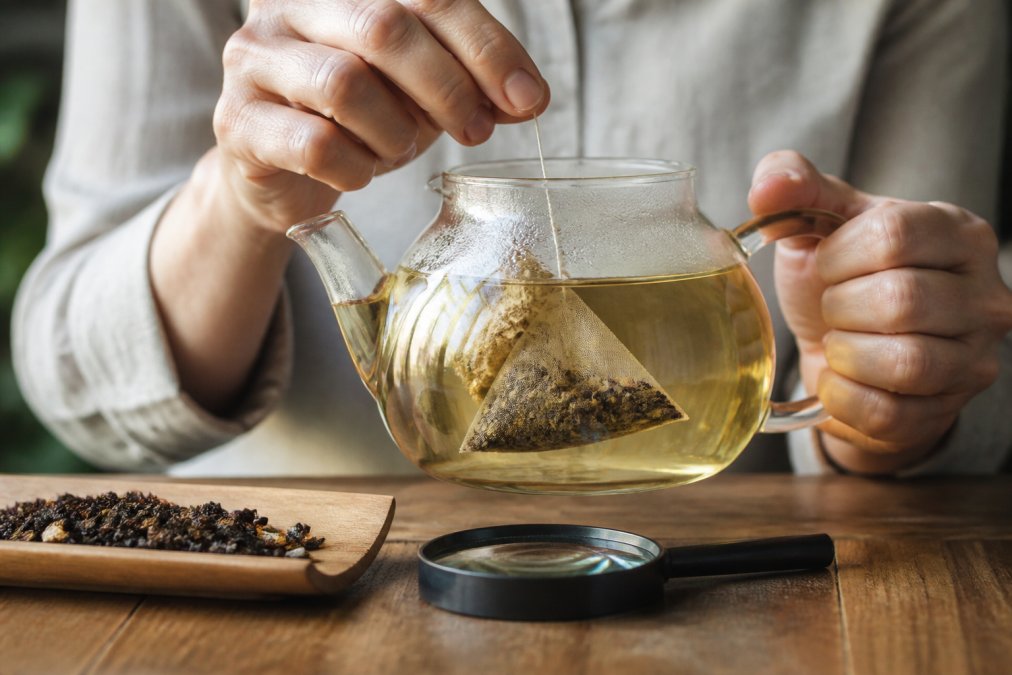
Look for these markers on the box:
- "Plastic-free" stated explicitly, not just "natural"
- Compostable or biodegradable with a certification
- Unbleached paper or plant-based mesh (like cornstarch or PLA)
- No polypropylene listed in materials
Step 4: Use Tea Supply Chain Transparency Tools to Verify Claims
1. Start with the certifier's own lookup database.
- Fair Trade Certified publishes a searchable product and brand database where you can confirm that a specific product, not just the parent company, is certified.
- Fairtrade International maintains a separate database of certified products and operators.
- USDA Organic listings can be checked through the USDA's organic integrity database, which lets you look up certified operations by name.
- Rainforest Alliance and Fair for Life both publish certified-supplier directories you can search by company name.
2. Check the brand's sourcing map or farm list.
- Named estates, cooperatives, or regions (for example, a specific garden in Darjeeling or a named cooperative in Kenya), not just "India" or "Africa."
- A stated percentage of traceable volume. Strong brands often disclose what share of their tea is traceable to farm level. A number like "80% traceable to farm" is far more meaningful than "ethically sourced."
- A date on the page. Sourcing relationships change. A map with no update date may be years out of date.
3. Look for batch-level traceability codes.
4. Read the audit report, not just the summary.
- Who conducted the audit (a named certifier or auditor, not "independent experts")
- What was in scope (labor conditions, pesticide use, water, wages)
- When it was conducted and whether findings were resolved
5. Cross-check against public regulatory records.
| Tool Type | What It Verifies | Where to Find It |
|---|---|---|
| Certifier lookup databases | Whether a specific product is currently certified | Fair Trade Certified, Fairtrade International, USDA Organic Integrity Database, Rainforest Alliance directories |
| Sourcing maps / farm lists | Named origins and traceable volume share | Brand website |
| Batch traceability codes | Origin of a specific lot | Product packaging |
| Published audit reports | Labor and environmental compliance, scope, and date | Certifier or brand impact page |
| Sustainability reports | Yearly progress, goals, and setbacks | Brand's impact page |
A brand that names its farms, publishes audits, and lets you confirm certification in a third-party database is far more trustworthy than one that just says "ethically sourced." The tools exist, the work is knowing where to look.
Step 5: Spot Greenwashing in Ethical Tea Brands
Greenwashing is when a brand markets itself as ethical without real evidence behind the claims. Watch for vague terms like "natural," "eco-friendly," or "sustainably sourced" with no certification or data attached.
Common greenwashing tactics include:
- Vague language that sounds good but means nothing specific
- Misleading imagery like lush farms that aren't the actual source
- Hidden trade-offs, where one green feature masks a bigger problem
- Certification logos used without a valid number or current status
Step 6: Weigh the Hidden Cost of Ethical Tea Brands
The hidden cost of tea goes beyond the price on the box. It includes environmental damage from conventional farming, unfair wages, and the long-term cost of packaging waste. Understanding that economics is what separates a thoughtful purchase from a guilt-driven one.
Why cheap tea is cheap.
- Labor. Tea plucking is still largely hand work. When a farm pays by weight with no floor price, workers absorb the volatility of the market.
- Land. Monoculture tea farming depletes soil, reduces biodiversity, and often relies on synthetic inputs to keep yields up.
- Packaging. Polypropylene mesh bags, foil-lined boxes, and plastic overwrap are inexpensive to produce and expensive to dispose of.
- Middlemen. Long supply chains with multiple brokers add margin at each step, which means less of the retail price reaches the farm.
How to judge whether the premium is real.
Ask yourself:
- Does the brand pay workers a living wage, not just a minimum?
- Are farming methods regenerative, protecting soil and biodiversity?
- Is the packaging compostable or recyclable?
- Does the brand support smallholder farmers long-term?
Post-purchase sustainability: what happens after you brew.
- Tea bags. Conventional bags with polypropylene mesh don't break down in home compost. Plastic-free, plant-based bags (paper, cornstarch, or PLA mesh) can often be composted, but check the brand's instructions, some "compostable" bags are only compostable in industrial facilities.
- Loose leaf. Loose leaf sidesteps the bag entirely. Used leaves can go into compost, and the tin or pouch can be reused or recycled depending on material.
- Packaging. Foil-lined bags and plastic overwrap are hard to recycle in most curbside programs. Paper boxes, unlined pouches, and reusable tins are easier to handle.
- Accessories. A reusable infuser, strainer, or teapot replaces single-use bags over hundreds of brews, the biggest waste reduction per dollar.
Frequently Asked Questions
Which tea company is considered the most ethical?
There is no single 'most ethical' tea company because ethics cover labor, environment, and transparency differently. Look for brands that publish audit reports, hold Fair Trade or Rainforest Alliance certification, and disclose their supply chain. Beverly Blend, for example, offers organic teas like Hibiscus Berry and Jasmine with clear sourcing. Always check a brand's sustainability reporting and third-party certifications rather than relying on marketing claims alone.
How can I verify if a tea brand is truly Fair Trade certified?
Visit the certifier's website, such as Fair Trade USA or Fairtrade International, and search their database for the brand. A legitimate certification will have a license number and audit reports. If a brand claims Fair Trade but cannot provide a certification ID, treat it as a red flag. You can also look for the Fair Trade mark on the packaging, which includes a unique code you can verify online.
Which tea companies don't use plastic in their bags?
Many artisan and loose-leaf brands avoid plastic by using paper, cellulose, or silk bags. To identify plastic-free tea bags, check the bag material: if it feels silky and smooth, it may contain PLA or nylon. Look for brands that explicitly state 'plastic-free' or 'compostable' on the packaging. Beverly Blend offers loose-leaf options, which eliminate the bag entirely. When in doubt, contact the company and ask for material details.
Is organic certification enough to guarantee ethical labor practices?
No. Organic certification covers farming methods like pesticide-free agriculture, but it does not address wage equity, labor rights, or working conditions. For ethical labor, look for additional certifications such as Fair Trade, which sets standards for fair wages and safe working conditions. A brand can be organic but still have poor labor practices. Always check for multiple certifications and supply chain transparency to get a fuller picture.
Choosing ethical tea brands takes more than reading a label. It means checking certifications, verifying supply chains, and asking hard questions about what happens after your cup is empty. Beverly Blend makes that easier with loose leaf teas sourced and packed to order, like our Masala Chai and Hibiscus Berry Tea, plus fast delivery that keeps every batch fresh. Get started with Beverly Blend and brew a cup that matches your values.
