

How to Identify Coffee Roast Levels by Sight
Table of Contents
- Understanding Coffee Roast Levels and What They Mean
- Light vs Medium vs Dark Roast: The Three Main Categories
- Coffee Bean Roast Stages: From Green to Dark
- How to Tell If Coffee Beans Are Oily: Surface Appearance Clues
- Using a Coffee Bean Color Chart for Visual Identification
- Common Mistakes When Identifying Roast Levels by Sight
- How Roast Level Affects Flavor Profile and Body
- Practical Tips for Inspecting Beans Under Consistent Lighting
- Frequently Asked Questions
Last Updated: October 19, 2026
Understanding Coffee Roast Levels and What They Mean
Learning to identify coffee roast levels is a core skill for anyone serious about their morning cup. Roast level determines flavor intensity, body, and acidity, so recognizing visual differences lets you choose beans that match your taste.
Roasting transforms green beans through distinct stages marked by visible color and texture shifts, your job is to read those signals accurately.
The three main roast categories, light, medium, and dark, represent measurable stages in the roast progression, each with distinct visual markers that help you select beans matching your brewing method and flavor expectations.
Light vs Medium vs Dark Roast: The Three Main Categories
The difference between light, medium, and dark roast comes down to roast time and temperature exposure. Each category has a distinct visual profile you can learn to recognize instantly.

Light Roast: Tan to Light Brown Beans
Light roast beans stop roasting early, before the first crack fully completes. They appear tan to light brown with a dry surface and minimal oil sheen, retaining more origin characteristics because the roast hasn't overpowered the bean's natural flavors.
When you inspect light roast beans under consistent lighting, you'll notice:
- Color ranges from tan to light cinnamon brown
- Surface appears matte or slightly dull
- Bean texture looks intact without visible cracks
- Individual beans show some color variation across the batch
Light roast coffee delivers higher acidity and brighter, more complex flavors, without the heavy body longer roasting develops. If you prefer the origin's unique notes, floral, fruity, or tea-like, light roast preserves them.
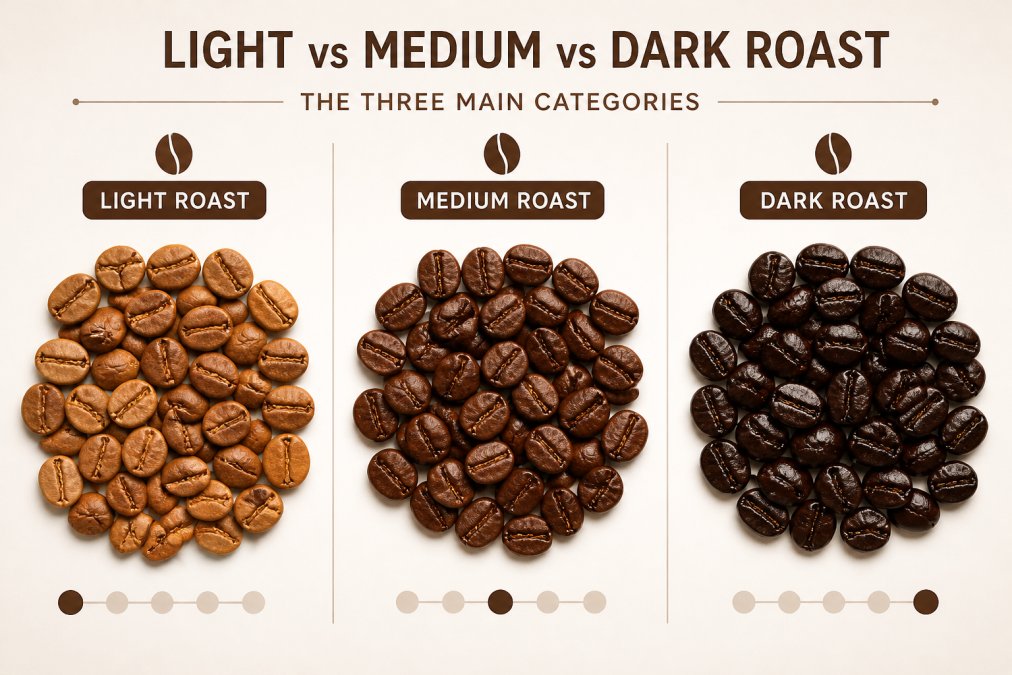
Medium Roast: Chocolate Brown Appearance
Medium roast beans have progressed further into the roast cycle, developing a rich chocolate brown color darker than light roast but short of dark roast's deep brown. The surface shows slight oil development, though not yet the shiny appearance of darker roasts.
Visual characteristics of medium roast include:
- Color appears consistently chocolate brown across most beans
- Surface has a slight sheen but isn't glossy
- Beans show minimal visible oil or moisture
- Color is more uniform than light roast batches
Medium roast balances origin flavor and roast character: some of the bean's original complexity plus the warmth and body roasting develops. That's why it remains popular for everyday drinking, it works across brewing methods and most palates.
Dark Roast: Deep Brown to Nearly Black
Dark roast beans spend significant time in the roaster, often progressing past the first crack into the second crack stage. The color shifts to deep brown, sometimes approaching black, and the surface becomes noticeably oily and shiny, emphasizing roasted character over origin notes.
Dark roast visual markers include:
- Color ranges from deep brown to nearly black
- Surface appears glossy and visibly oily
- Beans may look slightly shriveled compared to lighter roasts
- Oil coating is uniform across most beans in the batch
Dark roast delivers bold, heavy-bodied coffee with low perceived acidity and deep roasted, sometimes smoky or charred flavors. Beverly Blend's Extra Dark Roast Coffee ($19.99) showcases this profile with Central American beans roasted to an extra-dark level, developing pronounced, heavy-bodied character with minimal acidity.
Coffee Bean Roast Stages: From Green to Dark
Understanding the roast progression helps you recognize where a bean falls on the spectrum. Coffee moves through measurable stages marked by color shifts and physical changes, not instantly from light to dark.
First Crack and Second Crack Explained
The roast progression includes two major acoustic events roasters use as reference points: the first crack and the second crack, which correspond to visible changes you can learn to recognize.
First crack occurs when beans reach approximately 356-400°F internally. Pressure builds until the cell structure ruptures, creating an audible crack.
Second crack happens at higher temperatures, typically around 410-430°F. The bean's structure ruptures again, and significant oil migration begins, producing the glossy, oily surface you see in medium and dark roasts.
Medium roast beans are usually pulled between the first and second crack, or very early in the second crack phase.

The visual progression from first crack to second crack shows:
- First crack zone: tan to light brown, dry surface
- Between cracks: medium brown, slight oil development
- Second crack zone: dark brown to nearly black, glossy oily surface
How to Tell If Coffee Beans Are Oily: Surface Appearance Clues
Surface oil is one of the most reliable visual indicators of roast depth, but only if you can distinguish natural roasting oils from other surface conditions.
Roasting oils develop as the bean's cellular structure breaks down under heat and migrates to the surface, creating that characteristic sheen. The process accelerates during and after the second crack.
When inspecting beans for oil presence:
- Glossy appearance indicates darker roasts (medium-dark to dark)
- Matte or dull surface suggests lighter roasts (light to early medium)
- Uniform coating means consistent roasting across the batch
- Uneven oil distribution may indicate uneven roasting or beans at different roast stages
Surface appearance can be deceptive: moisture, processing residue, or dust can create a shiny look. Consistent lighting matters, natural daylight or a bright lamp reveals true surface texture better than fluorescent overhead lighting, which creates misleading reflections.
The key distinction: roasting oils feel slightly tacky and have a coffee aroma. If beans look oily but smell musty or off, that's not roasting oil, that's moisture or mold developing.
Using a Coffee Bean Color Chart for Visual Identification
A coffee bean color chart provides a reference framework for matching your beans to standard roast categories, showing beans at different roast stages for side-by-side comparison.
The most useful charts display whole beans under consistent lighting, removing variables like shadows or glare. When using a chart:
Extra Dark Roast Coffee – Bold, Oily & Low Acidity →
- Hold your beans near the chart in natural daylight
- Look at multiple beans from your bag, not just one
- Note the overall color trend across your batch
- Compare both the bean body color and surface appearance
Most charts divide roasts into these visual zones:
| Roast Category | Color Range | Surface Appearance | Typical Stage |
|---|---|---|---|
| Light | Tan to light cinnamon | Dry, matte | Around first crack |
| Medium | Chocolate brown | Slight sheen | Between cracks |
| Dark | Deep brown to black | Glossy, oily | After second crack |
Roasting isn't perfectly uniform, so your bag will likely contain beans at slightly different roast depths. That's normal, look at the overall trend rather than expecting every bean to match the chart exactly.
Beverly Blend's Medium Roast Coffee ($19.99) displays that consistent chocolate brown appearance you'd reference against a medium roast section of a color chart. The French Roast ($19.99) shows the deep brown with visible oil sheen characteristic of dark roast standards.

Common Mistakes When Identifying Roast Levels by Sight
Even experienced coffee drinkers make predictable errors when visually identifying roast levels. Recognizing them helps you avoid them.
Confusing uneven color with poor roasting. Batches naturally show some color variation, since beans roast slightly faster or slower due to size and roaster positioning.
Misjudging color under poor lighting. Fluorescent office lighting, dim indoor light, or shadows distort color perception, what looks dark brown indoors might be medium brown in daylight.
Assuming all oily beans are dark roast. Medium roast beans can show some surface oil, especially from the later side of the medium window.
Ignoring bean size differences. Larger and smaller beans from the same roast can appear slightly different in color due to surface area.
Forgetting that freshness affects appearance. Very fresh roasted beans show their true color most clearly.
How Roast Level Affects Flavor Profile and Body
Visual roast level directly correlates with what you'll taste and how the coffee will feel in your mouth. Understanding this connection helps you choose roasts that match your preferences.
Light roast delivers brighter, more acidic coffee with complex origin flavors. The shorter roast time preserves the bean's natural characteristics.
Medium roast balances origin character with roast development. You get some of the bean's natural complexity while tasting the warmth that roasting creates. Acidity is moderate.
Dark roast emphasizes roasted character over origin. You taste deep, bold flavors, sometimes smoky, sometimes slightly bitter, always intense. Acidity is low. Body is heavy and full.
The visual color you identify directly predicts these flavor and body characteristics.
Practical Tips for Inspecting Beans Under Consistent Lighting
Accurate visual identification requires controlling the variables that affect how you perceive color. Consistent lighting is the foundation of reliable bean assessment.
Use natural daylight when possible. Position yourself near a window with indirect sunlight.
If natural light isn't available, use a bright LED lamp. Choose a lamp with daylight-temperature bulbs (around 5000K color temperature).
Spread beans on a neutral surface. Use white, gray, or light tan paper or ceramic.
Inspect multiple beans, not just one. Pull five to ten beans from different parts of your bag. Look at them together.
Avoid assessing beans when tired or distracted. Your color perception shifts throughout the day and with fatigue.
Document what you observe. Note the color, surface appearance, and any other observations. Over time, this builds your visual reference library.
Learning to identify coffee roast levels by sight transforms how you select and enjoy coffee. Our Medium Roast and Extra Dark Roast options provide excellent reference points for building your visual identification skills.
Frequently Asked Questions
What are the three roast levels of coffee?
The three main roast levels are light, medium, and dark. Light roast beans are removed from the roaster shortly after the first crack, retaining a tan to light brown color and dry surface. Medium roast develops a chocolate brown appearance with minimal surface oil, balancing origin flavor with roasted character. Dark roast beans are roasted past the second crack, turning dark brown to nearly black with a visibly oily surface and intense, heavy-bodied flavor profile.
How can you tell if coffee beans are lightly or darkly roasted by color alone?
Light roast beans display tan, cinnamon, or light brown hues with a completely dry surface. Dark roast beans are noticeably darker, medium brown to nearly black, with a shiny, oily sheen visible on the bean surface. The progression is clear: as roast time increases, bean color deepens and surface moisture transforms from dry to visibly oily. However, color alone can be misleading under poor lighting, so inspect beans under consistent, natural light for the most accurate assessment.
Do dark coffee beans always look oily?
Most dark roast beans display visible surface oil because extended roasting brings oils to the bean surface. However, not every dark bean will appear equally oily depending on bean variety, roast profile, and how recently it was roasted. Some dark roasts may have a matte sheen rather than a glossy coating. The presence of oil is a strong indicator of dark roast, but the degree of visible oiliness can vary. Conversely, light and medium roasts should have dry, matte surfaces with no visible sheen.
What do first crack and second crack tell you about coffee roast level?
First crack is an audible popping sound that occurs around 350-400°F and marks the boundary between light and medium roast. Beans removed shortly after first crack produce light roast coffee with higher acidity and origin flavor. Second crack occurs around 420-430°F and signals the transition to dark roast. Beans roasted between the two cracks are medium roast, while beans roasted past second crack become dark roast with low acidity and heavy body. These acoustic milestones help roasters and visual inspectors understand the roast progression.