

Why Artisan Coffee Costs More: A Price Breakdown
Table of Contents
- Why Artisan Coffee Costs More: The Real Drivers
- High-Altitude Farming and Specialty Coffee vs Commodity Coffee
- How to Tell if Coffee Beans Are Fresh and Why Freshness Commands Premium Prices
- Processing Methods, Labor Intensity, and Quality Grading
- Benefits of Direct Trade Coffee Over Commodity Supply Chains
- Supply Chain Costs: Transportation, Storage, and Market Volatility
- Breaking Down the Price of Your Cup
- Conclusion
Last Updated: August 22, 2026
Why Artisan Coffee Costs More: The Real Drivers
When you reach for a bag of artisan coffee, the price tag often makes you pause. The answer isn't marketing hype or premium packaging, it's economics, geography, and labor. At Beverly Blend, we've spent years sourcing specialty-grade beans and roasting them to order. The cost difference reflects real, measurable differences in how coffee gets from a mountainside farm to your cup.
A bag of artisan coffee might cost two to three times what you'd pay for mass-produced beans. That premium covers distinct, tangible factors: where the beans grow, how they're processed, who handles them, and how fresh they are when they reach you.
High-Altitude Farming and Specialty Coffee vs Commodity Coffee
Specialty coffee begins with where the beans grow. High-altitude farming produces beans with greater flavor complexity and higher cupping scores, but it demands more from farmers and yields less per acre.
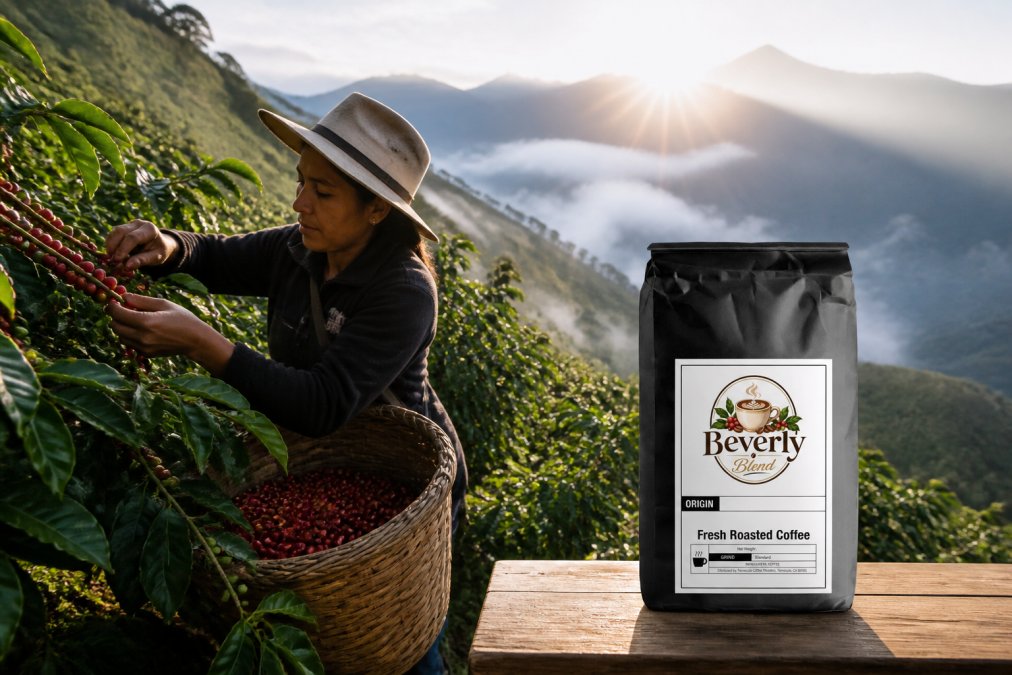
Specialty coffee typically grows between 3,000 and 6,500 feet elevation (peer-reviewed research). At these altitudes, the longer growing season and cooler temperatures allow beans to develop slowly, creating the flavor complexity coffee enthusiasts seek. A high-altitude coffee from Guatemala tastes more vibrant and nuanced than one grown at lower elevations in the same country.
But altitude comes with a cost. Steep terrain means farmers can't use machinery, everything is hand-picked. Harvesting specialty coffee is labor-intensive in ways commodity coffee harvesting isn't. Commodity operations prioritize yield and speed; specialty operations prioritize bean quality and ripeness.
A coffee farm at high altitude also produces fewer pounds per acre than a low-altitude farm. Farmers accept this because specialty buyers pay more per pound. Climate extremes, unexpected frosts, extended droughts, and heavy rains during harvest threaten high-altitude operations more than they threaten large commodity producers who can absorb losses across multiple regions.
This is why artisan coffee costs more from the moment the cherry is picked. The farmer's labor cost per pound is higher, the yield per acre is lower, and the risk is greater.
How to Tell if Coffee Beans Are Fresh and Why Freshness Commands Premium Prices
Freshness is where artisan coffee economics get interesting. A fresh coffee bean tastes dramatically different from a stale one. Coffee beans begin to lose their aromatics and flavor compounds within days of roasting (peer-reviewed research). A bean roasted two weeks ago tastes noticeably better than one roasted three months ago.
Here's how to tell if coffee beans are fresh:
Check the roast date printed on the bag. Fresh artisan coffee should have been roasted within the last two to three weeks. Look at the beans themselves, fresh beans have a slight sheen and vivid color, while oxidized beans look dull or faded. Smell the coffee when you open the bag; fresh coffee has a strong, pleasant aroma. Brew a small amount and taste it; fresh coffee brews with visible crema and clean, distinct flavor.
Why does freshness command premium prices? Achieving freshness requires a different supply chain model. Commodity coffee is roasted in bulk, packaged, and shipped to warehouses where it sits for months. Artisan roasters roast in smaller batches more frequently. Many, including Beverly Blend, roast to order, meaning your beans are roasted after you place your order and shipped within days. This model costs more to operate, smaller batch sizes mean higher per-pound roasting costs, and faster shipping costs more than slow freight.
But the result is a product that tastes objectively better. A coffee roasted to order and delivered fresh within a week outperforms coffee that's been sitting in a warehouse for six months.
Processing Methods, Labor Intensity, and Quality Grading
How coffee is processed after harvest dramatically affects its final flavor and cost. Processing is where artisan coffee begins to diverge from commodity coffee in terms of labor and precision.
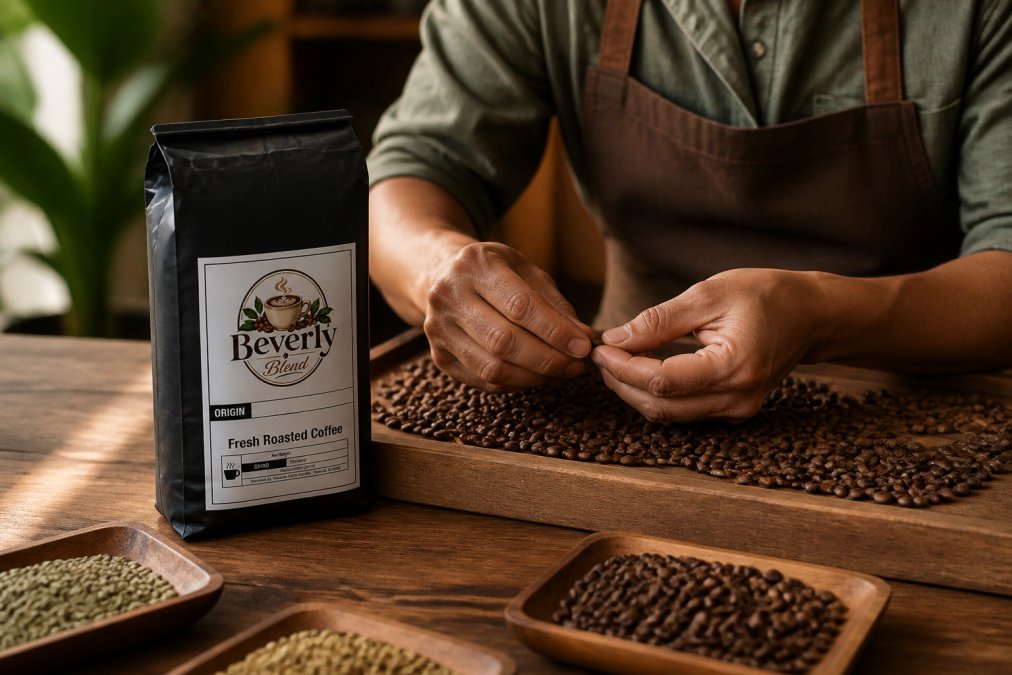
There are three primary processing methods: washed (wet), natural (dry), and pulped natural (honey). Washed processing removes the fruit using water and friction, the most labor-intensive method requiring constant monitoring for two to three weeks. Natural processing skips the water step, drying beans inside the fruit, which uses less water and labor but requires careful monitoring to prevent spoilage. Pulped natural processing splits the difference, removing the fruit but leaving some mucilage on the bean during drying.
Specialty coffee operations choose processing methods based on desired flavor outcome, not cost. Commodity operations optimize for speed and yield. This difference in priorities creates a cost gap.
Quality grading happens after processing. Specialty coffee uses cupping scores, a standardized tasting protocol where trained cuppers evaluate aroma, flavor, acidity, body, and overall balance on a 100-point scale. Beans scoring 80 or above are specialty-grade (sca.coffee). Grading requires trained personnel and time. Commodity operations skip cupping or do minimal grading. Specialty operations grade every batch, adding cost but ensuring consistency and quality.
The labor intensity of processing and grading is non-negotiable for specialty coffee. You cannot make a high-cupping-score coffee without careful processing and proper grading.
Benefits of Direct Trade Coffee Over Commodity Supply Chains
The supply chain structure fundamentally shapes coffee prices. Direct trade relationships create a different economic model than commodity supply chains.
In commodity coffee, beans pass through multiple intermediaries, farmer to local buyer to exporter to importer to roaster to retailer. Each intermediary takes a margin. The farmer receives less than 10 percent of the retail price.
Direct trade eliminates most intermediaries. A specialty roaster buys directly from a farmer or farmer cooperative, negotiating a price that works for both, typically paying significantly more than commodity prices. The farmer receives higher income and stability; the roaster gains traceability, consistency, and the ability to source specific flavor profiles.
But direct trade costs more. Without intermediaries handling logistics, the roaster must manage relationships with multiple farms, coordinate shipping, handle quality control, and manage inventory risk directly. Direct trade also supports smaller farms producing 10,000 pounds per year, volumes too small for commodity channels. The premium prices they receive justify the effort required to produce specialty-grade coffee.
Supply Chain Costs: Transportation, Storage, and Market Volatility
Once coffee is roasted, it enters a supply chain where costs accumulate quickly. Specialty coffee requires faster, more careful transportation than commodity coffee. Slow ocean freight isn't viable for artisan roasters, by arrival, the coffee is already stale. Specialty roasters use air freight or expedited shipping, which costs significantly more per pound.
Storage adds cost too. Coffee needs controlled conditions, cool and dry, away from light. Specialty roasters often use nitrogen-flushed bags to preserve freshness. Commodity operations use cheaper bags and accept some flavor loss.
Market volatility affects pricing in ways most consumers don't realize. Coffee is traded on global exchanges, and prices fluctuate based on supply, demand, currency movements, and speculation. Specialty coffee roasters can't absorb these price swings the way large commodity roasters can. When global coffee prices spike due to poor harvests, specialty roasters feel the impact immediately and must raise prices. Commodity roasters have the scale and financial sophistication to manage volatility.
Breaking Down the Price of Your Cup
Understanding where the price of artisan coffee actually goes helps explain why it costs more. For a $20 bag of specialty coffee:
The farmer receives approximately 20-25 percent ($4-5). This is substantially higher than commodity coffee, where farmers often receive 5-10 percent. Processing, milling, and export handling account for roughly 10-15 percent ($2-3). Import duties, shipping, and logistics consume roughly 5-10 percent ($1-2), including air freight and import tariffs. Roasting and packaging account for roughly 15-20 percent ($3-4), covering labor, equipment, and materials. Retail markup and overhead account for roughly 25-35 percent ($5-7), covering operating costs, storage, staff, and profit margin.
Almost every step involves higher costs for specialty coffee compared to commodity coffee. The farmer is paid more, processing is more careful and labor-intensive, shipping is faster and more expensive, roasting is done in smaller batches, and packaging is better quality.
Conclusion
Artisan coffee costs more because every stage of production, from high-altitude farming through direct trade sourcing to roasting to order, involves deliberate choices that prioritize quality over efficiency. The premium reflects real economic differences, not marketing.
When you understand these factors, the price makes sense. A specialty-grade coffee roasted fresh and shipped within days tastes objectively better than coffee sitting in a warehouse for months. At Beverly Blend, we source carefully, roast to order, and ship fast. Our specialty coffees deliver the complexity and freshness that justify their cost. When you brew a fresh cup, you experience exactly why artisan coffee costs more, and why it's worth it.
Consider elevating your daily ritual with our Whiskey Barrel Aged coffee for $19.99, a single origin Guatemala aged 30 days in a Bourbon barrel and then roasted to order. Or explore our unique Coffee with Mushrooms Dark Roast for $20.99, infused with Lion's Mane, Cordyceps, and Reishi mushrooms. For a lighter option, try our Coffee with Mushrooms Medium Roast at $20.99. If you enjoy a hint of sweetness, our Dubai Chocolate blend, lightly flavored with natural flavorings, is available for $19.99.


Frequently Asked Questions
Q: Why has coffee suddenly become so expensive?
A: Artisan coffee costs more due to multiple converging factors: climate extremes affecting yields, increased labor costs for hand-harvesting and processing, fair trade and direct trade premiums that ensure farmer viability, specialty-grade bean selection with higher cupping scores, and supply chain disruptions affecting logistics. Additionally, roasting to order and smaller batch production increase per-unit costs compared to mass commodity production. Market volatility and currency fluctuations also impact pricing.
Q: What factors contribute to the cost of specialty coffee beans?
A: Specialty coffee beans cost more because they're grown at high altitudes where flavor complexity develops, harvested selectively by hand rather than mechanically, processed using labor-intensive methods like washed or natural fermentation, graded for cupping scores above 80 points, and sourced through direct or fair trade channels that pay farmers sustainable prices. Small-batch production and traceability requirements add overhead. Storage and shelf-life management for green coffee also increase costs before roasting.
Q: Is artisan coffee worth the higher price point?
A: Artisan coffee's premium reflects genuine quality differences: superior flavor profiles, fresher beans roasted to order, ethical sourcing that supports farmer economic viability, and supply chain transparency. For daily drinkers, roasted-to-order options like Beverly Blend's single-origin and specialty blends deliver noticeably better taste and aroma than grocery-store commodity coffee. The cost difference often amounts to $0.50-$1.50 per cup, which many consumers find justified by the experience and quality. Freshness alone extends shelf life and flavor retention significantly.
Q: How does direct trade impact the price of artisan coffee?
A: Direct trade eliminates middlemen and commodity brokers, allowing roasters to pay farmers 20-40% above fair trade minimums. This higher farmer compensation is reflected in retail pricing but ensures economic viability for small-batch producers and sustainable agricultural practices. Direct relationships also enable traceability and quality control at origin, reducing waste and improving bean consistency. The transparency and sustainability premiums justify higher consumer prices while supporting long-term agricultural investment in specialty coffee regions.
The real question isn't why artisan coffee costs more. It's why commodity coffee costs so little. Once you understand the supply chain, the price premium for quality becomes obvious. If you're ready to experience the difference fresh, specialty-grade coffee makes, explore Beverly Blend's collection and discover what you've been missing in your morning ritual.
This article was written using GrandRanker