

What Are the Benefits of Direct Trade Coffee?
Table of Contents
- What Direct Trade Coffee Means for Your Morning Cup
- Fair Trade vs Direct Trade Coffee: How the Models Differ
- The Financial Breakdown: Where Your Money Actually Goes
- How Direct Trade Changes Coffee Quality and Processing
- The Benefits of Single Origin Coffee Sourced Through Direct Trade
- The Importer's Role: Who Moves the Beans and Why It Matters
- How to Identify Ethically Sourced Coffee You Can Trust
- Pros and Cons of Direct Trade Coffee for Farmers and Roasters
- Frequently Asked Questions
Last Updated: September 14, 2026
What Direct Trade Coffee Means for Your Morning Cup
Direct trade coffee is a sourcing model in which roasters buy beans straight from farmers or cooperatives, bypassing commodity market exchanges and traditional importers. This sourcing model changes what ends up in your cup. The model also comes with real trade-offs that most marketing copy skips.
Here is the honest version: direct trade has no legal definition and no universal certifying body. That means a roaster can print "direct trade" on a bag with nothing behind it. The roaster-farmer relationship is only as strong as the roaster's willingness to be transparent about who grew the coffee and what was paid.
Below, we break down where your money actually goes, how direct sourcing affects quality, and how to tell a genuine program from a label.
Fair Trade vs Direct Trade Coffee: How the Models Differ
Fair trade is a third-party certification system: farmers pay to join a cooperative, the cooperative meets social and environmental standards, and a certifying body verifies compliance. Direct trade skips the certification layer and relies on the roaster's own contracts and relationships.
The practical difference comes down to enforcement and flexibility.
| Feature | Fair Trade | Direct Trade |
|---|---|---|
| Oversight | Third-party certification | None; roaster self-reports |
| Minimum price | Set floor for members | Negotiated per contract |
| Farmer eligibility | Must join a cooperative | Individual farms can participate |
| Quality incentives | Limited | Strong; premiums tied to cup score |
| Transparency | Audit-based | Varies widely by roaster |
Where Certification Fits In
Certification is not the enemy of direct trade; the two often overlap. Many roasters buy from farms that hold organic or Rainforest Alliance certification while also negotiating direct contracts. The USDA Agricultural Marketing Service organic standards govern what "organic" can legally claim on a coffee label, while "direct trade" has no equivalent federal definition. That gap is exactly why you have to evaluate the roaster, not the sticker.
The Financial Breakdown: Where Your Money Actually Goes
Most coffee moves through a long chain: farmer, cooperative or mill, exporter, importer, roaster, retailer. Each hand takes a margin, and the farmer typically captures the smallest share of the retail dollar. Direct trade compresses that chain by having the roaster contract with the producer or their cooperative, but it does not delete every link, logistics, customs, and warehousing still have to be paid for by someone.
Here is the part most guides skip: a hypothetical breakdown of a single 12-ounce bag sold at retail for $20. The numbers below are illustrative, not a quote from any specific roaster, but they reflect the general shape of how money moves through specialty coffee.
| Stage | Who takes it | Approx. share of $20 retail |
|---|---|---|
| Farm gate (green coffee) | Producer or cooperative | $2.00-$4.00 |
| Export and milling | Exporter, dry mill, bagging | $0.50-$1.00 |
| Import and logistics | Importer, freight, customs, warehousing | $1.00-$2.00 |
| Roasting | Roaster (green cost, labor, gas, packaging) | $3.00-$5.00 |
| Distribution and retail | Distributor, cafe, or grocery margin | $6.00-$10.00 |
Two things jump out. First, the farm gate share is small even in a premium bag, which is why a few cents per pound of premium matters enormously at origin. Second, the largest single slice usually goes to whoever sells the bag to the end drinker, not to the producer.
What direct trade actually changes is the middle. When a roaster buys directly, the exporter and importer margins can shrink or shift into a logistics-only fee, and the roaster can route the savings to the farm gate. In practice, many direct trade contracts pay a premium over the commodity market price, often expressed as a fixed cents-per-pound differential above the published market, plus a quality bonus tied to cup score. The Commodity Futures Trading Commission oversees the futures market that sets that baseline price, which is why the differential is the number worth asking about.
The catch is that the roaster now absorbs costs a traditional importer used to carry: freight, customs brokerage, warehousing, and the financing that lets a producer get paid before the crop ships. Those costs are real, and a roaster who claims to pay double the market price while quietly cutting logistics corners is not running the program the label implies.
When you evaluate a direct trade claim, the useful question is not "is this direct?" but "what was the farm gate price, and how does it compare to the market?" A roaster who can answer that is running a program. One who cannot is running a label.
How Direct Trade Changes Coffee Quality and Processing
Quality control is where direct trade earns its reputation. When a roaster visits a farm or works closely with a producer, they can influence harvesting practices, processing methods, and roasting profile decisions that a commodity buyer never touches.
A common mistake is assuming direct trade automatically means better beans. It does not. What it does mean is that the roaster has a direct line to give feedback: "pick riper cherries," "extend the fermentation," "separate this lot." That feedback loop is what raises cup quality over successive harvests.
The flip side is fragility. A single bad harvest, a storm, or a disease outbreak can wipe out a direct relationship that took years to build. Market volatility hits both sides.
The Benefits of Single Origin Coffee Sourced Through Direct Trade
Single origin coffee and direct trade reinforce each other. A single-origin lot comes from one farm, region, or cooperative, which makes traceability possible. You cannot trace a blend back to a specific producer; you can trace a single-origin lot.
That traceability is what lets a roaster pay a premium tied to a specific harvest rather than a commodity market rate. The benefits of single origin coffee, in this context, are less about flavor purity and more about accountability. When you know the farm, you can ask what was paid.
The Importer's Role: Who Moves the Beans and Why It Matters
Direct trade does not eliminate the importer; it changes the importer's job. Most roasters still work with specialty importers who handle logistics, customs, and warehousing, but the importer acts as a facilitator rather than a price-setting middleman.
This is the detail most guides skip. A good importer provides infrastructure investment, financing for harvests, and quality control at origin. A bad one adds cost without adding value. The difference shows up in how much reaches the producer.
How to Identify Ethically Sourced Coffee You Can Trust
Verification is the hardest part for consumers, because no single authority certifies direct trade claims. Unlike organic, which is governed by the USDA Agricultural Marketing Service organic standards, "direct trade" has no federal definition and no required audit. That means the burden falls on you, but it is a manageable burden if you know what to ask.
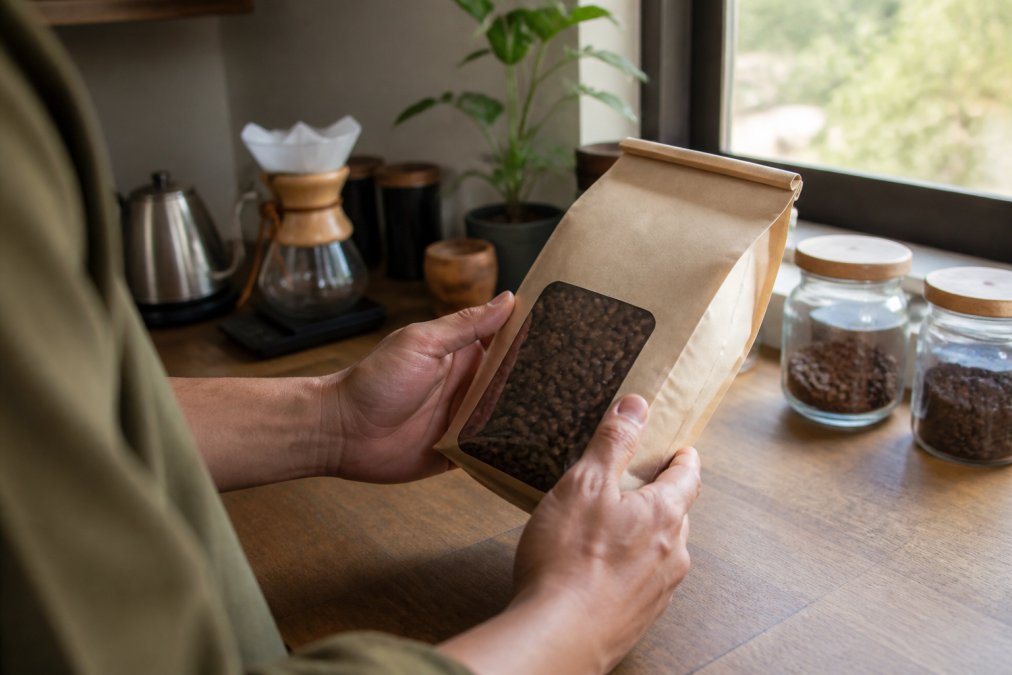
Start with what is printed on the bag
A genuine program leaves a paper trail. Look for:
- Farm or cooperative name printed on the bag
- Harvest year listed (not just "current crop")
- Specific price or premium disclosure (some roasters publish this)
- Roaster publishes origin reports or farm visit notes
- A named importer or export partner
- Certification logos where relevant (organic, Rainforest Alliance)
Any one of these alone is weak evidence. Together they form a pattern that is hard to fake consistently across a whole catalog.
Then pressure-test the claims
The checklist tells you what to look for. The questions below tell you whether the roaster actually has answers.
- "What was the farm gate price, and how does it compare to the market?" A real program can name a differential, for example, a fixed number of cents per pound above the published market price. A vague answer like "we pay well above market" is a red flag.
- "Which farm, and which harvest?" Direct trade is lot-specific. If the roaster cannot name the producer and the year, the coffee is probably not traceable to a single relationship.
- "Who is your importer, and what do they do?" Most roasters still use a specialty importer for logistics and financing. A roaster who claims to have no middleman at all is either very small or not being straight with you.
- "Can I see a farm visit report or origin notes?" Many roasters publish these. The absence of any documentation is more telling than the presence of a logo.
- "What happens when the harvest fails?" Long-term relationships survive bad years. A roaster who only buys in good years is trading, not partnering.
Know what the labels do and do not mean
Certification logos are useful but limited. Organic speaks to farming inputs, not to price paid to the farmer. Rainforest Alliance covers environmental and social criteria but does not guarantee a premium above the market. Fair Trade sets a floor price and a social premium, but it applies to cooperatives, not to individual farms. None of these seals verifies a direct trade claim, because no such seal exists.
For claims about environmental or social benefits on packaging, the Federal Trade Commission guidance on environmental marketing claims sets the standard for what companies can legally say. If a roaster's marketing language sounds broader than what the FTC would allow, that is worth noting.
The bottom line for shoppers
You will not find a seal that proves direct trade. What you can find is a roaster who answers specific questions with specific numbers, names, and years, and who is willing to say when a relationship did not work out. That kind of transparency is harder to fake than a logo, and it is the closest thing to verification the model currently offers.
Pros and Cons of Direct Trade Coffee for Farmers and Roasters
Direct trade is not a clean win for everyone. Producers gain access to premium pricing and long-term contracts, but they also take on more risk and often need infrastructure investment to meet quality targets. Roasters gain quality control and a story to sell, but they absorb logistics costs and carry the burden of proving their claims.
The model works when both sides commit to transparency. It fails when it becomes a label instead of a practice.
Frequently Asked Questions
What does direct trade coffee mean?
Direct trade coffee means a roaster buys beans straight from a farm or cooperative instead of going through a commodity broker or auction. The roaster and producer negotiate price, volume, and quality standards themselves, often through multi-year contracts. Because no single certifying body governs the term, the terms of each deal vary by roaster. That flexibility lets buyers pay above commodity market rates for specific lots, but it also means the label carries no independent verification unless the roaster publishes its own sourcing reports.
How does direct trade differ from Fair Trade certification?
Fair Trade uses third-party certification with a guaranteed minimum price and a social premium paid to cooperatives. Direct trade skips the certifying body and relies on the roaster's own relationship with the farm. In practice, direct trade agreements often pay more per pound than the Fair Trade floor, but there is no outside audit confirming it. Fair Trade gives you a standardized benchmark; direct trade gives you a relationship. Which model suits you depends on whether you value verifiable standards or roaster accountability.
Is direct trade coffee more expensive for the consumer?
Usually yes, and the gap can be significant. When a roaster pays a farm well above commodity market rates, covers logistics and importing, and roasts in small batches, those costs reach the shelf. Part of the premium also reflects quality: specialty-grade beans with careful harvesting and processing cost more at origin. Pricing varies by origin, lot size, and roast, so check the roaster's site for current pricing rather than assuming a fixed markup.
How can I tell if a roaster's direct trade claims are real?
Look for specifics, not slogans. Reputable roasters name the farm, cooperative, or washing station, list the region and altitude, and often publish the price paid per pound. Some release annual transparency reports. If a bag says only 'direct trade' with no farm name, treat it as marketing until you find more detail. You can also ask the roaster directly who they buy from and how long they have worked with that producer, which is exactly the kind of question a genuine sourcing program can answer.
Choosing coffee that genuinely supports the people who grow it takes more than reading a label. Beverly Blend sources beans directly and roasts to order, so you get maximum flavor and aroma with a clear line back to the farm. Our fast, automated fulfillment means fresh coffee at your door without inventory hassle, and our single-origin selections let you trace exactly what you are drinking. Get started with Beverly Blend and taste the difference direct sourcing makes in your daily cup.