

How to Identify Quality Coffee Beans: A 2026 Guide
Table of Contents
- Why Bean Quality Matters for Your Cup
- How to Tell If Coffee Beans Are Fresh
- Specialty Grade Coffee Standards Explained
- Bean Uniformity and Density: Technical Indicators of Quality
- Understanding Origin Transparency and Single-Origin Sourcing
- How to Store Coffee Beans for Maximum Freshness
- Processing Methods and Their Impact on Flavor Profile
- Sensory Cupping: How to Taste Coffee Like a Professional
Last Updated: August 27, 2026
Why Bean Quality Matters for Your Cup
The difference between a forgettable cup and one that stays with you comes down to the beans themselves. Start with mediocre beans and even a $3,000 espresso machine won't save you. Start with exceptional beans and a simple French press becomes revelatory.
At Beverly Blend, we meticulously source single-origin coffees from specific regions and altitudes because bean quality determines flavor profile, aroma, and your entire coffee experience. When you know what to look for, you stop overpaying for commodity coffee and start investing in beans that actually deliver.
Coffee marketing is deliberately confusing. Terms like "specialty grade," "single-origin," and "freshly roasted" get thrown around without meaning. Retailers hide roast dates. Origins become vague. This guide cuts through that confusion. We'll walk you through the specific markers that separate quality beans from the rest: visual cues, sensory tests, and technical standards professionals use.
How to Tell If Coffee Beans Are Fresh
Freshness is the foundation of everything. A perfectly sourced bean tastes flat and stale if it's been sitting for six months.
Check the Roast Date First
The roast date is your single most important data point. Coffee begins to oxidize immediately after roasting. Within the first two weeks, you're in the optimal window (peer-reviewed research). By four weeks, the beans are noticeably less vibrant. After eight weeks, you're drinking stale coffee.
Look for the roast date printed clearly on the bag. If you can't find it, that's a red flag. Reputable roasters like Beverly Blend print it prominently because they want you to know the beans are fresh. Some bags show only an expiration date, which is misleading, coffee degrades continuously from the moment it's roasted, not on a specific date.
The ideal scenario: roast date within the last two weeks. Acceptable range: up to four weeks. Beyond that, the beans have lost significant aromatics and complexity.
Visual Inspection: What Healthy Beans Look Like
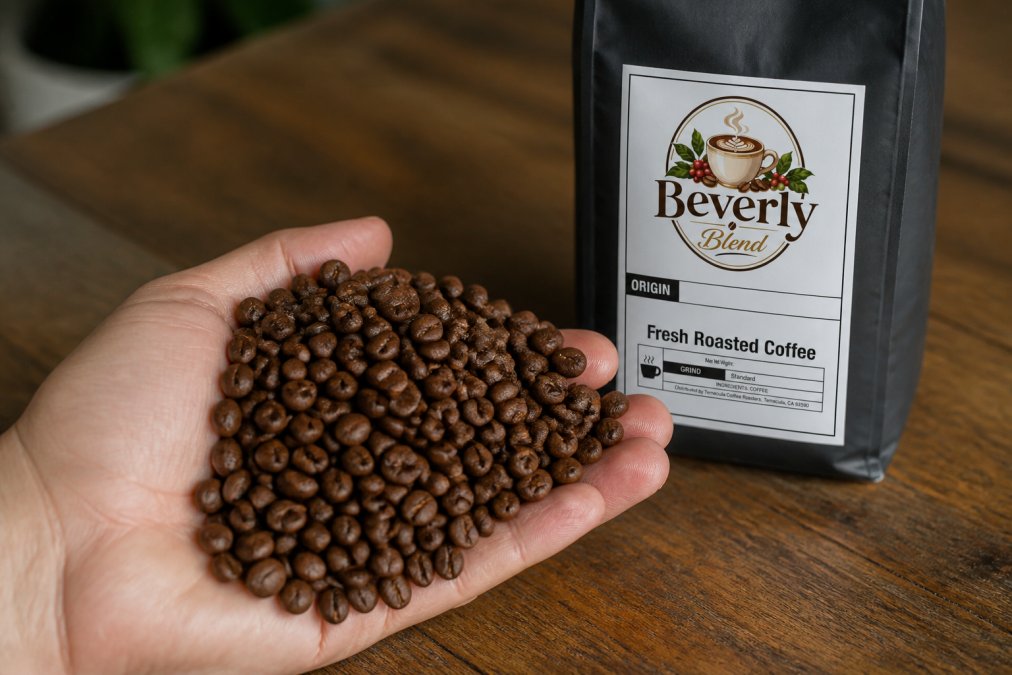
Quality beans have uniform size and color, indicating consistent processing and density. If you see mixed sizes, that suggests uneven processing or beans from different harvests or altitudes. Uniformity matters because it affects how evenly they extract when you brew.
The surface should have a subtle sheen, especially on medium and dark roasts. This is natural glossiness from the bean's structure and roasting process. Avoid a dull, chalky appearance, which indicates oxidation or poor storage.
Look for visible defects. Specialty-grade beans have strict defect limits. You shouldn't see cracked beans, discolored spots, or shriveled beans. If a handful contains multiple imperfections, the roaster likely didn't sort carefully.
The Aroma Test
Fresh, quality beans have a pronounced, complex aroma with notes related to the origin, fruity, chocolate, floral, or nutty. The aroma should be immediate and strong when you open the bag.
Stale beans smell flat and muted. Defective beans produce off-aromas: musty, moldy, or sour smells indicate processing problems or storage issues. Trust your nose here.
Specialty Grade Coffee Standards Explained
The coffee industry has formal grading systems that remove guesswork from buying.
Specialty vs. Commercial Grade: The Key Differences
Specialty-grade coffee is a specific classification, not marketing language. The Specialty Coffee Association sets the standard: specialty-grade beans score 80 points or higher on a 100-point scale during professional cupping evaluation (sca.coffee). This is a standardized sensory protocol performed by trained cuppers measuring flavor profile, acidity, body, balance, and aftertaste.
Commercial-grade coffee scores below 80. It's drinkable but lacks the complexity and clarity that define specialty coffee. Most supermarket coffee falls into this category.
The practical difference: specialty-grade beans taste noticeably better. You'll perceive distinct flavor notes instead of generic "coffee" taste. The origin characteristics shine through. The finish is clean rather than bitter or flat.
When you buy Beverly Blend's single-origin coffees like Brazil Santos or Ethiopia Natural, you're getting specialty-grade beans evaluated to these standards.

What Specialty Grading Evaluates
Professional cupping focuses on specific sensory attributes:
Flavor profile is the dominant note you taste. Quality beans have clear, identifiable flavor notes that match their origin. Ethiopia Natural, for example, should show milk chocolate, fruity, and caramel notes.
Acidity refers to brightness and liveliness, not chemical acidity. High-altitude beans typically have more acidity, making them taste more vibrant.
Body is the weight and texture in your mouth. Processing method heavily influences body. Washed coffees tend toward lighter body; natural process coffees are heavier.
Balance means all elements work together. Flavor, acidity, and body should complement each other rather than one overwhelming the others.
Aftertaste is what lingers after you swallow. Quality coffee leaves a pleasant, lingering finish.
Bean Uniformity and Density: Technical Indicators of Quality
Bean uniformity matters because coffee extracts based on surface area and density. If you're brewing mixed sizes, small ones extract faster and over-extract while large ones under-extract, creating an unbalanced cup. Specialty-grade beans are sorted by size so they extract evenly.
Density determines extraction time and how much flavor you can pull out. High-altitude beans are denser because they grow slower in cooler conditions, accumulating more sugars and flavor compounds. Dense beans require slightly longer brewing but reward you with more complex flavors.
You can feel density by handling the beans. High-density beans feel heavier for their size and don't crush easily. Altitude is the primary driver of density. Beans grown at 1,300 meters or higher tend toward higher density and more complex flavor, which is why origins like Colombia, Costa Rica, and Ethiopia Natural command premium prices.


Understanding Origin Transparency and Single-Origin Sourcing
Where the beans come from matters enormously, but only if you can verify it.
Why Single-Origin Beans Matter
Single-origin coffee comes from a specific region, farm, or lot within a farm. This is different from blends, which mix beans from multiple origins.
Single-origin beans let you taste the terroir, the unique characteristics of that specific place. Altitude, soil type, climate, and processing method all influence flavor. A single-origin Ethiopian bean tastes different from a single-origin Colombian bean because of these factors.
Transparency matters because some roasters claim single-origin status without real verification. Reputable roasters like Beverly Blend source through verified supply chains. We can tell you the region, altitude, farm or farmer group, variety, and processing method for every bean we sell.
Evaluating Sourcing Claims and Ethical Certifications
"Direct trade" means the roaster worked directly with the farmer or small farmer group, usually at prices above commodity rates. This is a genuine indicator of quality and ethical sourcing.
"Fair trade" is a formal certification ensuring farmers receive a minimum price and meet labor and environmental standards.
The strongest signal is when a roaster provides specific farm names, farmer names, or farmer groups. Vague claims like "ethically sourced" without specifics are marketing language.
How to Store Coffee Beans for Maximum Freshness
Once you've bought quality beans, storage determines whether they stay excellent or degrade.
Container and Environmental Conditions
Coffee's enemies are air, light, heat, and moisture. Use an airtight container, glass or ceramic with a tight seal works well. Avoid clear containers. Keep the container in a cool, dark place, not on a counter in sunlight or above the stove.
Temperature stability matters more than absolute coldness. A cool, consistent environment is better than one that fluctuates. Room temperature (around 70°F) is fine if stable. Avoid the freezer unless storing beans for months.
Humidity should be low. Avoid storing beans in the refrigerator, which introduces moisture.
Whole beans last longer than ground coffee because they have less surface area exposed to air. If you grind beans, use them within a few days.
The Role of Packaging Technology in Preserving Quality
One-way valves are standard on quality coffee bags. These allow carbon dioxide (which beans release after roasting) to escape without letting oxygen in, extending shelf life significantly.
Nitrogen flushing removes oxygen from the bag before sealing, dramatically slowing oxidation. High-end roasters use this, especially for beans meant for longer storage or shipping.
Resealable bags with zip locks let you close the bag after opening, reducing air exposure between uses. Opaque, thick bags protect beans from light and temperature fluctuations better than thin, clear ones.
Processing Methods and Their Impact on Flavor Profile
How the bean is processed after harvest dramatically influences its final flavor.
Washed process involves fermenting the bean in water to remove the fruit, then drying. This produces a cleaner, brighter cup with more acidity and clarity. Washed coffees tend toward lighter body and more floral or fruity notes.
Natural process dries the entire fruit on the bean before removing it. This produces a heavier body and more fruity, sometimes wine-like flavor notes. Natural process coffees are often more complex but more variable.
Honey process removes the fruit skin but leaves some mucilage on the bean during drying. It's a middle ground, producing medium body with balanced acidity and fruit-forward notes.
Understanding processing helps you predict what a bean will taste like before you buy it. If you prefer lighter, brighter cups, seek washed coffees. If you like heavier, fruitier cups, natural or honey process will suit you better.
Sensory Cupping: How to Taste Coffee Like a Professional
You don't need formal training to evaluate coffee like a professional. You need a protocol and practice.
Basic Cupping Protocol for Home Evaluation
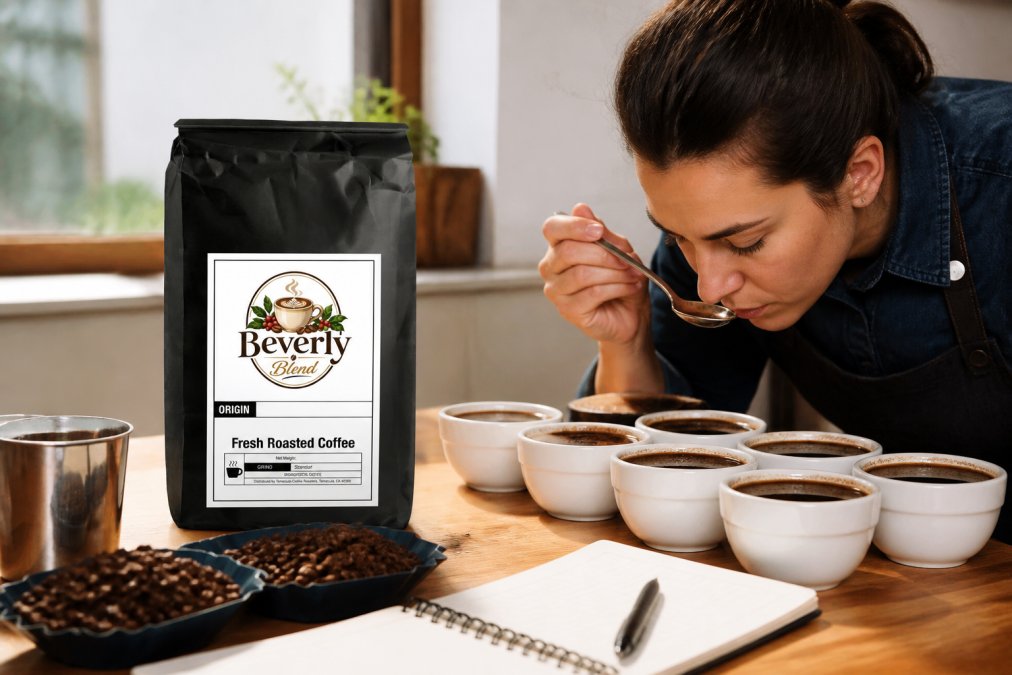
Grind your beans medium-coarse, similar to French press grind. Use the same amount for each cup, about one tablespoon of ground coffee per 6 ounces of water. Consistency lets you isolate the variable (the bean) from the process.
Heat water to about 200°F, just off boiling (sca.coffee). Pour water over the grounds and let them bloom for about 30 seconds. Smell the grounds before adding water (dry aroma), then after (wet aroma).
Let the coffee steep for four minutes. After four minutes, break the crust at the top with a spoon and smell deeply. Wait another minute for the coffee to cool slightly, then taste. Use a spoon to slurp the coffee, aerating it as it enters your mouth.
As the coffee cools, taste it again at different temperatures. Flavor perception changes as temperature drops. Cooler coffee often reveals sweetness and complexity that hot coffee masks.
Identifying Balance, Acidity, and Body in Your Cup
Balance is the first thing to assess. Do all elements work together, or does one dominate? A balanced cup feels complete. Quality beans achieve harmony between flavor, acidity, body, and aftertaste.
Acidity is the brightness and liveliness. It's not sourness, it's the quality that makes coffee taste alive rather than flat. High-quality beans have pleasant acidity that feels vibrant on your palate.
Body is the weight and texture. Light body feels tea-like. Medium body feels balanced and clean. Heavy body feels syrupy. Body should be clean and well-defined, not muddy.
Aftertaste is what lingers. Quality coffee leaves a pleasant finish that evolves as it cools.
Take notes as you taste. Write down what you perceive: flavor notes, body, acidity, balance, aftertaste. Compare beans side by side. Tasting multiple coffees in sequence reveals differences you'd miss tasting them individually.
| Evaluation Step | What to Assess | What Quality Looks Like |
|---|---|---|
| Dry Aroma | Smell before water | Clear, complex, origin-specific notes |
| Wet Aroma | Smell after water added | Aromatic compounds intensify |
| Flavor Profile | Taste at multiple temperatures | Distinct notes that match origin; complexity |
| Acidity | Brightness and liveliness | Pleasant vibrancy; not harsh or flat |
| Body | Weight and texture | Clean and well-defined; not muddy |
| Balance | How elements work together | All attributes complement each other |
| Aftertaste | Lingering finish | Pleasant, evolving; not bitter |
Knowing how to identify quality coffee beans transforms how you shop and what you experience in your cup. The markers are straightforward: roast date within weeks, not months; uniform, glossy beans with no visible defects; clear, complex aroma; transparent sourcing information; and professional packaging that preserves freshness.
Beverly Blend's single-origin coffees like Brazil Santos, Colombia, and Ethiopia Natural are roasted to order and shipped fresh because we understand that quality starts with exceptional beans. Every bag includes roast date, origin details, altitude, processing method, and tasting notes, the transparency you need to verify quality yourself. Start with beans you can evaluate, and your entire coffee experience elevates.
=== FAQ ANSWERS (audit these too, same rules) ===
[1] Q: What is the difference between specialty grade and commercial grade coffee? A: Specialty grade coffee scores 80 points or higher on the Specialty Coffee Association scale, evaluated for bean defects, uniformity, flavor balance, and origin clarity. Commercial grade has no standardized scoring and typically contains more defects and inconsistency. Specialty beans undergo rigorous cupping and traceability protocols that commercial coffee skips entirely, resulting in measurably better flavor and freshness in your cup.
[2] Q: How can you tell if coffee beans are stale just by looking at them? A: Stale beans appear dull and chalky rather than glossy and vibrant. They may show cracks or a grayish surface film from oxidation. Fresh beans roasted within 1-2 weeks display a rich, uniform color and often have a thin sheen from residual oils. Smell the beans too, stale coffee has a flat, cardboard-like aroma instead of the bright, complex fragrance of fresh beans. If the roast date is beyond 4 weeks old, the beans are likely past their peak.
[3] Q: Why is the roast date more important than the expiration date? A: Coffee begins losing flavor and aroma immediately after roasting through oxidation and degassing. An expiration date only tells you when the product becomes unsafe; a roast date tells you when the flavor was at its peak. Beans roasted 1-2 weeks ago will taste noticeably better than beans roasted 6 months ago, even if both are technically safe to consume. Always prioritize freshness by checking the roast date on the bag.
[4] Q: What role does bean density play in coffee quality? A: Higher-density beans, typically grown at higher altitudes with slower maturation, develop more complex sugars and acids that create richer flavor profiles. Density affects how evenly the bean extracts during brewing, denser beans require slightly longer extraction times but reward you with better balance and body. When evaluating beans, uniform density across a batch indicates consistent quality and better flavor predictability in your final cup.
[5] Q: How does the processing method affect the flavor of coffee beans? A: The three main methods, washed, natural, and honey process, dramatically shape flavor. Washed process (used for Colombia and Costa Rica beans) produces clean, bright acidity and emphasizes origin characteristics. Natural process (like Ethiopia Natural) creates fruity, wine-like notes and fuller body. Honey process (partial fermentation) balances both, offering sweetness with complexity. Understanding the processing method helps you predict the flavor profile before brewing.
[6] Q: What should I look for when evaluating origin transparency? A: Quality coffee producers provide specific information: the country, region, altitude, farm name or farmer cooperative, varietal, and processing method. Vague labels like 'African blend' or 'house roast' hide the actual sourcing. Transparent roasters like Beverly Blend detail everything from the Kintamani region of Bali to the specific altitude and soil type, allowing you to understand exactly what you're buying.
[7] Q: How long do roasted coffee beans stay fresh? A: Peak flavor lasts 2-4 weeks after roasting. Beans remain drinkable for up to 3-4 months if stored properly in an airtight container away from light and heat, but flavor degrades noticeably after the first month. For the best experience, purchase beans roasted within the past week and use them within 4 weeks. Beverly Blend roasts to order and ships quickly to maximize freshness when the beans arrive at your door.
Frequently Asked Questions
What is the difference between specialty grade and commercial grade coffee?
Specialty grade coffee scores 80 points or higher on the Specialty Coffee Association scale, evaluated for bean defects, uniformity, flavor balance, and origin clarity. Commercial grade has no standardized scoring and typically contains more defects and inconsistency. Specialty beans undergo rigorous cupping and traceability protocols that commercial coffee skips entirely, resulting in measurably better flavor and freshness in your cup.
How can you tell if coffee beans are stale just by looking at them?
Stale beans appear dull and chalky rather than glossy and vibrant. They may show cracks or a grayish surface film from oxidation. Fresh beans roasted within 1-2 weeks display a rich, uniform color and often have a thin sheen from residual oils. Smell the beans too, stale coffee has a flat, cardboard-like aroma instead of the bright, complex fragrance of fresh beans. If the roast date is beyond 4 weeks old, the beans are likely past their peak.
Why is the roast date more important than the expiration date?
Coffee begins losing flavor and aroma immediately after roasting through oxidation and degassing. An expiration date only tells you when the product becomes unsafe; a roast date tells you when the flavor was at its peak. Beans roasted 1-2 weeks ago will taste noticeably better than beans roasted 6 months ago, even if both are technically safe to consume. Always prioritize freshness by checking the roast date on the bag.
What role does bean density play in coffee quality?
Higher-density beans, typically grown at higher altitudes with slower maturation, develop more complex sugars and acids that create richer flavor profiles. Density affects how evenly the bean extracts during brewing, denser beans require slightly longer extraction times but reward you with better balance and body. When evaluating beans, uniform density across a batch indicates consistent quality and better flavor predictability in your final cup.
How does the processing method affect the flavor of coffee beans?
The three main methods, washed, natural, and honey process, dramatically shape flavor. Washed process (used for [Colombia](https://beverlyblend.com/products/colombia) and [Costa Rica](https://beverlyblend.com/products/costa-rica) beans) produces clean, bright acidity and emphasizes origin characteristics. Natural process (like [Ethiopia Natural](https://beverlyblend.com/products/ethiopia-natural)) creates fruity, wine-like notes and fuller body. Honey process (partial fermentation) balances both, offering sweetness with complexity. Understanding the processing method helps you predict the flavor profile before brewing.
What should I look for when evaluating origin transparency?
Quality coffee producers provide specific information: the country, region, altitude, farm name or farmer cooperative, varietal, and processing method. Vague labels like 'African blend' or 'house roast' hide the actual sourcing. Transparent roasters like Beverly Blend detail everything from the Kintamani region of Bali to the specific altitude and soil type, allowing you to understand exactly what you're buying.
How long do roasted coffee beans stay fresh?
Peak flavor lasts 2-4 weeks after roasting. Beans remain drinkable for up to 3-4 months if stored properly in an airtight container away from light and heat, but flavor degrades noticeably after the first month. For the best experience, purchase beans roasted within the past week and use them within 4 weeks. Beverly Blend roasts to order and ships quickly to maximize freshness when the beans arrive at your door.
This article was written using GrandRanker