

Single Origin vs Blended Coffee: A 2026 Guide
Table of Contents
- Defining Single Origin Coffee
- What is a Coffee Blend?
- Benefits of Drinking Single Origin Coffee
- Key Differences in Flavor Profiles and Complexity
- How to Brew Single Origin Coffee for Maximum Flavor
- The Role of Roasting, Terroir, and Processing Methods
- Price Point Comparisons and Value
- Storage, Freshness, and Longevity
Last Updated: August 24, 2026
Defining Single Origin Coffee
Single origin coffee is sourced from a single, defined geographic region, farm, or micro-lot rather than blended from multiple origins. This preserves the unique characteristics imparted by terroir, the combination of altitude, climate, soil composition, and processing methods that define a particular growing area.
A single origin from Ethiopia tastes distinctly different from one grown in Colombia because altitude affects acidity, soil type influences mineral content, and processing methods determine which flavors emerge. Beverly Blend specializes in single origin coffees sourced directly from growers across multiple continents, with each origin reflecting careful selection of micro-lots that meet our standards for flavor complexity and consistency.
Single origin coffees demand more precision from both roaster and brewer. A blend can mask inconsistencies through strategic mixing. A single origin exposes everything, the quality of the harvest, the skill of the roaster, and the technique of the person brewing it.
What is a Coffee Blend?
A coffee blend combines beans from two or more origins to create a consistent flavor profile and mouthfeel. Blends are engineered products where a roaster selects specific origins, roasts each to a particular level, and combines them in precise ratios to achieve a target cup profile that remains stable across batches.
The primary advantage of blending is consistency. Seasonal variations in single origin crops create batch-to-batch variation; blends smooth these fluctuations by mixing origins that compensate for each other's seasonal shifts. Beverly Blend's House Blend, a medium roast combining select coffees from Central and South America, is engineered to deliver nutty, sweet chocolate, and mild citrus notes with a clean bright finish every time.
Blends also serve functional purposes. The 6 Bean Blend, a dark roast designed for espresso, combines six origins chosen for their ability to cut through milk and maintain presence in espresso-based drinks. From a sourcing perspective, blends allow roasters to work with a broader range of suppliers and respond to market availability.

Benefits of Drinking Single Origin Coffee
The primary benefit of single origin coffee is nuance and complexity. A well-sourced, properly roasted single origin expresses the specific characteristics of its terroir in ways a blend cannot replicate. You taste the altitude in the acidity, the processing method in the body and sweetness, and the varietal in the flavor notes.
Single origin coffees also support direct relationships between roasters and growers. When you buy Beverly Blend's Brazil Santos, you're supporting Fazenda Santa Barbara and its specific farming practices. This relationship incentivizes quality and sustainability in ways commodity blending cannot match.

From a brewing perspective, single origin coffees reward technique. Because the flavor profile is concentrated and specific, small adjustments in water temperature, brew time, or grind size produce noticeable differences in the cup. Single origins also tend to have stronger identity and memorability, you remember the Ethiopian natural you tried last month because its fruity, floral character stood out.
Key Differences in Flavor Profiles and Complexity
Single Origin Flavor Characteristics
Single origin coffees express distinct flavor profiles based on their growing conditions and processing methods. High-altitude coffees tend toward higher acidity and brighter notes; lower-altitude coffees develop deeper body and earthier characteristics.
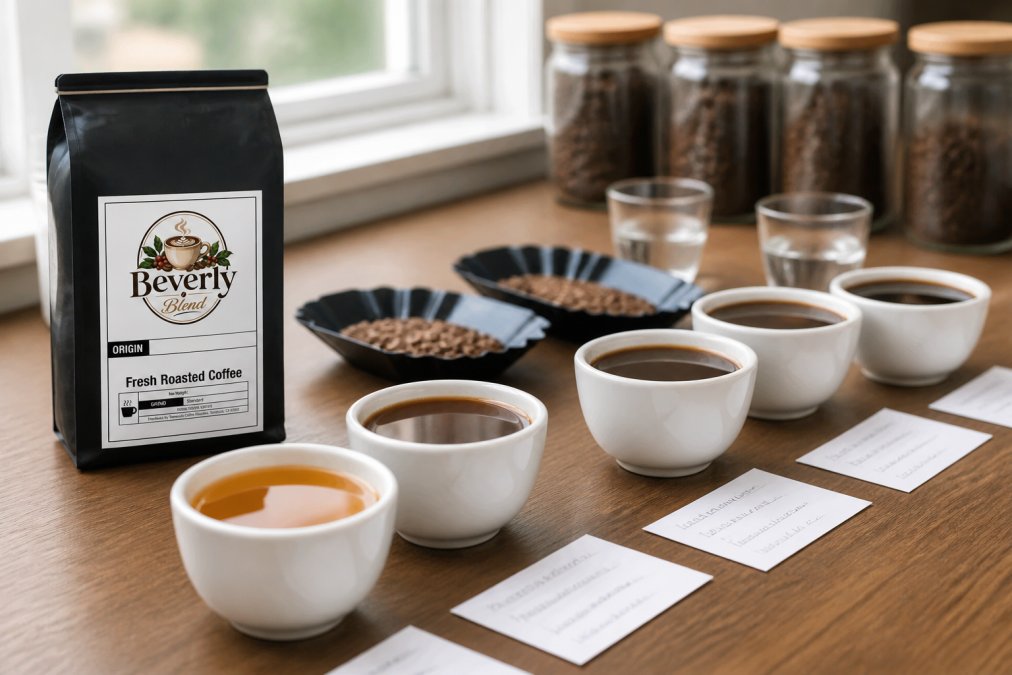
Beverly Blend's Ethiopia Natural, grown at 1,700-1,900 meters in the Sidama zone, expresses milk chocolate, fruity, and caramel notes. The high altitude and full natural processing method preserve the fruit-forward character that defines Ethiopian coffees. Single origin flavor profiles are predictable within a range, but complexity emerges as multiple layers of flavor reveal themselves as the coffee cools.
Blend Flavor Characteristics
Blends are designed to be balanced and approachable. The roaster selects origins that complement each other, creating a cup that doesn't demand attention but rewards it if you pay attention. Beverly Blend's House Blend combines coffees from Central and South America in ratios that deliver consistent body, sweetness, and balance.

Dark roast blends prioritize body and mouthfeel over origin-specific flavor notes. The dark roast level dominates the cup profile, creating chocolate, caramel, and roasted nut notes that come from the roasting process itself. Blends sacrifice the concentrated expression of terroir that makes single origin coffees memorable, gaining consistency and approachability at the cost of complexity and distinctiveness.
How to Brew Single Origin Coffee for Maximum Flavor
Single origin coffees respond to precision in brewing. The goal is to extract the full range of flavors without over-extracting (which creates bitterness) or under-extracting (which creates sourness).
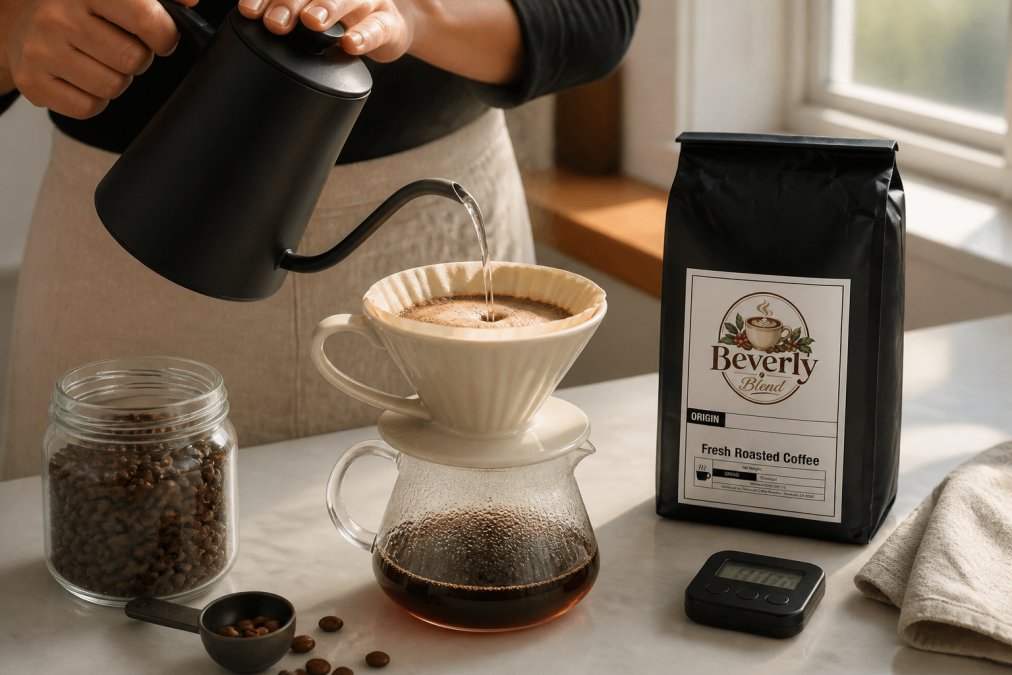
Water temperature: Single origins typically brew best between 195-205°F. Lower temperatures (195-200°F) bring out brighter, more delicate flavors and higher acidity. Higher temperatures (200-205°F) extract deeper, more chocolatey notes and fuller body.
Grind size: For pour-over brewing, aim for a grind similar to sea salt. For French press, use a coarse grind. For espresso, use a fine grind. Match grind to brewing method so water and grounds interact for the right amount of time.
Brew ratio and timing: A common starting point is 1:16 (one part coffee to 16 parts water by weight). A pour-over typically takes 3-4 minutes. A French press steeps for 4 minutes. An espresso shot extracts in 25-30 seconds.
For pour-over: Rinse your filter first. Add grounds, then pour just enough hot water to wet them (the "bloom" phase). Wait 30-45 seconds to allow CO2 to escape. Then pour the remaining water slowly, maintaining consistent water level. Total brew should take 3-4 minutes.
For French press: Use a coarse grind and a 4-minute steep. Stir after 1 minute to break up the crust and ensure even extraction. Press slowly to avoid sediment in your cup.
Small changes in brewing variables produce noticeable differences in the cup. A single origin brewed at 195°F tastes brighter and more acidic; the same coffee brewed at 205°F tastes fuller and more chocolatey.
The Role of Roasting, Terroir, and Processing Methods
How Roast Level Affects Your Cup
Roast level is one of the most powerful variables in coffee flavor. A light roast preserves origin-specific flavors and acidity. A dark roast emphasizes roasting-created flavors like chocolate, caramel, and roasted nuts, masking much of the terroir expression.
For single origin coffees, roast level is a critical choice. Beverly Blend's Ethiopia Natural is roasted to med-light specifically to preserve its milk chocolate, fruity, and caramel character. A darker roast would push the coffee toward generic chocolate and roasting notes, losing the distinctive fruity expression.
Blends often benefit from darker roasts, which create consistency and body that works well for espresso and milk-based drinks. Medium roasts occupy the middle ground, preserving some origin character while introducing roasting-created complexity.
Terroir and Altitude Impact
Terroir encompasses the complete environmental context of a coffee's growth: altitude, climate, soil composition, rainfall patterns, and seasonal variation. These factors fundamentally shape the coffee plant and the beans it produces.
Altitude is the most direct terroir variable affecting flavor. High-altitude coffees (above 1,500 meters) develop higher acidity and brighter flavor notes because the plant matures more slowly in cooler temperatures (peer-reviewed research). Beverly Blend's Costa Rica, grown at 1,300-1,445 meters in volcanic loam soil, shows sweet apple, raisin, and honey characteristics. Compare this to Brazil Santos, grown at 750-1,050 meters, lower altitude means less acidity and faster maturation, resulting in a smoother, more chocolate-forward cup.
Soil type also matters. Volcanic loam contributes mineral complexity and balanced sweetness. Climate and rainfall patterns influence sweetness, acidity, and body. A region with consistent rainfall produces different results than one with distinct wet and dry seasons.
Processing Methods: Washed, Natural, and Honey Process
Processing method determines which flavors get extracted from the cherry and which remain dormant.
Washed (wet-mill) processing removes the fruit from the bean immediately after harvest, then dries the bean. This method emphasizes acidity and origin character because the fruit's sugars don't ferment into the bean. Beverly Blend's Colombia and Costa Rica are both fully washed, preserving origin characteristics.
Natural (dry) processing dries the entire cherry with the bean inside. The fruit ferments into the bean over weeks, creating sweetness and body. Beverly Blend's Ethiopia Natural uses this method, creating the milk chocolate, fruity, caramel profile that defines this coffee.
Honey process removes the skin but leaves some of the fruit on the bean during drying. It's a middle ground between washed and natural, creating moderate sweetness and acidity with good body. Beverly Blend's Brazil Santos uses pulped natural processing, creating a smooth cup with cocoa notes.
Processing method is a fundamental choice that shapes the final cup. A single origin's flavor profile is inseparable from its processing method.
Price Point Comparisons and Value
Single origin coffees typically cost more than blends due to more careful sourcing, smaller batch sizes, and more precise roasting. Beverly Blend's single origins are priced at $19.99 per bag, while blends are also $19.99. The Sample Pack, featuring six 2-ounce single origin samples, is $24.99, allowing you to explore multiple origins without committing to full bags.
The value calculation depends on what you're buying for. If you want a reliable, consistent cup for daily drinking, a blend delivers that at the same price point. If you want to explore how geography shapes flavor and develop your palate, a single origin is the better investment.
Direct-to-consumer roasters like Beverly Blend can offer competitive pricing on single origins because they eliminate middlemen. Beans go from grower to roaster to your door with minimal markup. The real value question is whether you value the experience of tasting terroir and origin character.
Storage, Freshness, and Longevity
Coffee freshness matters more for single origins than for blends because origin-specific flavors fade faster than roasting-created flavors (peer-reviewed research). A fresh single origin showcases its terroir; a stale single origin tastes flat and generic.
Beverly Blend roasts to order, meaning your coffee is roasted days before it ships. This matters because coffee begins losing volatile aromatics and flavor compounds immediately after roasting.
Storage best practices: Keep coffee in an airtight container away from light, heat, and moisture. Whole beans stay fresh longer than ground coffee. Grind immediately before brewing for maximum flavor extraction.
For whole beans, expect peak flavor within 2-4 weeks of the roast date (peer-reviewed research). Ground coffee oxidizes faster; use it within a few days for optimal flavor. A stale blend still tastes like a blend, balanced and approachable. A stale single origin loses the very characteristics that made it distinctive.
Freezing can extend coffee life if done correctly. Store beans in an airtight container in the freezer for up to a month. Thaw to room temperature before opening to prevent condensation. But freezing is a last resort; fresh coffee from a recent roast is always better.
The freshness advantage of direct-to-consumer roasting is significant. When you order from Beverly Blend, you're getting coffee roasted specifically for your order, not coffee sitting in warehouse inventory.
Choosing between single origin and blended coffee comes down to what you value in your daily cup. Single origins reward exploration and precision; blends deliver consistency and approachability.
The best approach is to try both. Start with Beverly Blend's Single Origin Favorites Sample Pack, which lets you explore six origins without committing to full bags. Compare the complexity and distinctiveness of single origins against the consistency of blends like the House Blend.
Beverly Blend's roast-to-order model and direct sourcing relationships mean you're getting coffee roasted days before it arrives and supporting specific farming communities. Get started with Beverly Blend and discover how terroir shapes your morning ritual.
Frequently Asked Questions
Is single origin coffee better than blended coffee?
Neither is objectively better. Single origin coffee offers distinct flavor complexity tied to specific terroir, altitude, and processing methods, while blended coffee provides consistency and balanced flavor profiles. Single origin works best if you enjoy exploring nuanced tasting notes. Blends suit those who prefer a reliable, smooth cup without batch-to-batch variation. Your choice depends on whether you prioritize complexity or consistency in your daily brew.
Why is single origin coffee typically more expensive?
Single origin coffees cost more because they come from specific micro-lots with careful sourcing, smaller production runs, and traceability to individual growers. Each harvest has unique characteristics based on terroir and processing method, requiring more selective curation. Blends use beans from multiple sources, allowing roasters to balance costs across regions. Beverly Blend's single origins are $19.99 per bag, reflecting the premium sourcing and roast-to-order freshness that preserve the distinctive flavor profile of each origin.
What are the primary flavor differences between single origin and blends?
Single origin coffees express unique characteristics from their region. For example, Ethiopia Natural offers fruity and caramel notes from high-altitude Sidama farms, while Brazil Santos delivers smooth cocoa notes from volcanic loam soil. Blends combine beans to create consistency and balance. Beverly Blend's House Blend blends Central and South American coffees for nutty, sweet chocolate, and mild citrus notes. Single origins showcase complexity and nuance; blends prioritize a harmonized, predictable flavor experience across every cup.
How does roast level affect the flavor of single origin versus blended coffee?
Roast level impacts both types, but differently. Light and medium roasts preserve the origin's unique terroir characteristics, acidity, and floral or fruity notes. Darker roasts emphasize body, mouthfeel, and bring out chocolate or molasses tones. Single origins roasted light reveal their distinctive regional nuances; darker roasts can mask those subtleties. Blends are often roasted to a consistent level to maintain predictability. Beverly Blend's single origins range from med-light (Ethiopia) to med-dark (Bali Blue), each roast optimized to highlight that origin's best qualities.
Should I choose single origin or blends for espresso?
Both work for espresso, but they deliver different results. Single origin espresso showcases origin-specific flavor complexity and body, ideal if you want to taste terroir nuances. Blends offer balanced extraction and crema consistency shot-to-shot, making them more forgiving for home espresso machines. Beverly Blend's 6 Bean Blend is specifically designed for espresso, combining six origins for smooth, reliable shots. If you have a quality espresso machine and enjoy experimenting with flavor, single origin works well. For consistency and ease, a blend is the safer choice.
How do I know the coffee is fresh when it arrives at my door?
Freshness depends on roast-to-delivery timeline. Beverly Blend roasts to order, meaning your coffee is roasted shortly before shipping, ensuring maximum flavor and aroma when it arrives. This differs from pre-roasted coffee sitting in warehouse inventory for weeks. Peak flavor window for roasted coffee is 2-4 weeks after roasting. Check the roast date on the bag; if it's within 1-2 weeks of arrival, your coffee is at its best. Store in an airtight container away from light and heat to preserve freshness.
What makes single origin coffee different from blended beans in terms of environmental impact?
Single origin coffees often support direct relationships with specific growers and cooperatives, promoting sustainable farming practices at individual farms. Many single origins use eco-friendly processing methods. For example, Costa Rica uses eco-pulping and sun drying. Blends, by combining multiple sources, can dilute traceability and environmental accountability. Beverly Blend's single origins emphasize smallholder farmers and cooperatives using environmentally friendly processing, supporting both quality and sustainability. If environmental impact matters to you, single origin offers clearer visibility into sourcing practices.
Can I try single origin coffee before committing to a full bag?
Yes. Beverly Blend offers the Single Origin Favorites Sample Pack for $24.99, containing six 2-ounce samples of popular single origins including Brazil Santos, Colombia, Costa Rica, Ethiopia, Honduras, and Tanzania. This lets you explore different flavor profiles and origins without buying full 12-ounce bags at $19.99 each. Sampling is ideal for discovering your preferences before committing to a specific origin or understanding how different terroir, altitude, and processing methods affect taste.
This article was written using GrandRanker