

How to Clean a French Press Plunger: Step-by-Step
Table of Contents
- Why Cleaning Your French Press Plunger Matters
- What You'll Need Before You Start
- How to Disassemble French Press Plunger Components
- How to Deep Clean French Press Mesh Filter Screen
- Material-Specific Cleaning for Stainless Steel and Glass
- Hand Washing vs. Dishwasher: What's Safe for Your Plunger
- How Often to Clean French Press for Best Results
- Drying and Reassembly to Prevent Rust
- Frequently Asked Questions
Last Updated: October 1, 2026
Why Cleaning Your French Press Plunger Matters
Learning how to clean a french press plunger is essential for great-tasting coffee. Over time, coffee oils and grounds build up on the mesh filter and plunger components, creating bitter, rancid flavors in every cup you brew.
The plunger assembly presses hot water through coffee grounds, extracting flavor and aroma. But when sediment and oils accumulate, they interfere with the brewing process, making your coffee taste stale or off, even when using fresh, high-quality beans from Beverly Blend.
Regular cleaning prevents this problem entirely. A well-maintained plunger delivers clean extraction every time, with noticeably brighter flavor, better aroma, and smoother mouthfeel.
Coffee oils don't rinse away with water alone, they cling to the mesh filter screen and gasket. Deep cleaning removes this stubborn residue and keeps your brewing equipment performing at its best.
What You'll Need Before You Start
Gather these items before you begin learning how to clean a french press plunger:
- Warm water (not boiling)
- Dish soap (mild, unscented)
- Soft-bristled brush or old toothbrush
- Clean cloth or paper towels
- Small bowl for soaking
- Vinegar (white vinegar works best for natural cleaning)
- Baking soda (optional, for stubborn residue)
Keep the glass carafe separate during plunger cleaning to prevent accidental breakage.
How to Disassemble French Press Plunger Components
Identifying the Main Parts
Your French press plunger is a five-part assembly. Understanding each component prevents confusion and reduces the risk of damaging delicate seals.
The plunger rod is the long metal or plastic shaft that extends down through the lid. The spring wraps around the rod and provides the downward pressure needed to extract coffee. The mesh filter screen sits at the bottom and separates grounds from brewed liquid. The gasket (a rubber or silicone ring) seals the filter to the rod and prevents grounds from leaking around the edges. The collar (also called the retaining ring or cap) holds everything together at the top and screws onto the lid.
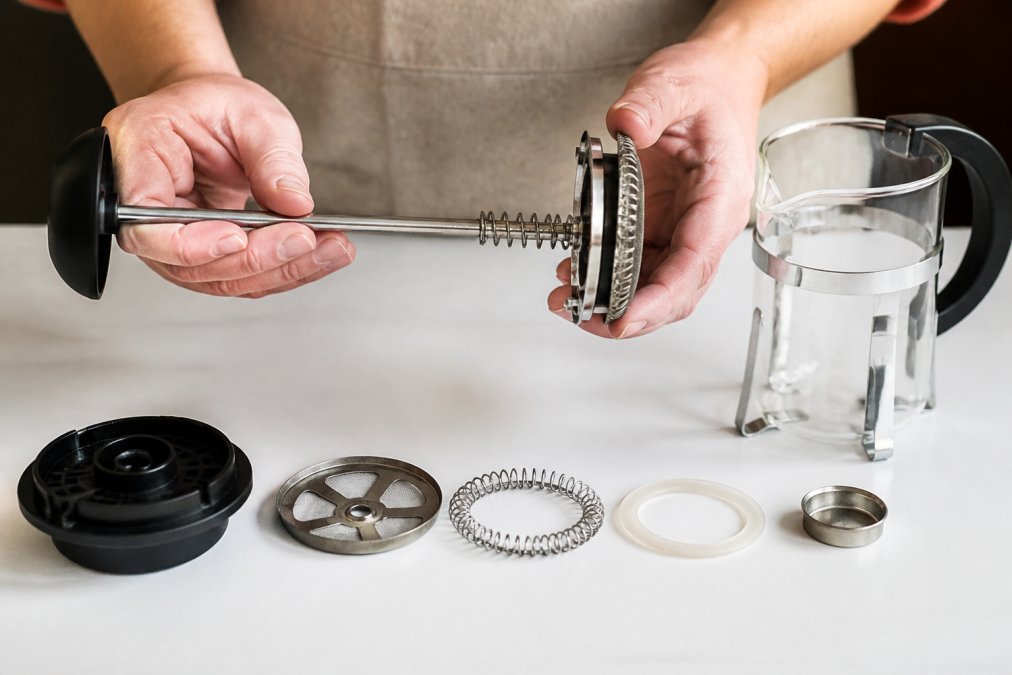
Cleaning each part individually removes debris that hides in tight spaces between the rod and spring, inside the gasket groove, and on both sides of the mesh, areas that stay dirty when you clean the plunger while assembled.
Step-by-Step Disassembly Sequence
Step 1: Cool and Empty Let your French press cool for two minutes after brewing. Empty all remaining coffee grounds into the trash and rinse the carafe with warm water.
Step 2: Unscrew the Collar Grasp the collar (the threaded ring at the top of the plunger) with your thumb and forefinger and turn it counterclockwise gently. Most collars come off by hand without tools. If it feels stuck, soak the entire plunger assembly in warm water for two minutes first to soften dried coffee residue. Never force it, forcing can strip the threads.
Step 3: Lift Out the Plunger Rod Once the collar is loose, carefully pull the plunger rod straight up and out of the lid. The spring may come with the rod or stay attached to the collar, both are normal. If the rod feels stuck, wiggle it gently side to side while pulling.
Step 4: Separate the Spring Slide the spring off the rod by hand.
How to Deep Clean French Press Mesh Filter Screen
Removing Stubborn Coffee Grounds and Residue
Rinse the mesh under warm running water and gently scrub both sides with your soft brush, working from the center outward to dislodge loose grounds without damaging the fine mesh.
Natural Cleaning Solutions for Rancid Oils
Coffee oils are the real challenge, water alone doesn't remove them completely. Vinegar dissolves these oils naturally.
Material-Specific Cleaning for Stainless Steel and Glass
French press plungers use different materials for different components, each with specific vulnerabilities. Cleaning the wrong way can cause permanent damage that affects both function and flavor.
Stainless Steel Plunger Rods and Springs
Stainless steel is durable but not immune to corrosion. Water spots and mineral deposits can cause the spring to stiffen or the rod to bind.
Cleaning stainless steel:
- Rinse immediately after use with warm water and mild dish soap
- Dry with a soft cloth within two minutes of rinsing, do not air dry
- For water spots or mineral buildup, soak the component in white vinegar for five minutes, then scrub gently with a soft brush and dry immediately
- Never use steel wool, scouring pads, or abrasive cleaners; these scratch the surface and create pits where corrosion starts
- If rust spots appear (rare but possible in high-humidity environments), scrub with a paste of baking soda and water, rinse, and dry completely
Glass Carafes and Mesh Filters
Cleaning glass carafes:
- Use warm water only; never expose glass to extreme temperature changes
- Use a soft brush or cloth only; never use steel wool or hard-bristled brushes
- For stubborn stains, soak in a 1:1 vinegar-and-water solution for 15 minutes, then scrub gently with a soft cloth
- Dry with a lint-free cloth to prevent water spots
Cleaning mesh filter screens:
- Never use abrasive scrubbers, steel wool, or hard-bristled brushes, these create holes that allow grounds to slip into your coffee
- Rinse gently under warm running water, using your soft toothbrush to dislodge grounds from both sides
- For deep cleaning, soak in a 1:1 vinegar-and-water solution for 15 minutes, then use a soft brush with gentle circular motions
- If the mesh develops holes, the filter must be replaced; a damaged mesh cannot be repaired
Plastic Collars, Handles, and Gaskets
Plastic components are vulnerable to heat, harsh chemicals, and prolonged soaking in acidic solutions.
Cleaning plastic parts:
- Use only warm water and mild dish soap; never use hot water (above 140°F), which can warp plastic
- Avoid prolonged soaking in vinegar or other acidic solutions; a quick rinse is fine, but extended soaking (more than 30 minutes) can degrade the plastic
- Never use bleach, commercial descalers, or abrasive cleaners on plastic
- Dry plastic components immediately after cleaning to prevent water spots and mildew
- If a plastic collar becomes cracked or a gasket tears, replacement parts are inexpensive and widely available
Checking Your French Press Manual
Manufacturers often specify which components are dishwasher safe and which materials require hand washing. Check your manual or the manufacturer's website for your specific model. Some high-end French presses have stainless steel components rated for dishwasher use, while budget models may have plastic parts that require hand washing only.
Hand Washing vs. Dishwasher: What's Safe for Your Plunger
Hand washing is the safest approach for your French press plunger. You control the temperature and pressure. This prevents damage to delicate components like the mesh filter and gasket.
How Often to Clean French Press for Best Results
Clean your plunger immediately after each use, this is the single most important maintenance habit.
Drying and Reassembly to Prevent Rust
After cleaning, dry all components completely. Use a soft cloth or paper towel. Pay special attention to the mesh filter and gasket.
To reassemble, reverse the disassembly steps:
- Slide the spring onto the plunger rod
- Insert the gasket into the collar
- Position the mesh filter screen
- Insert the rod assembly through the collar
- Screw the collar clockwise until snug (don't over-tighten)
Frequently Asked Questions
How often should you clean a French press plunger?
Clean your French press plunger after every use to prevent coffee oils and grounds from hardening. For deep cleaning, disassemble and soak the mesh filter and gasket weekly if you brew daily. This maintenance schedule preserves flavor extraction and prevents rancid oils from affecting your next brew. Regular cleaning also extends the life of the gasket and spring components.
Can you put a French press plunger in the dishwasher?
Most plunger components are hand-wash only. The mesh filter, gasket, and spring can degrade under high heat and pressure. Rinse parts immediately after use with warm water, then hand wash with mild soap. Stainless steel components tolerate warm water better than plastic or rubber gaskets, which can warp. Check your manufacturer's instructions for specific guidance on your model.
What's the best way to remove rancid coffee oils from the mesh filter?
Soak the mesh filter in hot water with a small amount of baking soda for 15-20 minutes to break down stubborn residue and oils. Gently scrub with a soft brush or cloth, then rinse thoroughly. For heavy buildup, use a mixture of equal parts white vinegar and water. Avoid abrasive scrubbers that can damage the fine mesh screen and affect your coffee extraction quality.
How do you disassemble a French press plunger for deep cleaning?
First, remove the plunger assembly from the pot. Gently unscrew or unclip the plunger rod from the mesh filter, check your model's design. Separate the mesh filter from the gasket and spring beneath it. Lay all components on a clean surface. This disassembly allows you to access sediment trapped between layers and clean the gasket thoroughly, which is essential for maintaining proper water seal and flavor profile.
Maintaining your French press plunger keeps every cup tasting excellent. Clean equipment extracts maximum flavor and aroma from fresh, artisan-roasted beans. When you invest in premium coffee from Beverly Blend, a well-maintained plunger ensures you experience every note and nuance. Spend two minutes cleaning after each use, and your French press will deliver perfect coffee for years to come.