

How to Properly Store Loose Leaf Tea for Freshness
Table of Contents
- Why Proper Storage Matters for Loose Leaf Tea
- Best Containers for Loose Leaf Tea
- Temperature, Light, and Humidity Control
- How Long Does Loose Leaf Tea Last
- Signs of Stale Tea and When to Discard
- Step-by-Step Storage Process
- Travel Storage Solutions and Sustainability
- Frequently Asked Questions
Last Updated: October 3, 2026
Why Proper Storage Matters for Loose Leaf Tea
The way you store loose leaf tea directly determines how long it stays fresh and flavorful. Tea leaves absorb moisture, odors, and light exposure readily. Once oxidation accelerates, aroma fades and flavor flattens.
Storage mistakes can ruin premium tea within weeks. A $20.99 tea that tastes exceptional on arrival can taste stale by month two if stored wrong. The good news: proper storage is simple and requires no special equipment.
Tea leaves are stable only when protected from three enemies: light, heat, and moisture. Light accelerates oxidation fastest, heat speeds it up, and moisture does both. Store loose leaf tea correctly, and it stays fresh for months. Neglect storage, and you waste money on premium tea.
Best Containers for Loose Leaf Tea
The container is everything. The best containers for loose leaf tea are airtight, opaque, and made of inert material that doesn't absorb odors.
Airtight Containers and Sealing Techniques
An airtight container slows oxidation dramatically. The seal must be tight enough that you feel resistance when opening and closing it.
The best options include:
- Metal tins with tight-fitting lids, Industry standard for tea storage. Metal blocks light completely. It doesn't absorb odors like plastic can.
- Glass jars with rubber gasket seals, Allows you to see tea without opening it. Must have an airtight rubber seal, not just a screw-on lid.
- Ceramic caddies with fitted lids, Attractive and functional. Ensure the lid seals tightly; some decorative caddies have loose fits.
- Vacuum-seal bags, Best for long-term storage or travel. Removes air completely. Downside: single-use once opened.
Test your seal by closing the container and trying to open it. If it opens easily without a slight suction sound, the seal isn't tight enough.
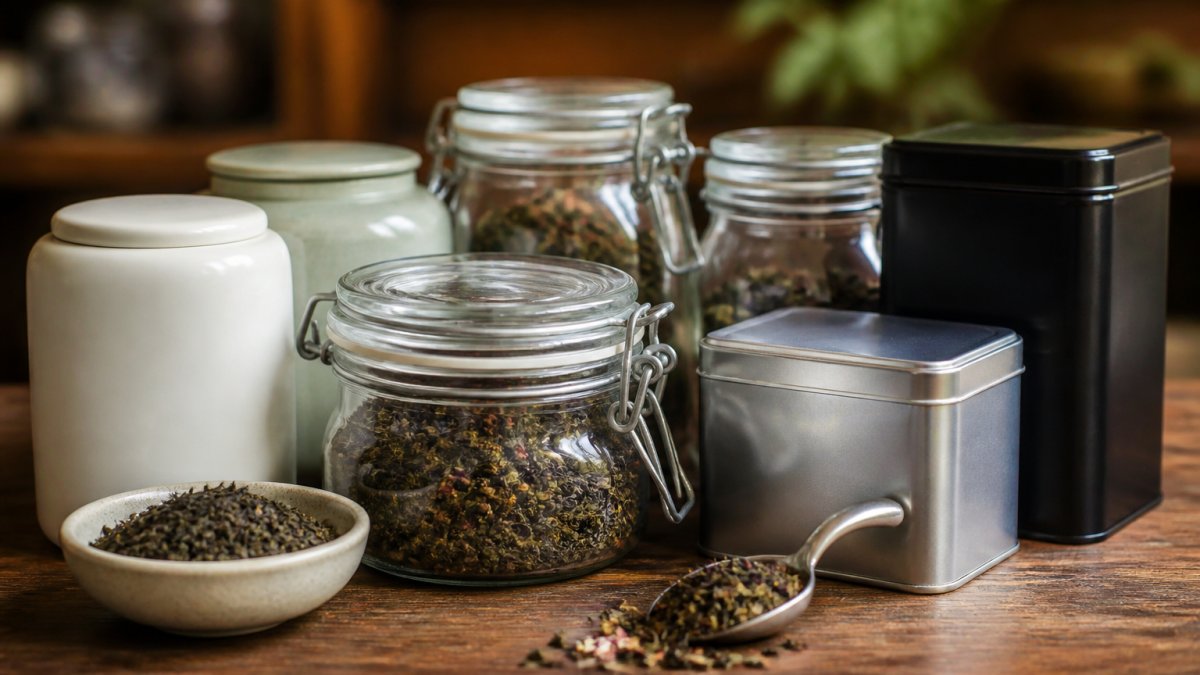
Never store tea in paper bags or cardboard boxes. These porous materials allow air circulation and absorb surrounding odors, transferring them to tea within days.
Opaque vs. Clear Storage Options
Light is one of the fastest oxidizers of tea. Ultraviolet rays break down flavor and aroma compounds. Clear glass containers look beautiful but are terrible for tea storage.
Opaque containers win: metal tins block 100% of light, ceramic caddies block all light if glazed, dark glass blocks most UV, and clear glass allows full exposure. If you prefer to see your tea, store it in an opaque container and label it. A clear jar on a sunny shelf degrades noticeably within 3-4 weeks.
Temperature, Light, and Humidity Control
Temperature, light, and humidity work together to accelerate oxidation. Control all three, and your tea stays fresh far longer.
The Impact of Light, Heat, and Moisture on Oxidation
Oxidation breaks down flavor compounds in tea leaves. Light exposure causes the fastest degradation, heat accelerates it at a slower rate, and moisture causes mold and speeds oxidation simultaneously. Store tea in a dark cupboard away from heat sources at room temperature (around 70°F). Avoid areas near windows, ovens, dishwashers, or radiators.
Humidity Control for Specific Tea Types
Green and white tea are delicate and degrade faster in humid conditions; keep humidity below 50% and use desiccant packets if needed. Black tea and oolong are more stable and tolerate slightly higher humidity. Herbal tea is generally stable; store it like black tea. If your storage area stays above 60% humidity, add desiccant packets to your containers.
Refrigerator and Freezer Storage Myths
Refrigerators are humid and cycle temperature, creating condensation that introduces moisture into tea and speeds degradation. Freezers are slightly better but still not ideal due to freezer burn and repeated thawing damage. Best practice: store tea in a cool, dark cupboard at room temperature. If you must refrigerate, use an airtight container with a desiccant packet, open it infrequently, and let it reach room temperature before opening.
How Long Does Loose Leaf Tea Last
The shelf life of loose leaf tea depends on the type and storage conditions. Properly stored tea lasts much longer than most people assume.
Ideal Shelf Life for Different Tea Types
Storage conditions matter more than the calendar. A tea stored perfectly lasts longer than a tea stored poorly, even if the poorly-stored tea is newer.
Green and white tea: 6-12 months at peak freshness. These teas are delicate. They lose flavor faster. After a year, they're still drinkable but noticeably less vibrant.
Black tea and oolong: 12-24 months at peak freshness. These oxidized teas are more stable. They degrade slower.
Pu-erh tea: Improves with age. Properly stored pu-erh can last decades. Some pu-erh becomes more valuable as it ages.
Herbal tea: 12-18 months. Most herbal blends stay fresh for over a year if stored correctly.
These timelines assume airtight storage in a cool, dark place. A tea stored in a clear jar on a sunny shelf loses freshness in weeks. A tea stored in a sealed tin in a dark cupboard hits these timelines.
Signs of Stale Tea and When to Discard
Stale tea isn't dangerous. It just tastes bad. Learning to spot degradation saves money because you'll know when to use tea versus when it's past its prime.
Visual, Aromatic, and Flavor Indicators of Degradation
Stale tea shows three clear signs:
Aroma: Fresh tea smells vibrant. Stale tea smells muted or flat. Open the container and smell it. If the aroma is weak or musty, the tea is degrading. Musty smell specifically suggests moisture exposure.
Color: The leaves may look duller or darker than when new. Some color change is normal, but significant darkening suggests oxidation damage.
Taste: This is the final test. Brew a small amount. Stale tea tastes flat and lacks complexity. The flavor profile is one-dimensional instead of layered. If it tastes off, discard it.
One specific warning: if you see mold or smell mold, throw the tea away immediately. Mold means moisture got inside. The tea is unsafe to drink.
Step-by-Step Storage Process
Follow this process every time you receive new tea or transfer tea to storage containers.
Step 1: Choose your container (2 minutes) Pick an airtight, opaque container. Metal tins are best. Glass with rubber gaskets works too.
Step 2: Check the seal (1 minute) Close the container and try to open it. You should feel resistance. If it opens easily, the seal isn't tight enough.
Step 3: Transfer the tea (3 minutes) Pour loose leaf tea from the bag into your container. Fill it mostly full but leave a small air gap. Don't compress the leaves.
Step 4: Seal it immediately (30 seconds) Close the container right away. Don't leave tea sitting in an open container.
Step 5: Label the container (1 minute) Write the tea name and purchase date on a label. Stick it on the container. You'll forget what's inside otherwise.
Step 6: Store in a dark cupboard (immediate) Place the sealed container in a cool, dark cupboard away from heat sources. Not above the stove. Not on a sunny shelf.
Step 7: Check every 3 months (30 seconds) Open the container and smell the tea. If the aroma is still vibrant, you're storing it correctly. If it's fading, move the container to a cooler or darker spot.
Travel Storage Solutions and Sustainability
Travel disrupts every storage variable: temperature fluctuates, light exposure increases, humidity changes, and containers get jostled. Keeping tea fresh while traveling requires different strategies than home storage.
Maintaining Freshness During Travel
For trips under one week: Use a small airtight tin or sealed container. Metal tins are ideal because they're durable and block light completely. Fill it only with the amount of tea you'll use during the trip. Seal it immediately after packing. Store it in the interior of your luggage, away from external pockets where temperature and light exposure are highest.
For trips one to three weeks: Vacuum-seal bags are your best option. They remove most air, which dramatically slows oxidation even if temperature and humidity fluctuate. Pack multiple small bags instead of one large bag. Open one bag when you arrive; keep the others sealed.
For extended travel or frequent commuting: Invest in a small, high-quality airtight container designed for travel. Look for tins or canisters with rubber gasket seals that are compact enough to fit in a bag or desk drawer. Refill it weekly from a larger home storage container.
Temperature management during travel: Avoid storing tea in hot cars or direct sunlight. If you're traveling by car, keep tea in the passenger cabin rather than the trunk, where temperatures can exceed 120°F on warm days. On flights, pack tea in carry-on luggage where temperature is controlled, not checked baggage where it may be exposed to extreme heat or cold.
Sustainable Storage Materials
Eco-conscious tea drinkers should prioritize reusable, long-term storage solutions that don't leach chemicals or generate waste.
Metal tins: The gold standard for sustainability. High-quality metal tins last decades and can be reused indefinitely. They don't degrade, don't leach chemicals, and block light completely. The upfront cost is higher than plastic, but the lifetime value is superior.
Glass jars with rubber gasket seals: Durable and chemical-free. Glass doesn't absorb odors or flavors and doesn't degrade over time. The rubber gasket seals are replaceable if they wear out.
Ceramic caddies: Attractive and sustainable if glazed properly. Unglazed ceramic can absorb odors and moisture. Choose glazed ceramic caddies with fitted lids. They're less practical for long-term storage than metal or glass but work well for tea you use regularly.
Avoid single-use plastics: Plastic containers leach chemicals (especially BPA and phthalates) into tea over time, particularly if exposed to heat. Plastic also absorbs odors and flavors, contaminating future batches of tea stored in the same container.
Desiccant packets: Most desiccant packets (silica gel) are reusable. After they absorb moisture and become saturated, you can dry them in a 250°F oven for 2-3 hours to restore their absorbing capacity. A single packet can be reused dozens of times over years.
Building a Sustainable Tea Storage System
Invest in 2-3 high-quality metal tins or glass jars for home storage. Use these containers for years. For travel, use a small reusable tin or vacuum-seal bags sparingly. Replace desiccant packets by drying and reusing them. This approach minimizes waste, eliminates chemical exposure, and keeps tea fresher longer than any disposable alternative.
A sustainable system also saves money. A $15-25 metal tin used for five years costs less per year than repeatedly buying new plastic containers or single-use bags. Premium tea deserves premium storage, storage that lasts as long as the tea's shelf life and beyond.
Frequently Asked Questions
How should I store loose leaf tea to keep it fresh the longest?
Store loose leaf tea in an airtight container away from light, heat, and moisture. Use opaque tins, ceramic caddies, or dark glass jars kept in a cool, dark cupboard at room temperature. Proper sealing prevents air exposure and oxidation, which degrade flavor and aroma. Avoid refrigerators and freezers unless your tea is vacuum-sealed, as condensation can ruin the leaves. Most loose leaf tea stays fresh for 6-12 months with correct storage.
What are the signs of stale tea?
Stale tea loses its vibrant aroma, becoming flat or musty. The flavor profile becomes muted or develops off-tastes. Visual degradation appears as faded color or visible moisture damage. Whole leaf tea may appear brittle or discolored. If your tea smells stale, tastes weak even with proper steeping, or shows condensation inside the container, it's time to discard it and start fresh with a new batch.
Can I store loose leaf tea in the refrigerator or freezer?
Refrigerator and freezer storage is generally not recommended for loose leaf tea. Temperature fluctuations cause condensation, which introduces moisture and damages the leaves. Freezer burn can also affect delicate whole leaf varieties. The only exception is vacuum-sealed tea stored consistently in a freezer without temperature changes. For most tea drinkers, a cool, dark cupboard at room temperature is the ideal storage method that preserves freshness without risk.
How long does loose leaf tea last before it goes stale?
Most loose leaf tea stays fresh for 6-12 months when stored in an airtight container away from light and heat. Green and white teas are more delicate and best consumed within 6-8 months. Black teas and oolong varieties maintain quality for up to a year. Pu-erh tea can age for years and actually improves over time. Once opened, finish your tea within 3-4 months for optimal flavor and aroma. Store away from strong odors, as tea absorbs surrounding scents easily.