

Why Is Artisan Coffee More Expensive? The Real Cost
Table of Contents
- The Price of a Cup: Where Your Money Goes
- What Is Specialty Coffee Grade and Why It Matters
- From Farm to Roaster: Labor and Harvesting Costs
- The Benefits of Single-Origin Coffee for Flavor
- Small-Batch Roasting vs. Commodity Coffee Production
- How to Tell if Coffee Beans Are Fresh (and Why It Costs More)
- The Hidden Costs: Equipment, Energy, and Waste
- Is Artisan Coffee Worth the Investment?
- Frequently Asked Questions
Last Updated: September 8, 2026
When you pay $20 for a bag of beans at a specialty shop, the instinct is to wonder why is artisan coffee more expensive than the $8 bag on the grocery shelf. The answer isn't a marketing markup; it's a completely different supply chain. At Beverly Blend, we roast to order precisely because the economics of artisan coffee are built on quality control, not volume, and the cost difference reflects the labor, sourcing, and care that commodity coffee skips entirely. Below, we'll break down exactly where your money goes and what you are actually paying for.
The gap between a $6 cup and a $2 cup isn't just about snobbery. It is about traceability, bean density, and the fact that someone hand-picked the cherries that ended up in your mug. Once you understand the production costs involved, the price feels less like a luxury tax and more like a fair wage for a premium product.
The Price of a Cup: Where Your Money Goes
Most explanations stop at "the supply chain costs more," but that doesn't answer the real question of why a $20 bag isn't just a $10 bag with a bigger markup. The answer lies in a specific, tiered economic structure that diverges from commodity coffee at the farm gate.
Consider the path of a typical $20 retail bag of specialty coffee. The largest single line item is the green coffee itself. While commodity coffee trades on the C Market at a price that fluctuates with global supply, specialty-grade beans are sold through direct trade or relationship contracts at a significant premium. A common pattern is for a roaster to pay two to four times the commodity price for high-scoring lots, and for microlots from celebrated farms, the multiplier can be far higher. This premium is not a donation; it is the price of a harvest that was selectively picked, carefully processed, and rigorously sorted to meet a cupping score above 80 points.
From that point, the roaster's margin is thinner than most consumers assume. The remaining funds must cover the cost of the roast itself, which is energy-intensive and labor-heavy at small batch sizes, plus packaging, which for specialty coffee often includes one-way degassing valves and resealable bags that cost more than the simple foil pouches used for commodity coffee. Then come the operational costs: rent for a production facility, insurance, equipment maintenance, and the salaries of the roaster and production staff. Finally, the wholesale or retail markup is applied, which for a roaster selling direct-to-consumer is the only way to keep the per-bag price competitive with a cafe that sells cups.
A useful way to visualize this is to think of the $20 bag as a pie. The farmer's share is the first and most protected slice, often negotiated before the beans are even roasted. The roaster's slice is the thinnest, as they operate on volume that is a fraction of a commodity producer's. The logistics and packaging slice is fixed and non-negotiable. The remaining slice, the roaster's profit, is what allows them to stay in business and reinvest in the next harvest. When you see a $20 bag, you are not paying for a luxury tax; you are paying for a system where the producer at the start of the chain receives a living wage, and the roaster at the end of the chain operates on a margin that would be unsustainable for a commodity producer.
This economic model is the direct opposite of the commodity chain, where the farmer is a price taker and the roaster's profit is built on volume and shelf stability. The price of artisan coffee is not a single markup; it is the cumulative result of a system designed to pay for quality at every step.
What Is Specialty Coffee Grade and Why It Matters
Specialty coffee is a formal classification, not a vague marketing term. To earn this grade, green beans must score 80 points or higher on the Specialty Coffee Association's 100-point cupping scale, which evaluates aroma, flavor, acidity, and aftertaste (sca.coffee).
This grading system is why the cost diverges so sharply. Commodity coffee is graded on yield and resilience, often grown at lower altitudes where defects are common. Specialty beans, in contrast, require specific altitudes and processing methods to develop complex flavors. The cupping score is the gatekeeper: if a harvest doesn't meet the standard, it gets sold to the commodity market at a fraction of the price.
From Farm to Roaster: Labor and Harvesting Costs
The most labor-intensive step in the supply chain happens before the roaster ever sees the beans. On high-altitude farms, coffee cherries ripen unevenly, which means mechanical strip-picking is not an option. Harvesters must return to the same trees multiple times over several weeks, hand-selecting only the ripe red cherries.
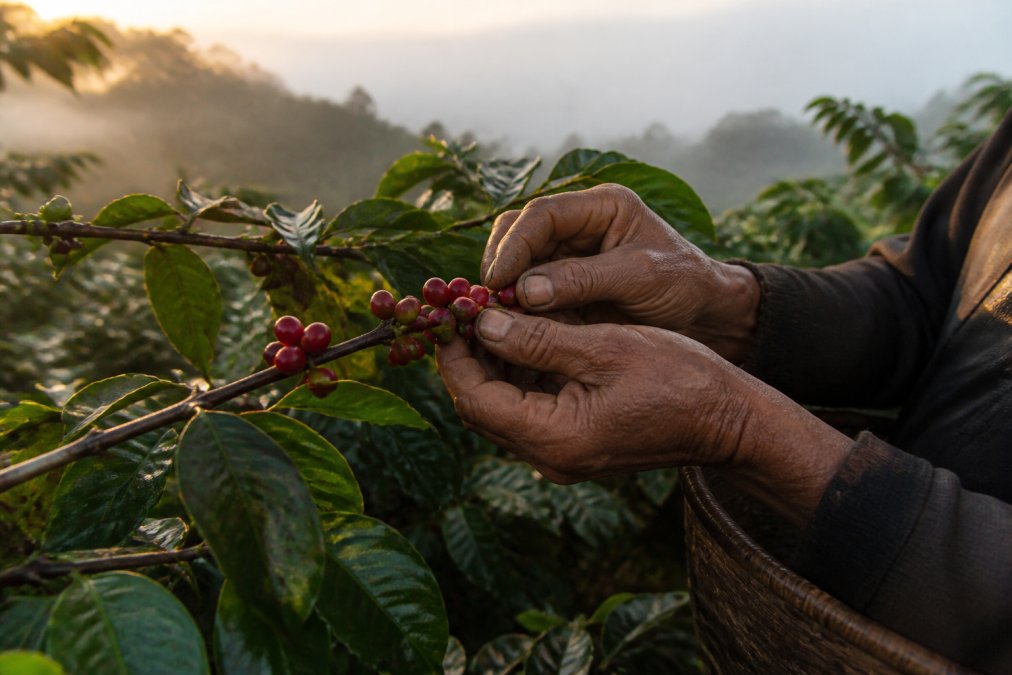
This manual selection directly impacts the final flavor. A single unripe or overripe cherry can introduce a sour or fermented note into an entire small-batch lot. The cost of this precision is significant: hand-picking yields far less per hour than mechanical harvesting, and skilled pickers command higher wages for their selectivity. This is the primary reason why single-origin lots carry a premium before they even leave the farm.
The Benefits of Single-Origin Coffee for Flavor
Single-origin coffee offers a flavor complexity that blends rarely achieve because it represents a specific terroir. When beans come from one farm or region, the roasting profile can be tailored to highlight the unique characteristics of that harvest, from the soil type to the processing method.
Traceability is the core benefit here. With a blend, a roaster can mask defects from cheaper beans by mixing them with higher-quality lots. With a single origin, there is nowhere to hide. The roaster must source excellent beans and roast them with precision, because any mistake is immediately visible in the cup. The benefits of single-origin coffee are about accountability as much as taste.
Small-Batch Roasting vs. Commodity Coffee Production
Small-batch roasting is a fundamentally different process from commodity production. Industrial roasters process thousands of pounds per hour at high heat to ensure consistency and shelf stability, often sacrificing the delicate aromatic compounds that make coffee enjoyable.
Artisan roasters, in contrast, work in batches of 10 to 50 pounds, monitoring the roast profile in real time to develop specific flavor notes. This precision requires skilled labor and more energy per pound. A commodity roaster might spend a few cents per pound on energy; a small-batch roaster spends several times that because the roast takes longer and requires constant attention.
How to Tell if Coffee Beans Are Fresh (and Why It Costs More)
Freshness is the single most important factor in how to tell if coffee beans are fresh, and it is a primary driver of artisan pricing. Coffee begins to lose its volatile flavor compounds within minutes of roasting and degrades noticeably after two weeks (peer-reviewed research).
Commodity coffee is designed to sit on a shelf for months. To achieve that stability, it is often roasted darker, which masks staleness, or packaged with nitrogen flushing. Artisan roasters reject this model. Roasting to order means the beans arrive at your door within days of roasting, not months. This short shelf life creates waste management costs for the roaster, who must predict demand accurately or discard unsold inventory, a cost that is passed on to the buyer.
The Hidden Costs: Equipment, Energy, and Waste
Beyond the beans themselves, artisan coffee carries significant overhead that commodity producers avoid. Precision roasting equipment is expensive, and the energy costs of running a small-batch roaster are far higher per pound than an industrial drum roaster that runs continuously.
The economics also include waste. A commodity roaster can sell every batch regardless of quality. An artisan roaster must cup-test every batch and discard or downgrade any roast that falls short of the flavor profile. This quality control is not optional; it is the foundation of the brand's reputation. When you buy artisan coffee, you are also paying for the batches that didn't make the cut.
Is Artisan Coffee Worth the Investment?
The question of whether artisan coffee is worth the investment comes down to what you value in your daily cup. If coffee is simply a caffeine delivery system, commodity beans are perfectly adequate. But if you are seeking flavor complexity and a product with traceability, the premium is justified.
Consider the cost per cup. A $20 bag of specialty coffee yields roughly 30 cups, bringing the cost to about 65 cents per serving (ncausa.org). That is a marginal increase over commodity coffee when you account for the labor, the cupping standards, and the freshness. For those who view coffee as a daily ritual rather than a utility, the investment in artisan coffee delivers a measurable improvement in quality of life.
For a practical example of this value, consider the Whiskey Barrel Aged single-origin offering at $19.99. This coffee is aged for 30 days in a Bourbon barrel and then roasted to order, ensuring the beans arrive at your door at peak freshness. The tasting profile from the aging process simply cannot be replicated by mass-market producers who prioritize shelf stability over flavor development.

Frequently Asked Questions
Is artisan coffee actually better than mass-market coffee?
Yes, for most drinkers, and the difference is measurable. Artisan coffee starts with specialty grade beans that score 80 or higher on the cupping scale, which means fewer defects and more complex flavors. Mass-market coffee often uses commodity-grade arabica or robusta that is roasted dark to mask inconsistencies. The freshness from roast-to-order delivery also preserves aromatic oils that grocery store bags lose over time. Whether that justifies the higher price depends on how much you value flavor and the ethical sourcing practices behind each batch.
Why has coffee suddenly become so expensive?
Coffee prices have climbed because of supply chain pressures and market volatility. Climate change threatens arabica production in key regions, and labor and shipping costs have risen globally. For artisan coffee, these factors compound with the higher costs of specialty grade beans, which already command a premium over commodity coffee. Small-batch roasters also pay more for energy and skilled labor. The result is that the true cost of a carefully sourced, freshly roasted bag is finally reflected in the retail price.
What is the difference between commodity coffee and artisan coffee?
Commodity coffee is treated as a bulk agricultural product, traded on global markets where price is the main factor. It is often grown at lower altitudes, harvested by machine, and roasted in massive batches that can sit in warehouses for months. Artisan coffee flips that model: it is grown at high altitudes, hand-picked for ripeness, and purchased through direct or fair trade relationships. Roasters treat it in small batches and ship it within days of roasting. This approach costs more at every step but preserves origin character and supports sustainable farming.
What factors contribute to the price of single-origin coffee?
Single-origin coffee costs more because it comes from one specific farm or region, not a blend of beans from around the world. That traceability requires careful separation during harvesting and processing. High-altitude farms, like those in Ethiopia's Sidama zone, produce denser beans with unique flavor profiles, but yields are smaller and picking is done by hand. The roaster pays a premium for that quality and traceability, then roasts it in small batches to highlight the origin's character. The final price reflects the entire chain.
The gap between a commodity bag and an artisan bag is not about greed; it is about the cost of doing things properly. At Beverly Blend, we focus on carefully sourced beans roasted to order, which guarantees maximum flavor and aroma in every cup. If you are ready to taste the difference that freshness and traceability make, explore our single-origin collection and experience a coffee that was crafted, not just produced. Get started with Beverly Blend and elevate your daily ritual.