

How Long Does Coffee Stay Fresh: A Storage Guide
Table of Contents
- How Long Does Coffee Stay Fresh: The Freshness Window
- How to Tell If Coffee Beans Are Fresh
- Best Way to Store Coffee Beans at Home
- Whole Bean vs. Ground Coffee Shelf Life
- Does Ground Coffee Go Bad, and How Quickly
- Freezing and Refrigerating Coffee: What Works
- The Role of Roast Date and Degassing
- Troubleshooting Stale Coffee and Off-Flavors
- Frequently Asked Questions
Last Updated: September 1, 2026
How Long Does Coffee Stay Fresh: The Freshness Window
How long coffee stays fresh depends on storage method and whether you're using whole beans or ground coffee. Whole beans typically stay fresh for two to four weeks after roasting when stored properly, while ground coffee loses optimal flavor within one to two weeks (peer-reviewed research).
Coffee begins degrading the moment it's roasted. The roasting process releases oils and carbon dioxide that give coffee its aroma and flavor. Once roasted, coffee starts degassing as oxygen gradually replaces CO2, causing oxidation and staleness. At Beverly Blend, we roast to order to maximize this freshness window, our single-origin and premium blends arrive within days of roasting, giving you coffee at its flavor peak rather than the flat taste of shelf-aged beans.
Freshness varies based on roast date, storage method, container type, and environmental conditions. Light roasts maintain optimal flavor slightly longer than dark roasts. The roast date is critical: coffee roasted three months ago will never taste as vibrant as coffee roasted three weeks ago, regardless of storage quality.
How to Tell If Coffee Beans Are Fresh
Fresh coffee beans display specific visual, aromatic, and taste characteristics that deteriorate over time.
Visual and Aroma Indicators
Fresh whole beans have a rich, dark color with visible surface oils, appearing glossy and uniform. As coffee ages, it loses this sheen and becomes duller and more matte. Aroma is the most reliable freshness indicator, fresh coffee has a strong, complex smell immediately noticeable when you open the bag.
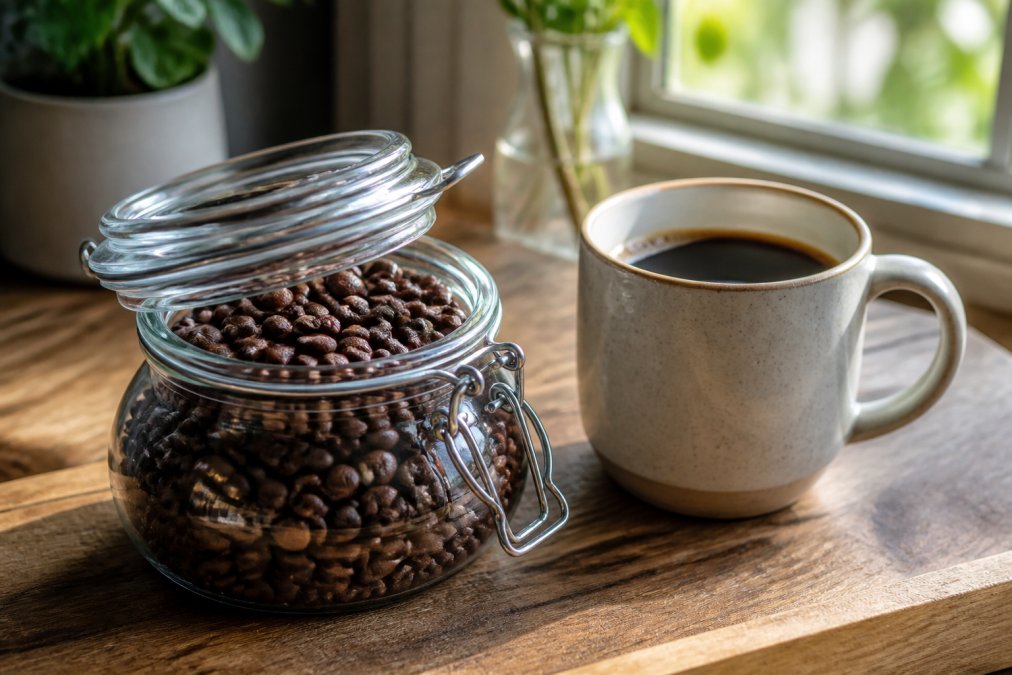
Stale coffee has a flat, muted aroma lacking depth, often described as dusty or cardboard-like. If your coffee container has weak or absent aroma, the beans have passed their freshness window. Ground coffee loses aroma even faster than whole beans because grinding increases surface area exposed to oxygen, causing most volatile compounds to dissipate within hours.
Taste and Extraction Changes
Stale coffee tastes flat and one-dimensional. Fresh coffee has layers of flavor, acidity, body, subtle sweetness, and origin-specific tasting notes. Extraction also changes with age: fresh beans extract evenly for balanced cups, while older beans often over-extract, creating bitter, harsh flavors. If your coffee tastes sour or overly bitter, the issue may be bean age rather than brewing technique.
Best Way to Store Coffee Beans at Home
Proper storage is the single most important factor in maintaining freshness. Coffee's enemies are heat, light, moisture, and oxygen.
Choosing the Right Container
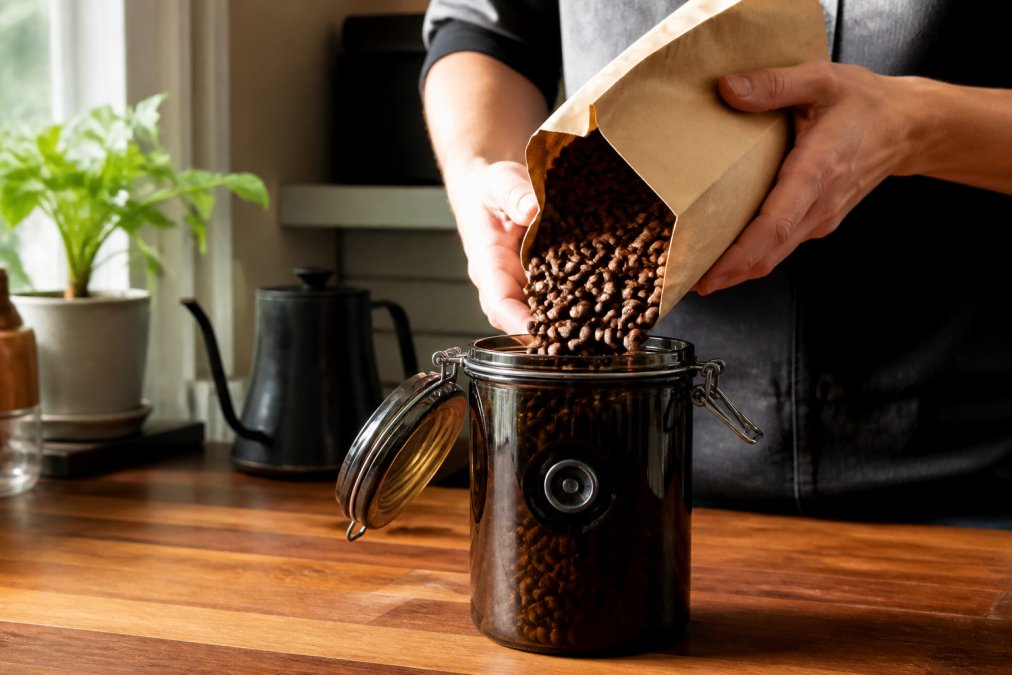
An airtight container is essential. Containers with one-way valves are ideal because they allow degassing CO2 to escape without letting oxygen back in. Choose glass or ceramic over plastic, which can absorb odors. Dark glass blocks UV light better than clear glass. Use appropriately sized containers to minimize excess air space. Vacuum-seal bags with manual pumps are excellent for larger quantities.
Temperature, Light, and Moisture Control
Store coffee at room temperature, ideally between 60-70°F (usda.gov). Heat accelerates oxidation. Never store coffee above stoves or near heat sources. A cool, dark cabinet or pantry is ideal. Avoid regular refrigerator storage due to temperature fluctuations and condensation; the exception is long-term freezer storage.
Light, especially UV light, degrades coffee compounds. Keep coffee in dark containers in dark locations. Moisture promotes mold growth and clumping. Store containers away from sinks, dishwashers, and humid environments. In very humid climates, add a small desiccant packet to your container.
Whole Bean vs. Ground Coffee Shelf Life
Whole beans stay fresh significantly longer than ground coffee because surface area exposed to oxygen is dramatically different. Whole beans maintain optimal freshness for two to four weeks after roasting. Ground coffee is best used within one to two weeks, though it remains drinkable longer.
Grinding beans immediately before brewing preserves maximum freshness and flavor. The difference between pre-ground and freshly ground coffee is substantial. If you must buy pre-ground coffee, purchase smaller quantities frequently rather than stockpiling. Beverly Blend's single-serve capsules stay fresher longer because each capsule is sealed with no oxygen inside, protecting grounds from oxidation until brewing.
Does Ground Coffee Go Bad, and How Quickly
Ground coffee doesn't become unsafe to drink but does go stale quickly. Ground coffee begins losing optimal flavor within days of grinding (peer-reviewed research). After one week, most volatile aromatic compounds have dissipated. After two weeks, flavor is noticeably flat. After a month, it tastes distinctly stale and bitter.
If you drink coffee daily and want the best taste, buying whole beans and grinding them at home is worthwhile. A burr grinder takes 30 seconds to grind enough for a single cup.
Freezing and Refrigerating Coffee: What Works
Freezing is effective for long-term whole bean storage, but requires careful technique to prevent condensation damage. Divide coffee into weekly portions and freeze separately, thawing only what you need. Frozen whole beans can maintain acceptable freshness for up to three months. Let frozen beans come to room temperature before opening to prevent condensation.
Don't freeze ground coffee unless storing for more than a month. If you do, use it within six weeks. Refrigerators aren't recommended for regular storage due to temperature fluctuations and humidity. The exception is extremely hot climates where room temperature consistently exceeds 75°F, use a cool, dark refrigerator section (not the door) for short-term whole bean storage in airtight containers.
The Role of Roast Date and Degassing
The roast date is the most important information on a coffee bag. Coffee is optimal within two to four weeks of roasting. After that, flavor changes, not necessarily badly, but no longer at peak.
Degassing is carbon dioxide escaping from beans after roasting. During the first 24-48 hours, beans release significant CO2. Specialty roasters like Beverly Blend wait several days before shipping because coffee less than 24 hours old can be over-carbonated, affecting extraction and balance.
The optimal drinking window is typically three to ten days after roasting. At this point, degassing is complete and extraction is balanced, but beans haven't lost vibrancy. Coffee remains excellent for two to four weeks, then gradually declines in flavor intensity.
Troubleshooting Stale Coffee and Off-Flavors
If your coffee tastes flat, bitter, or unpleasant, staleness is often the culprit rather than brewing technique. Check the roast date first. If beans are more than four weeks old, staleness is likely responsible.
Off-flavors in stale coffee include excessive bitterness, sourness, or papery taste. Very old coffee tastes cardboard-like or musty. If you're using correct brewing method and technique but coffee still tastes off, try fresh beans from a different roast date, the difference will be immediately obvious.
Storage mistakes also create off-flavors. Coffee stored above stoves or in warm locations tastes flat. Coffee in clear containers exposed to light tastes stale even if recent. Coffee stored near strong odors absorbs them. Review storage conditions before assuming beans are the problem.
The difference between mediocre and exceptional coffee often comes down to freshness. Beverly Blend roasts to order and ships quickly, ensuring beans arrive at peak freshness. Our commitment means you experience the full flavor potential of each single-origin bean or carefully crafted blend. Start with our 12 Pack Single Serve Coffee Capsules, each capsule is sealed with no oxygen inside, protecting coffee until you brew, or explore our whole bean options for the ultimate freshness experience. Your morning ritual deserves exceptional-tasting coffee, not stale.

Frequently Asked Questions
How long does an opened bag of coffee stay fresh?
Once opened, whole bean coffee stays fresh for 2-4 weeks when stored in an airtight container away from light, heat, and moisture. Ground coffee degrades faster due to increased surface area exposed to oxygen, remaining optimal for 1-2 weeks. The roast date matters significantly; coffee begins losing flavor compounds through oxidation immediately after roasting, with the freshness window narrowing after the first month.
How can I tell if coffee beans are fresh?
Fresh beans show a glossy or oily surface (especially darker roasts), have a strong, vibrant aroma, and taste bright with complex flavor notes. Stale beans appear dull, lack aroma, and taste flat or bitter. Check the roast date on the bag, coffee is at peak flavor 5-30 days after roasting. If beans are older than 2-3 months, they've likely lost significant acidity and body, even in storage.
Does ground coffee go bad, and how long does it last?
Ground coffee doesn't technically go bad, but it loses flavor rapidly through oxidation. Ground coffee stays fresh for 1-2 weeks in an airtight container; after that, flavor degradation accelerates noticeably. The finer the grind, the faster oxidation occurs. For best results, grind whole beans just before brewing. Pre-ground coffee from Beverly Blend's single-serve capsules stays sealed with no oxygen, preserving freshness far longer than open ground coffee.
Can I drink coffee that's expired or very old?
Coffee doesn't expire in the food safety sense, it won't make you sick. However, very old coffee (beyond 6-12 months) tastes significantly worse due to flavor degradation and potential rancidity from oxidation. Coffee more than 2-3 years old may develop musty or off-flavors. While safe, drinking old coffee defeats the purpose of investing in quality artisan beans. Proper storage extends freshness, but consuming coffee within its optimal window ensures the best experience.
This article was written using GrandRanker